Top 3D Printer Nozzles for Crisp Prints and Easy Flow
For most hobbyists, the Micro Swiss Plated Wear Resistant Nozzle is the top pick because it combines the thermal performance of brass with the durability of hardened steel, handling abrasive filaments without frequent swaps. Its main limitation is a higher cost per nozzle compared to standard brass.
Stock brass nozzles wear out quickly when you print glow-in-the-dark or carbon-fiber filaments. Upgrading to a more durable nozzle saves time and money over the long run.
This roundup covers seven top-rated nozzles, ranging from affordable brass to premium hardened steel, so you can choose the best one for your printing habits.
Before you buy
Our top picks

Micro Swiss Plated Wear Resistant Nozzle
Micro Swiss is known for quality, and this plated nozzle offers near-brass thermal conductivity with superior wear resistance. It fits standard MK8 and V6 threaded hotends, making it a versatile upgrade. Users report consistent extrusion and fewer clogs after thousands of hours.
Pros
- Excellent heat transfer
- Durable plating resists abrasion
- Fits most hotends
Cons
- More expensive than standard brass
- Plating can chip if mishandled

LUTER Brass 3D Printer Nozzle 24-Pack
This multipack of brass nozzles covers all common sizes, from 0.2 to 1.0 mm, at a fraction of the cost of a single hardened nozzle. They deliver reliable performance for standard PLA and PETG. Owners appreciate the included cleaning kit and wrench.
Pros
- Very affordable per nozzle
- Multiple sizes included
- Good for testing different layer heights
Cons
- Brass wears quickly with abrasives
- Inconsistent quality control reported by some

Trianglelab CHT High Flow Brass Nozzle
The CHT (Core Heat Technology) nozzle splits filament into three channels inside, heating it more efficiently and allowing flow rates up to 50% higher than standard nozzles. This means faster prints without sacrificing quality. Made from brass, it is best for non-abrasive filaments.
Pros
- Significantly faster printing
- Better melt consistency
- Easy to install
Cons
- Limited size options
- Not suitable for abrasive filaments
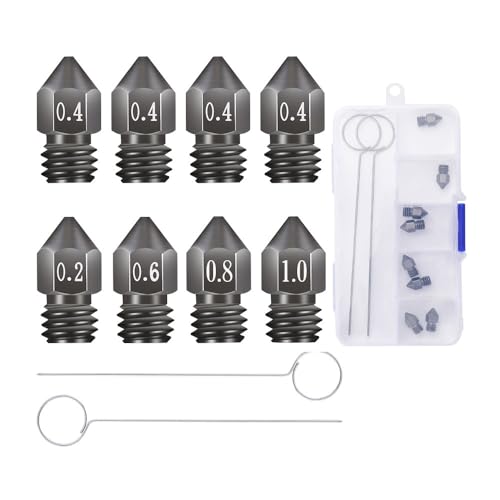
Gulfcoast Robotics Hardened Steel Nozzle
This hardened steel nozzle withstands abrasive materials that would eat through brass. It is available in all standard sizes and fits many hotends. Users note that it requires slightly higher printing temperatures due to lower thermal conductivity, but the durability is worth it.
Pros
- Very durable for abrasives
- Wide size selection
- Great price for hardened steel
Cons
- Lower thermal conductivity
- May need temperature adjustments

E3D V6 Nozzle Brass 0.4mm
This genuine E3D brass nozzle is precision-machined for optimal flow and consistent layer adhesion. It fits all E3D V6 hotends and clones. Users praise its consistent performance and longevity for a brass nozzle.
Pros
- Genuine E3D quality
- Excellent manufacturing tolerances
- Easy to clean
Cons
- Premium price for brass
- Still wears with abrasives
TH3D Studio Tough Nozzle
TH3D’s Tough Nozzle is made from a proprietary hardened material that performs like brass but lasts longer. It drops into Creality printers and many others without retuning. Users report it handles PLA and PETG flawlessly and even some wood-filled filaments.
Pros
- No temperature adjustments needed
- Harder than brass
- Backed by TH3D support
Cons
- Only 0.4 mm standard
- Not as hard as pure hardened steel

MOOSOO Tungsten Carbide 3D Printer Nozzle
Tungsten carbide is extremely hard and can last up to 10 times longer than hardened steel. This nozzle handles any abrasive filament with ease. It maintains good heat transfer, but it is the most expensive option here. Users who print thousands of hours of carbon fiber find it worth the investment.
Pros
- Extreme wear resistance
- Good thermal conductivity
- Long lifespan
Cons
- Very expensive
- Limited size availability
The lineup, side by side
| # | Model | Material | Best for | Score | Price |
|---|---|---|---|---|---|
| 1 | Micro Swiss Plated Wear Resistant Nozzle | Nickel-plated brass | Abrasive filaments and long-lasting performance | 9.4 | Check price |
| 2 | LUTER Brass 3D Printer Nozzle 24-Pack | Brass | Budget printing and quick replacements | 8.9 | Check price |
| 3 | Trianglelab CHT High Flow Brass Nozzle | Brass with CHT core | High-speed printing and increased flow rates | 9.2 | Check price |
| 4 | Gulfcoast Robotics Hardened Steel Nozzle | Hardened steel | Carbon fiber and glow-in-the-dark filaments | 9.0 | Check price |
| 5 | E3D V6 Nozzle Brass 0.4mm | Brass | E3D V6 users seeking genuine reliability | 9.1 | Check price |
| 6 | TH3D Studio Tough Nozzle | Proprietary hardened | All-around durability without changing thermal profile | 8.8 | Check price |
| 7 | MOOSOO Tungsten Carbide 3D Printer Nozzle | Tungsten carbide | Maximum wear resistance and longevity | 8.7 | Check price |
Questions worth asking
Can I use a hardened steel nozzle with PLA?
Yes, but because steel has lower thermal conductivity than brass, you may need to increase your printing temperature by about 5 to 10°C to achieve the same flow.
How often should I replace my 3D printer nozzle?
Depending on usage and filament type. With standard PLA, every few months. With abrasive filaments, every few weeks. Check for wear and clogs regularly.
Are all nozzles compatible with my printer?
No. Most common are MK8 (Creality) and V6 (E3D style). Always check the thread type and length. Some printers use unique mounting systems, so verify compatibility before buying.
What’s the difference between brass and hardened steel nozzles?
Brass offers better heat transfer and is cheaper, but it wears quickly with abrasive filaments. Hardened steel is much more durable but requires higher temperatures and may affect print quality if not properly tuned.
Do larger nozzles print faster?
Yes, a larger nozzle allows for thicker layers and wider extrusion, reducing print time. However, you need a hotend that can melt filament fast enough to keep up with the increased flow.
Can I use a ruby nozzle instead of hardened steel?
Ruby nozzles are extremely hard and corrosion-resistant, but they are expensive and delicate. They are not necessary for most users; hardened steel or tungsten carbide offer similar benefits at lower cost.
What is the best nozzle for wood-filled filament?
Wood-filled filaments are abrasive, so a hardened steel or plated nozzle is recommended to prevent wear. Brass will wear out quickly and may clog.
How do I stop a nozzle from clogging?
Ensure your filament is dry, use a high-quality nozzle with a polished internal finish, and avoid sudden temperature changes. Regularly perform cold pulls to clean out residue.
Are there any safety concerns when changing nozzles?
Yes, always work with a hot hotend, but be cautious of burns. Alternatively, use a cool swap method if your printer allows. Never touch the nozzle while it’s hot. Use tools and protective gloves.
Can I mix nozzle sizes with different layer heights?
Yes, but you should match the layer height to about 25-50% of the nozzle diameter for best quality. For example, with a 0.4 mm nozzle, use layer heights between 0.1 and 0.2 mm.
Our take
If you print mostly PLA and want a reliable, affordable option, the LUTER brass multipack is a solid choice. But for serious creators who print abrasive materials or want to maximize print speed, the Micro Swiss Plated Wear Resistant Nozzle is the best investment. It balances cost and performance, and its durability saves you money over time.