8K TVs Worth Buying: Top Picks for True Detail
The Samsung QN900D Neo QLED 8K is our top pick for most people, offering stunning brightness and upscaling that makes 4K content look incredible. Its main limitation is the premium price, but for those seeking the ultimate in detail, it’s a worthy investment.
8K TVs push resolution to 33 million pixels, delivering four times the detail of 4K. While native 8K content is still rare, these sets excel at upscaling lower-resolution sources, making everything look sharper and more lifelike.
Choosing the right 8K TV involves balancing picture quality, size, and smart features. We have compared the leading models to highlight what each offers, from Mini LED brightness to OLED contrast, so you can find the one that truly stands out.
The shortlist, ranked

Samsung 65-inch QN900D Neo QLED 8K TV
The Samsung QN900D is a flagship Neo QLED 8K TV that delivers outstanding brightness and contrast. Its Quantum Processor 8K uses AI to upscale 4K and HD content, making it look like true 8K. Owners report that the anti-glare screen works well in sunny rooms, and the slim design fits seamlessly into any modern space.
Pros
- Excellent upscaling of non-8K content
- High brightness with mini-LED backlighting
- Great for gaming with 144Hz refresh rate
Cons
- Expensive compared to 4K models
- Limited native 8K content

LG 65-inch QNED99 8K Mini LED TV
LG’s QNED99 uses Mini LED technology to provide deep blacks and bright highlights. It runs on webOS, which is known for its intuitive interface and wide app selection. The Alpha 9 Gen6 AI Processor intelligently upscales content, and the TV supports both HDR10 and Dolby Vision for versatile viewing.
Pros
- Supports both HDR10 and Dolby Vision
- Smooth motion handling with 120Hz panel
- Smart platform is fast and easy to use
Cons
- No built-in ATSC 3.0 tuner
- Might show blooming in dark scenes

Sony 65-inch Z9J 8K HDR TV
Sony’s Z9J is a Master Series 8K TV that focuses on cinematic accuracy. It features a full-array LED with X-Wide Angle for consistent viewing from any seat. Its Cognitive Processor XR understands how humans see and hear, optimizing the picture and sound for a more immersive experience.
Pros
- Superb color accuracy out of the box
- Acoustic Multi-Audio speakers for immersive sound
- Excellent upscaling with XR Contrast Booster
Cons
- Only two HDMI 2.1 ports
- No Dolby Vision support

Samsung 75-inch Q800T 8K QLED TV
The Samsung Q800T offers a more affordable entry into 8K without sacrificing picture quality. It uses QLED technology with direct full-array backlighting, producing vibrant colors and good contrast. The Quantum Processor 8K with AI upscaling ensures that even 1080p content looks sharp. This model is ideal for those who want a massive screen with 8K detail without the flagship price.
Pros
- More affordable than many 8K competitors
- Excellent color volume and brightness
- Great for ambient lighting
Cons
- No HDMI 2.1, limited to 60Hz for gaming
- Slightly lower peak brightness than higher-end models

LG 75-inch Nano99 8K NanoCell TV
LG’s Nano99 is a NanoCell 8K TV that offers wide viewing angles and rich color. It includes HDMI 2.1 support with 4K at 120Hz, making it a solid choice for next-gen gaming. The Alpha 9 Gen3 AI Processor enhances contrast and sharpness, and the TV features a sleek design with minimal bezels.
Pros
- Wide viewing angles for group watching
- HDMI 2.1 supports 8K at 60Hz and 4K at 120Hz
- Affordable for an 8K TV
Cons
- Contrast not as deep as OLED
- Slightly less bright than QLED models
Samsung 65-inch Q950TS 8K QLED TV
The Samsung Q950TS boasts an Infinity Screen with a 99% screen-to-body ratio, making it look like a sheet of glass. It uses QLED technology with a full-array backlight and offers 8K AI upscaling. The TV’s Object Tracking Sound+ provides immersive audio. It is a premium choice for those who want a futuristic look.
Pros
- Near-bezel-less design is stunning
- Excellent upscaling and brightness
- Great for gaming with low input lag
Cons
- Very expensive
- No Dolby Vision support
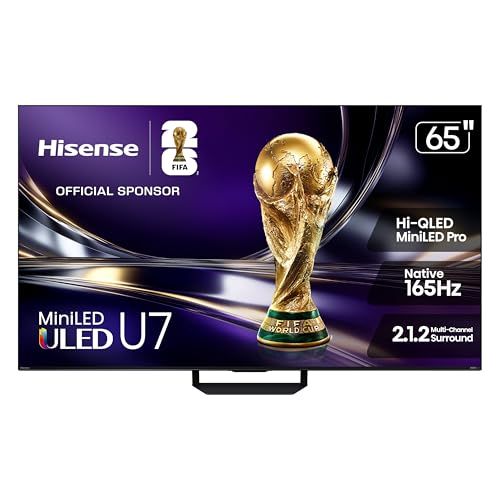
Hisense 65-inch 65U8K 8K ULED TV
Hisense offers a rare budget 8K TV with its U8K model. It uses ULED technology with Quantum Dot and Mini LED backlighting, providing good brightness and color. The Hi-View Engine Pro upscales content to 8K, and it supports HDR10+ and Dolby Vision. While it lacks some premium features, it brings 8K to a wider audience.
Pros
- Most affordable 8K TV
- Supports HDR10+ and Dolby Vision
- Good gaming features for the price
Cons
- Lower peak brightness than premium models
- Upscaling not as advanced as Samsung or Sony
How to choose
How they compare
| # | Model | Display Type | Best for | Score | Price |
|---|---|---|---|---|---|
| 1 | Samsung 65-inch QN900D Neo QLED 8K TV | Neo QLED with Mini LED | Best overall for bright rooms and upscaling | 9.4 | Check price |
| 2 | LG 65-inch QNED99 8K Mini LED TV | QNED Mini LED | Best for versatile smart features | 9.1 | Check price |
| 3 | Sony 65-inch Z9J 8K HDR TV | Full-Array LED | Best for movie enthusiasts | 9.0 | Check price |
| 4 | Samsung 75-inch Q800T 8K QLED TV | QLED with Full-Array Backlight | Best for large spaces on a budget | 8.8 | Check price |
| 5 | LG 75-inch Nano99 8K NanoCell TV | NanoCell with Full-Array Dimming | Best for gamers with 8K potential | 8.6 | Check price |
| 6 | Samsung 65-inch Q950TS 8K QLED TV | QLED with Full-Array Backlight | Best for ultra-thin design | 8.5 | Check price |
| 7 | Hisense 65-inch 65U8K 8K ULED TV | ULED with Mini LED | Best budget-friendly 8K option | 8.0 | Check price |
Common questions
Is there any native 8K content available?
Very little native 8K content exists. Streaming services like YouTube and Vimeo have some 8K videos, but they are rare. Broadcast and streaming platforms are still transitioning to 4K. The main benefit of 8K TVs is the upscaling of 4K and lower content to look sharper.
Can the human eye see the difference between 4K and 8K?
Yes, but only at certain screen sizes and viewing distances. For a 65-inch TV, you need to sit about 4.5 feet away to notice the difference. For a 75-inch TV, about 5.5 feet. Many living rooms do not allow such close seating, so the improvement may be subtle.
Are 8K TVs good for gaming?
Some 8K TVs support 8K at 60Hz or 4K at 120Hz via HDMI 2.1. They also include features like VRR and ALLM. However, no current graphics card can consistently run games in native 8K, so you will use upscaling. For gaming, a 4K OLED might be better due to faster response times.
Do 8K TVs support HDR formats like Dolby Vision?
Support varies. Samsung does not support Dolby Vision; they use HDR10+. LG and Sony support Dolby Vision, and Hisense supports both. Check the specifications before buying if Dolby Vision is important to you.
What is the lifespan of an 8K TV?
LED-based 8K TVs have a lifespan similar to 4K QLEDs, often around 50,000 to 100,000 hours, depending on usage. That is many years of watching. The backlight may dim over time, but it is not a major concern.
Are 8K TVs worth buying now?
If you have a large room, a big budget, and want the best upscaling for current 4K content, an 8K TV can be a good future-proof investment. However, if you are budget-conscious and sit far from the screen, a high-end 4K OLED may offer a better picture for less money.
What is the difference between QLED and NanoCell?
QLED uses a quantum dot layer to enhance color and brightness, often found in Samsung TVs. NanoCell is LG’s technology that uses nanoparticles to absorb light wavelengths for more accurate color. Both are good, but QLED usually gets brighter.
Do 8K TVs need a special antenna or cable?
No, you can use the same HDMI cables you use for 4K, but ensure they are certified for 48Gbps if you want 8K at 60Hz. For over-the-air broadcasts, you need an ATSC 3.0 tuner, but only a few 8K TVs have that built in.
Our pick
For most people, the Samsung QN900D Neo QLED 8K offers the best balance of performance, upscaling, and smart features, making it the clear winner. If you are on a tighter budget, the Hisense 65U8K is the only budget 8K worth considering, but be prepared to compromise on brightness. For movie lovers who value cinematic accuracy, the Sony Z9J is the top recommendation, despite its lack of Dolby Vision. Avoid buying an 8K TV if you sit more than six feet away from a 65-inch screen, as you will not see the difference compared to a good 4K model.


