7 Acrylic Paint Sets Worth Trying for Canvas and Craft
Liquitex BASICS is the easiest acrylic to recommend, giving creamy coverage and dependable color for a student price. Golden Heavy Body carries dense pigment for archival work. Arteza suits beginners who want a wide range of usable shades without a large outlay.
Liquitex BASICS covers most painters, because buttery consistency and reliable color behavior make it forgiving. Doing archival work? Golden Heavy Body carries denser pigment and holds knife texture. Arteza gives beginners a broad palette in resealable pouches for the least money.
Craft acrylic and artist acrylic look identical in a listing photo and behave nothing alike on canvas. Filler content is usually the difference, and it rarely appears on the label. We leaned on published pigment information, opacity and lightfastness ratings, then weighed what long term owners report about fading, chalky whites and cracking.
What we recommend
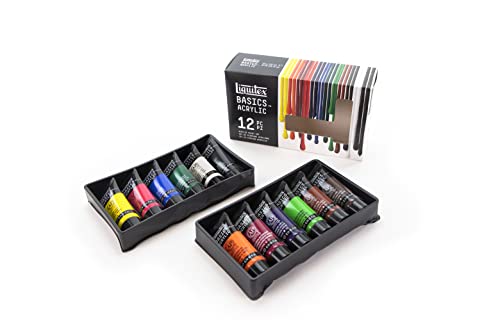
Liquitex BASICS Acrylic Paint Set
Buttery consistency lets BASICS hold a brush mark without dragging, which few student acrylics manage. Colors stay close to their wet appearance as they cure, so mixing stays predictable. Most painters can work with this line for years before pigment strength becomes the limiting factor.
Pros
- Holds brush marks without dragging
- Colors mix predictably across the range
- Lightfastness is strong for a student line
Cons
- Some hues want a second coat
- 22 ml tubes are small for large canvases

Golden Heavy Body Acrylic Paint Set
Pigment density is the headline here, and it survives thinning: a Golden color diluted with medium keeps its chroma where cheaper paint turns weak and milky. Thick texture suits palette knife work and standing impasto. Owners producing work for sale point to the archival lightfastness as the reason they pay more.
Pros
- Keeps chroma even when thinned with medium
- Texture stands up under a palette knife
- Archival ratings suit work meant to sell
Cons
- Highest cost per tube in this roundup
- Thick body needs medium for smooth glazing

Winsor & Newton Galeria Acrylic Set
Galeria bridges student and professional lines, with real pigment strength and a smooth satin surface once dry. Its 60 ml tubes deliver far more paint per order than the 22 ml standard, which matters on larger canvases. Working time runs slightly longer, so blends stay open a little further.
Pros
- 60 ml tubes stretch much further per order
- Dries to an even satin surface
- Pigment strength sits above most student lines
Cons
- Ten colors means more mixing from scratch
- A few shades dry noticeably darker

Arteza Acrylic Paint Set
Resealable pouches replace crimped tubes, which stops the dried plug that wastes paint at the nozzle. Coverage is respectable and the flow stays easy to control while brush technique is still developing. Owners praise the sheer count of usable shades for the outlay.
Pros
- Resealable pouches waste less than crimped tubes
- Wide shade selection for early experimenting
- Soft flow forgives uneven brush pressure
Cons
- Pigment sits lighter than professional lines
- Whites can look chalky over dark grounds
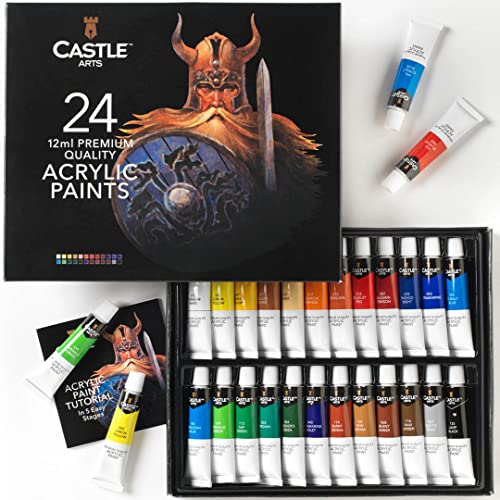
Castle Art Supplies Acrylic Paint Set
Castle Art fills a palette with a wide spread of hues for very little, which suits practice sheets, classrooms and craft tables. Paint spreads smoothly and cures with a light gloss. Dark grounds expose the thin coverage, so treat it as a learning and craft paint rather than a finish coat.
Pros
- Lowest cost per color of the tube sets
- Spreads smoothly with little brush drag
- Enough shades to fill a classroom palette
Cons
- Coverage thins out over dark grounds
- 12 ml tubes empty within a few sessions

Apple Barrel Acrylic Paint Set
Apple Barrel is the matte craft acrylic that sticks to wood, terracotta, papier mache and primed metal. Bottles pour rather than squeeze, which suits pouring into a palette well for a group project. Nothing about it is archival, so seal any piece that will handle wear.
Pros
- Adheres to wood, terracotta and primed metal
- 2 oz bottles give plenty of volume
- Non toxic and washes out of brushes easily
Cons
- Not archival for framed artwork
- Needs a sealer on anything handled

DecoArt Americana Acrylic Paint Set
Finely milled pigment lets Americana lay down crisp lines with a small round brush, which is why decorative and folk painters keep returning to it. Fluid consistency layers thin without leaving ridges. Shade batches stay consistent across reorders, useful when a project runs over several months.
Pros
- Fine milling supports small brush detail
- Shade batches stay consistent between orders
- Thin layers dry without visible ridges
Cons
- Matte finish needs a topcoat for sheen
- Too thin to build impasto texture
How to pick the right one
What separates student, artist and craft acrylics? Pigment to filler ratio is the whole story. Artist grades like Golden pack raw pigment and little extender, so colors stay vivid when thinned and resist fading. Student grades add binder and filler to hold the cost down, which is why whites can read chalky and dark colors want a second pass. Craft acrylics go further still, trading pigment for volume. Buy artist grade for work that will hang, student grade for learning.
Which acrylic body suits your painting style? Heavy body paint keeps the ridge a brush or knife leaves, which is what makes impasto and textured surfaces possible. Soft body and fluid acrylics self level into flat, even films, so they suit lettering, glazing and small brush detail. Many painters keep both: a heavy body set for expressive work and a fluid line like Americana for fine lines. Mediums move a paint either direction once you know which you want.
Which surfaces can you paint acrylics on? Canvas, wood, paper, terracotta, stone and primed metal all accept acrylic. Absorbency is the variable. Raw wood and paper drink the binder, so gesso or a sealer first keeps color on the surface. Slick plastics and glossy metal need a bonding primer or the film peels in sheets. Outdoor pieces want a UV resistant clear coat, since even good pigment fades faster in direct sun.
How do you get the most paint for your money? Compare cost per milliliter, not the price on the box. A 24 tube set of 12 ml tubes holds less paint than ten 60 ml tubes, and it costs more per unit. Beginners get more value from a broad affordable range while learning to mix. Committed painters save by buying core colors in large artist grade tubes and mixing everything else, which also builds better color judgment.
Compared at a glance
| # | Model | Consistency | Best for | Score | Price |
|---|---|---|---|---|---|
| 1 | Liquitex BASICS Acrylic Paint Set | Medium heavy body | Best overall | 9.4 | Check price |
| 2 | Golden Heavy Body Acrylic Paint Set | Heavy body | Best for professionals | 9.2 | Check price |
| 3 | Winsor & Newton Galeria Acrylic Set | Medium body | Best value artist grade | 9.0 | Check price |
| 4 | Arteza Acrylic Paint Set | Soft body | Best for beginners | 8.8 | Check price |
| 5 | Castle Art Supplies Acrylic Paint Set | Soft body | Best budget | 8.6 | Check price |
| 6 | Apple Barrel Acrylic Paint Set | Fluid | Best for crafts | 8.3 | Check price |
| 7 | DecoArt Americana Acrylic Paint Set | Fluid | Best for detail work | 8.0 | Check price |
Frequently asked questions
Are expensive acrylics really worth it?
For finished work that will hang, yes. More pigment means stronger color, better coverage and lightfastness that holds for decades. Practice sheets, classroom work and craft projects do not need it.
Can I mix different acrylic brands together?
Yes. Every acrylic uses the same water based polymer binder, so they blend without reacting. Watch consistency instead, since a fluid paint mixed into heavy body lands somewhere between the two.
Do acrylic paints dry darker or lighter?
Slightly darker in most cases, because the milky binder turns clear as it cures. Student sets with more extender shift further. Test a swatch and let it dry fully before committing to a mix.
How do I keep acrylics from drying on my palette?
Work in small amounts, mist with a spray bottle, or use a sealed stay wet palette with damp paper. Resealable pouch sets waste less between sessions than crimped tubes.
What surfaces can acrylic paint stick to?
Canvas, wood, paper, terracotta, stone and primed metal all work. Prime absorbent or slick surfaces first, and seal anything going outdoors. Craft lines like Apple Barrel are formulated for multi surface use.
Are acrylic paints non toxic?
Most consumer acrylics are labeled non toxic and clean up in water. Certain cadmium and cobalt pigments carry cautionary labels, so read the tube and ventilate when using solvent based varnishes.
How many colors do I need to start painting?
A warm and cool of each primary, plus titanium white, mixes nearly everything. Larger sets speed up early work, but a small palette teaches color relationships much faster.
Should I varnish an acrylic painting?
For displayed or handled work, yes. Varnish blocks dust and UV, evens out patchy sheen and can be removed later. Craft pieces on wood or terracotta particularly benefit from a sealer.
Which acrylic paint is best for fine detail?
Fluid, finely milled paints such as DecoArt Americana lay crisp lines with a small round brush. Heavy body paint drags at that scale and leaves visible ridges.
How long does acrylic paint take to dry?
Thin layers set touch dry within minutes and cure fully over several days. Thick impasto passages can take a week or longer before the film hardens all the way through.
The bottom line
Liquitex BASICS remains the smartest all round buy, delivering artist style handling at a student price. Step up to Golden Heavy Body when archival pigment strength and standing texture matter for work you plan to sell or hang. Start with Arteza if the goal is the widest palette for the least money.


