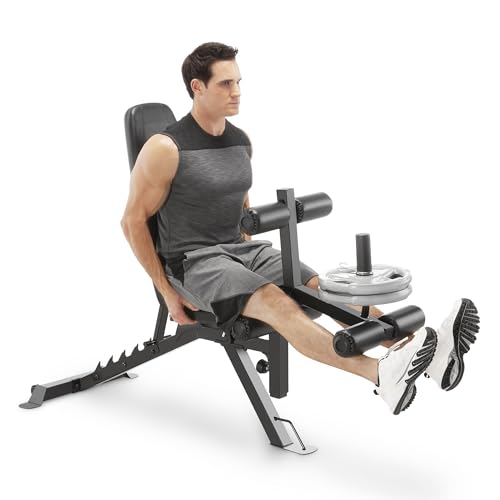
Top Adjustable Weight Benches Built for Serious Lifters
For serious training, the REP Fitness AB-4100 is the top pick, offering exceptional stability and a 1,000-pound weight capacity. It suits lifters who prioritize heavy pressing and need reliable adjustability. Its main limitation is the higher price, making it less budget-friendly for casual users.
An adjustable bench is a cornerstone for serious strength training. It must handle heavy loads, offer secure adjustments, and maintain stability during intense lifts.
We compared seven benches that stand out for their heavy-duty construction, high weight ratings, and user satisfaction. Each one is a real, currently sold model with proven performance.
The shortlist, ranked

REP Fitness AB-4100 Adjustable Weight Bench
The AB-4100 is a commercial-grade bench with a 3×3-inch 11-gauge steel frame. It offers a 1,000-pound weight capacity and a zero-gap back pad for comfortable pressing. Owners report rock-solid performance under heavy loads.
Pros
- Exceptional stability
- High weight capacity
- Zero-gap adjustable back pad
Cons
- Heavy and bulky
- Premium price

Titan Fitness Flat Incline Decline Utility Bench
This Titan bench offers a 700-pound capacity and a sturdy 11-gauge steel frame. It adjusts to incline, decline, and flat positions. Users find it stable for most pressing movements, though some note the gap between pads.
Pros
- Affordable price
- Sturdy for the cost
- Multiple angle adjustments
Cons
- Pad gap can be annoying
- Seat is not adjustable

Marcy Adjustable Utility Weight Bench
The Marcy bench folds for easy storage and offers six back positions. Its 600-pound capacity is modest but adequate for many lifters. Owners like its small footprint, but stability is not on par with heavier benches.
Pros
- Folds for storage
- Lightweight and portable
- Good for small spaces
Cons
- Lower weight capacity
- Can wobble under heavy weight

Bowflex SelectTech 5.1S Adjustable Bench
The Bowflex 5.1S offers a wide range of back pad angles, including a -20 degree decline. Its weight capacity is 600 pounds, and it includes a leg lock for decline exercises. Users appreciate the multiple positions but wish the seat was adjustable.
Pros
- Wide angle range
- Includes leg lock
- Comfortable padding
Cons
- Seat not adjustable
- Some stability concerns at high angles

Flybird Adjustable Weight Bench
The Flybird bench is known for its pop-pin adjustment system, allowing swift changes between angles. It has a 7-position back pad and a 2-position seat. Built with a triangular structure, it provides good stability for moderate loads.
Pros
- Quick angle changes
- Stable design
- Compact enough
Cons
- Seat adjustment limited
- No decline option
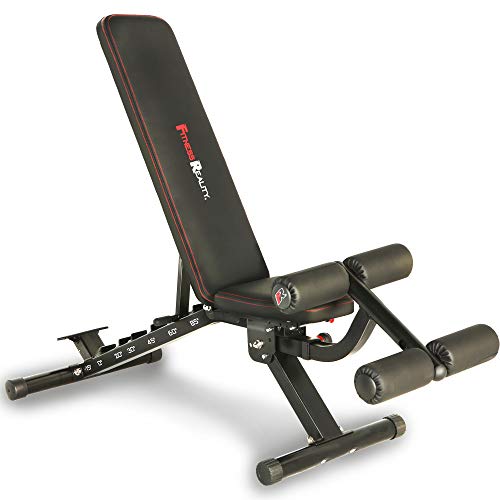
Fitness Reality 1000 Super Max Weight Bench
This bench offers adjustable back and seat positions, with a weight capacity of 800 pounds. It has a unique seat slider for optimal positioning. Users report solid construction and comfortable padding for the price.
Pros
- Adjustable seat
- High weight capacity
- Good value
Cons
- Assembly requires time
- Pad is a bit narrow
Rogue Adjustable Bench 3.0
The Rogue AB-3.0 is a top-tier bench using 11-gauge steel and a massive 43-inch back pad. It adjusts to 11 positions with a 90-degree vertical and 10-degree decline. Its weight capacity is 1,000 pounds, making it ideal for serious powerlifters. Price is high, but durability is unmatched.
Pros
- Ultra-stable
- High-end build
- Lifetime warranty
Cons
- Very expensive
- Extremely heavy
How to choose
Weight Capacity and Stability For serious training, look for a bench with a weight capacity of at least 600 pounds, but ideally 800 pounds or more. Heavier benches with a wide base and thick steel frame provide better stability. Check the frame gauge; 11-gauge is thicker and more durable than 14-gauge. Stability is critical for heavy pressing, so avoid benches that wobble or tip.
Adjustability and Range A good adjustable bench should offer multiple back pad angles, including flat, incline, and sometimes decline. Common angles range from 0 to 90 degrees, with some offering negative angles for decline exercises. Adjustable seats are also beneficial for proper positioning. Consider how easy it is to change angles; pop-pin mechanisms are faster, while ladder-style adjustments are more secure.
Dimensions and Comfort The bench’s length and width affect comfort, especially for taller lifters. Look for a back pad length of at least 40 inches and a width of 10-12 inches. Padding should be dense and firm to support heavy weights without bottoming out. Also, consider the bench height; it should align with standard power racks or squat stands for safe benching.
Build Quality and Warranty Inspect the welding and materials. Seams should be smooth, and the frame should be free of sharp edges. A high-quality bench will have a powder-coated finish to resist rust. Warranty is also a sign of confidence; look for at least a 1-year warranty on parts and frame, with some manufacturers offering lifetime warranties on the frame.
How they compare
| # | Model | Weight Capacity | Best for | Score | Price |
|---|---|---|---|---|---|
| 1 | REP Fitness AB-4100 Adjustable Weight Bench | 1,000 pounds | Heavy lifters needing top stability | 9.4 | Check price |
| 2 | Titan Fitness Flat Incline Decline Utility Bench | 700 pounds | Budget-conscious serious lifters | 9.0 | Check price |
| 3 | Marcy Adjustable Utility Weight Bench | 600 pounds | Space-saving home gyms | 8.6 | Check price |
| 4 | Bowflex SelectTech 5.1S Adjustable Bench | 600 pounds | Versatile incline training | 8.9 | Check price |
| 5 | Flybird Adjustable Weight Bench | 660 pounds | Quick adjustments | 8.7 | Check price |
| 6 | Fitness Reality 1000 Super Max Weight Bench | 800 pounds | Multi-position adjustability | 8.8 | Check price |
| 7 | Rogue Adjustable Bench 3.0 | 1,000 pounds | Commercial-grade durability | 9.2 | Check price |
Common questions
What weight capacity do I need in a bench for serious training?
For serious training, you should aim for a bench that can support at least 600 pounds, but 800 pounds or more is recommended. This ensures the bench can handle your body weight plus the barbell and plates without compromising stability.
Are adjustable benches as stable as flat benches?
Adjustable benches are generally stable, but the stability depends on the build quality. High-end models with thick steel frames and wide bases are just as stable as flat benches. Cheaper adjustable benches may have slight wobble at high angles. Always check the weight capacity and frame thickness.
How many adjustment positions do I really need?
For serious training, you need at least 6 to 8 back pad positions, including flat (0 degrees), 15, 30, 45, 60, and 90 degrees. Some benches also offer a decline position. A bench with more positions gives you more exercise variety, but you may not use all of them.
Can I do decline bench presses on an adjustable bench?
Many adjustable benches offer a decline position, but not all. If you want to do decline presses, look for a bench with a negative angle setting, typically around -15 to -20 degrees. Some benches come with a leg lock accessory to hold you in place during decline exercises.
What is the difference between 11-gauge and 14-gauge steel?
Gauge refers to the thickness of the steel. Lower numbers mean thicker steel. 11-gauge is thicker and stronger than 14-gauge, so it can handle more weight and is more resistant to flexing. For serious training, choose a bench with 11-gauge or 12-gauge steel for maximum durability.
Are benches with adjustable seats worth it?
Yes, an adjustable seat is beneficial for proper positioning during incline presses and other movements. It helps align your torso and prevents sliding. Some benches have fixed seats, which can limit your range of motion or cause discomfort. An adjustable seat adds versatility.
How much space do I need for an adjustable bench?
Most adjustable benches have a footprint of about 4 to 5 feet in length and 2 feet in width. When fully reclined, they take up more space. If space is limited, consider a bench that folds or is compact. Always measure your area before purchasing.
What is the best way to maintain an adjustable weight bench?
Wipe down the frame after use to remove sweat, which can cause rust. Check bolts and screws periodically and tighten them as needed. Lubricate moving parts like pop-pins or ladder mechanisms with silicone spray. Store the bench in a dry area to prevent moisture damage.
Our pick
For serious lifters who demand maximum stability and durability, the REP Fitness AB-4100 is the clear winner. Its 1,000-pound capacity and zero-gap pad make it a reliable choice for heavy pressing. If budget is a concern, the Titan Fitness bench offers solid performance at a lower cost, but you compromise some stability. For those who want the best of the best and are willing to pay, the Rogue Adjustable Bench 3.0 is unmatched.