Choosing Hay for Rabbits, Guinea Pigs and Chinchillas
Oxbow Western Timothy Hay is the everyday default, with coarse strands and reliable quality between bags. Small Pet Select 2nd Cutting wins over pets that reject stalky hay. Standlee Premium Western Forage brings the cost per kilo down for multi pet households.
Oxbow Western Timothy Hay is the safe starting point for rabbits, guinea pigs and chinchillas. Small Pet Select 2nd Cutting converts fussy eaters with softer, leafier strands. Standlee Premium Western Forage makes sense once several animals are eating from the same supply.
Hay is difficult to buy online because quality shifts with each harvest, and one brand can arrive green and fragrant in spring then dusty by autumn. We compared grass types, cutting characteristics, published fibre content and packaging format. Owner reports about dust levels, strand breakage and how much of a bag ends up as bedding rather than food then decided the ranking.
Before you buy
Grass hay first, legume hay second Adult rabbits, guinea pigs and chinchillas need unlimited grass hay available at all times, because it is the base of the entire diet. Timothy is the default, with orchard grass and meadow hay as direct equivalents. Alfalfa belongs in a separate category as a legume carrying far more protein and calcium. Feed it to growing or nursing animals, and to healthy adults only as an occasional extra.
What does first, second and third cutting mean? First cutting brings thick stems and plenty of seed heads, which delivers the most chewing and dental wear. Second cutting balances leaf against stem and is the safest choice for a pet whose preferences you do not yet know. Third cutting is very soft and leafy, appealing to fussy eaters while offering less coarse fibre. Plenty of owners settle on mixing two cuttings to get palatability and abrasion together.
How to judge hay freshness by smell, colour and dust Good hay smells sweet and grassy, looks green rather than yellow or grey, and releases little dust when shaken. Brown patches, a musty smell or clumping all point to moisture during storage, and that bag should not be fed. A small amount of fine material at the bottom is normal. When most of the contents are short fragments, the hay was over compressed or handled roughly in transit.
Storing hay so it stays fresh for months Airflow is the requirement people miss most often. Sealed plastic in a warm room invites mould within weeks. Move hay into a fabric sack, a cardboard box or a plastic tub with the lid propped open, keep it off cold concrete and out of direct sun. Buying a bale only saves money if you can store it properly and get through it in a few months, otherwise smaller bags bought more often stay noticeably fresher.
Our top picks
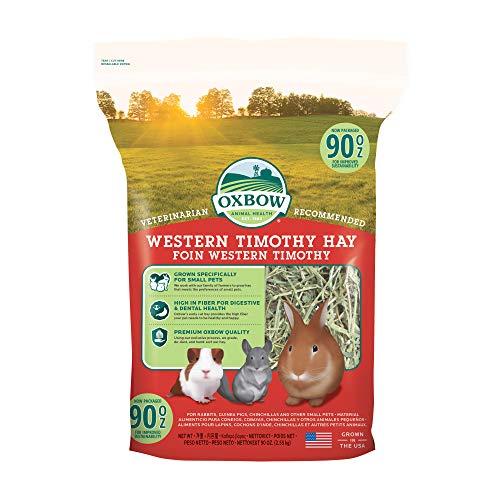
Oxbow Western Timothy Hay
Coarse strands and a good proportion of seed heads keep chewing going through the day, which is what wears molars down. High fibre and low calcium make it suitable as a lifelong staple for adult rabbits and guinea pigs. Bag to bag consistency is better here than with most competing brands, and that matters enormously with a fussy animal.
Pros
- Fibre content supports steady dental wear
- Quality varies little between deliveries
- Stocked widely, so reordering rarely fails
Cons
- Compression during packing breaks some strands
- Coarse stems get rejected by picky pets

Small Pet Select 2nd Cutting Timothy Hay
Second cutting sits between the stalky first cut and the very soft third, giving a leaf to stem balance most animals accept immediately. Boxed packaging replaces heavy plastic compression, so strands arrive long and lofty. Cost per kilo is the catch, and it climbs fast once you feed more than two animals.
Pros
- Converts pets that refuse coarse first cut hay
- Strands arrive unbroken and full length
- Box packing keeps the hay lofty rather than flattened
Cons
- Cost per kilo is high for multiple animals
- Boxes need real cupboard space

Kaytee Timothy Hay
Bag sizes here suit a single rabbit or a pair of guinea pigs, without the premium markup. Fibre content is appropriate for adult animals and acceptance is generally good. Colour and dust vary more between batches than the premium brands, so shaking a portion out before serving becomes a sensible habit.
Pros
- Keeps daily feeding costs down
- Resealable bag limits moisture ingress
- Available in most pet aisles and online
Cons
- Dust levels swing between batches
- More short broken strands than premium hay
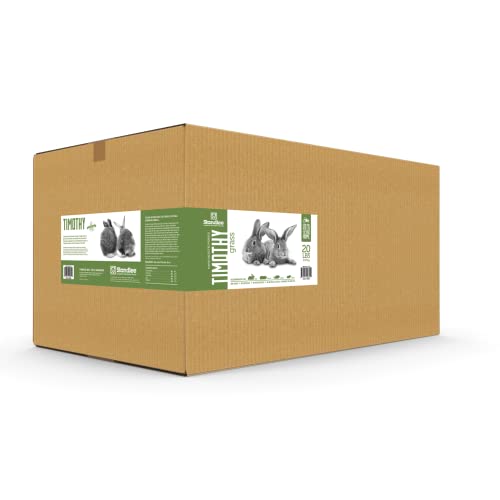
Standlee Premium Western Forage Timothy Grass Hay
Compressed bales drop the cost per kilo substantially once several animals are eating. Quality is proper sun cured forage grade rather than a scaled up pet product. Compression means you break off flakes and loosen them by hand, and the bale needs a dry shed or utility room rather than a kitchen cupboard.
Pros
- Lowest cost per kilo in this comparison
- Forage grade quality stays consistent
- Far less packaging waste per kilo fed
Cons
- Demands significant dry storage space
- Flakes need pulling apart before serving

Oxbow Orchard Grass Hay
Softer and sweeter than timothy, orchard grass is the usual next move when a pet refuses the standard staple. It also suits owners who react to timothy dust while handling hay daily. Nutritionally it replaces timothy fully for adult animals, though the softer strand delivers slightly less abrasive chewing.
Pros
- Sweeter smell tempts reluctant eaters back to hay
- Often easier on owners sensitive to timothy
- Works as a complete timothy replacement for adults
Cons
- Softer strands mean less dental abrasion
- Protein sits slightly above first cut timothy

Rabbit Hole Hay Ultra Premium Soft Timothy Hay
Hand sorting before packing removes the stalky material, which is exactly what seniors with worn teeth need. Strands arrive noticeably leafier and greener than mass market bags. Feeding it exclusively gets expensive, so many owners mix it into a cheaper staple to lift acceptance rather than replacing that staple.
Pros
- Accepted by animals that reject everything else
- Leaf content is high and stem content minimal
- Sorting means very little goes to waste
Cons
- Highest cost per kilo in this list
- Low stem content shortens chewing time

Viking Farmer Alfalfa Hay
Alfalfa is a legume rather than a grass, so protein and calcium both run well above timothy. Young, pregnant and nursing animals need exactly that. Mixed into grass hay, it also tempts an underweight pet to eat more, but healthy adults should get it as an occasional addition because of the calcium load.
Pros
- Nutrient density suits growing animals
- Strong appetite appeal when mixed into grass hay
- Arrives green and fragrant in most reports
Cons
- Calcium level rules it out as an adult staple
- Leaf shatter leaves fines at the bottom of the bag
The lineup, side by side
| # | Model | Grass type | Best for | Score | Price |
|---|---|---|---|---|---|
| 1 | Oxbow Western Timothy Hay | Western timothy, first cutting | Best overall | 9.4 | Check price |
| 2 | Small Pet Select 2nd Cutting Timothy Hay | Timothy, second cutting | Best premium | 9.2 | Check price |
| 3 | Kaytee Timothy Hay | Timothy | Best value | 9.0 | Check price |
| 4 | Standlee Premium Western Forage Timothy Grass Hay | Western timothy grass | Best for multi pet homes | 8.8 | Check price |
| 5 | Oxbow Orchard Grass Hay | Orchard grass | Best alternative grass | 8.6 | Check price |
| 6 | Rabbit Hole Hay Ultra Premium Soft Timothy Hay | Soft cut timothy | Best for fussy or senior pets | 8.3 | Check price |
| 7 | Viking Farmer Alfalfa Hay | Alfalfa legume hay | Best for growing and nursing animals | 8.0 | Check price |
Common questions
How much hay does a rabbit need each day?
Grass hay should be present at all times and typically forms around 80 percent of daily intake. A pile roughly the size of the animal is a useful visual check. Top it up rather than letting yesterday’s hay go stale in the rack.
Is timothy or orchard grass better for guinea pigs?
Both work as a staple for adults. Timothy carries coarser stems that drive more dental wear. Orchard grass is softer and sweeter, which tempts reluctant eaters and is often easier on owners who react to timothy dust.
Can guinea pigs eat alfalfa hay?
Young, pregnant and nursing guinea pigs benefit from the extra protein and calcium. Healthy adults should eat grass hay as the staple instead. Long term alfalfa feeding in adults is associated with urinary problems, so keep it occasional.
Why is my hay so dusty?
Some dust is unavoidable in any dried forage. Heavy dust usually points to a very dry harvest or rough handling during compression. Shaking hay out in another room before serving reduces what both you and your pet breathe.
How long does a bag of hay stay fresh?
Stored dry with airflow, most bags hold their smell and colour for a few months. Once hay smells flat or looks bleached, animals eat noticeably less of it. Buying quantities you will finish within a season works out cheaper than it first appears.
What should I try if my rabbit will not eat hay?
Offer a softer cutting or switch grass type entirely. Place hay in the litter tray, since many rabbits eat while toileting. Cut pellets back so hay becomes the more attractive option. Persistent refusal alongside reduced appetite warrants a vet check for dental problems.
Is boxed hay better than bagged hay?
Boxed hay generally arrives loftier with longer strands, because compression is lighter. Bagged hay costs less and stores more easily. Neither is inherently fresher, though heavy compression does create more short fragments at the bottom of the pack.
Can I use hay as bedding as well as food?
You can, and many owners do, but it soils quickly and gets expensive. A cheaper meadow hay or straw handles bedding duty. Keep the good timothy in a rack or feeder where it stays clean enough to eat.
Which hay suits a senior rabbit with worn teeth?
Softer cuts are easier to chew, which is where Rabbit Hole Hay Ultra Premium Soft Timothy fits. Orchard grass is a gentler everyday alternative. Any dental change is worth raising with a vet, since reduced hay intake is often the first sign of a problem.
Our pick
Oxbow Western Timothy Hay is the one to start with, because it stays consistent between bags and suits most adult small pets for life. Switch to Small Pet Select 2nd Cutting when an animal turns away from coarse strands. Move to Standlee bales once you are feeding enough mouths to justify the storage space.

