Aquarium Cleaning Tools for Faster Water Changes
Python No Spill Clean and Fill Aquarium Maintenance System removes buckets from the routine entirely, which is the biggest single time saver. Aqueon Siphon Vacuum Aquarium Gravel Cleaner covers substrate work cheaply. Mag-Float Floating Aquarium Cleaner clears glass algae without wet sleeves.
No single gadget cleans a tank. Substrate needs vacuuming, glass needs scrubbing and water needs swapping, and Python No Spill Clean and Fill handles the third job best. Aqueon Siphon Vacuum is the value pick for gravel, and Mag-Float Floating Aquarium Cleaner keeps hands dry during glass work.
Getting this wrong causes real damage, since acrylic scratches under tools that glass shrugs off, and short handles leave you elbow deep in a tall tank. We compared blade and pad materials, handle reach, siphon starting method and storage bulk. Owner reports on scratching, siphon priming and worn suction cups shaped the ranking.
The top picks, ranked

Python No Spill Clean and Fill Aquarium Maintenance System
A faucet adapter drives a venturi that drains the tank, then reverses to refill from the same hose. Owners with tanks over about 40 gallons report a whole afternoon chore shrinking to a short job. Hose sections add on, so a tank far from the kitchen is still reachable.
Pros
- No lifting or carrying of full buckets
- Drains and refills through one hose
- Extension sections cover distant tanks
Cons
- Requires a faucet with a threaded spout
- Refills straight from the tap, so dechlorinator goes in the tank

Aqueon Siphon Vacuum Aquarium Gravel Cleaner
Shake priming starts the siphon without mouth suction, and the wide tube lifts waste out of gravel while heavier substrate drops back. Tube sizes run from mini to extra large, so depth can be matched properly. A bucket is still part of the process.
Pros
- Starts without mouth siphoning
- Tube sizes match shallow and deep tanks
- Cheap enough to keep a spare
Cons
- Bucket carrying is unavoidable
- Hose length limits how far the bucket can sit

Mag-Float Floating Aquarium Cleaner
Two magnets sandwich the glass, so the inner pad scrubs while your hand stays outside and dry. If the halves separate, the inner piece floats to the surface instead of landing in gravel and picking up grit. Models are sized by glass thickness, and separate glass and acrylic versions exist.
Pros
- Hands stay out of the water
- Floating inner half avoids gravel pickup
- Sized properly for thick glass tanks
Cons
- Grit trapped under the pad still scratches
- Wrong version on acrylic causes marks

API Algae Scraper Pad for Glass Aquariums
Direct hand pressure clears the hard green spot algae a magnet skates over, especially in corners a magnet cannot reach. The pad is rated for glass tanks only. It costs little and stores flat, so keeping one alongside a magnet makes sense.
Pros
- Applies far more pressure than a magnet
- Gets into corners and silicone seams
- Very low cost addition to a kit
Cons
- Means putting an arm in the water
- Not rated for acrylic tanks
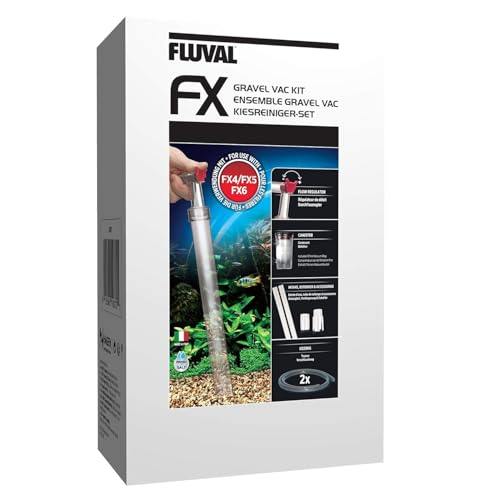
Fluval Aquarium Cleaning Kit Set
One purchase covers a scraper and brushes mounted on a flexible handle, which suits someone setting up a first tank. Bending the handle reaches around a heater or filter intake. Individual pieces are basic next to dedicated tools, and no water changer is included.
Pros
- Covers several chores in one purchase
- Flexible shaft bends around equipment
- Sensible starting point for beginners
Cons
- Each tool is basic on its own
- No water changing capability included

hygger Aquarium Cleaner 6-in-1 Set
Sections of handle screw together, so reach extends to the bottom of deep aquariums without shoulder deep immersion. Interchangeable heads cover a scraper, sponge, gravel rake and fork. Heads are light, which suits soft algae more than baked on spot algae.
Pros
- Reaches the base of deep aquariums
- Six heads cover most routine chores
- Breaks down for compact storage
Cons
- Threaded joints can work loose in use
- Heads are too light for hard algae

Kordon Fish Net for Aquariums
Fine soft mesh lifts uneaten food, plant trimmings and shed leaves before they break down into nitrate. Softer weave also matters when a fish has to be moved, since coarse netting catches on fins. Several sizes exist, and the smallest handles are short.
Pros
- Fine mesh is gentler on trailing fins
- Clears floating debris before it decays
- Low cost item most kits leave out
Cons
- Does no cleaning on its own
- Short handles on the smaller sizes
How to choose
What goes in a basic aquarium cleaning kit Four items cover almost every routine job: something to move water, something to lift waste from substrate, something to scrub glass and a net. Everything else is refinement. Keep all of it separate from household cleaning gear, because soap residue is difficult to rinse away and harms fish. Rinsing tools in dechlorinated water and drying them fully before storage prevents cross contamination between tanks.
Gravel vacuum vs faucet water changer A siphon vacuum is cheap, needs no plumbing and works anywhere, which is why almost every keeper owns one. Its limit is the bucket, and a 40 gallon tank means several trips. Faucet systems like the Python drain and refill through a single hose, at the cost of needing a threaded tap nearby. Anyone changing more than about five gallons weekly usually ends up with both.
How to scrub algae without scratching glass or acrylic Acrylic marks under pads that leave glass untouched, so always check the rating before a tool goes in. Grit causes most scratches, not the pad itself, which is why a magnet dropped into gravel should be rinsed before it goes back on the glass. Mag-Float’s floating design exists for that reason. Save handheld scrapers such as the API pad for glass tanks and stubborn spot algae.
Best cleaning tools for tall and deep tanks Standard handles run out around 18 inches, and anything deeper leaves you leaning into the water. Extendable sets such as the hygger 6-in-1 solve reach, and a longer siphon tube keeps the vacuum working at the base. Magnet cleaners handle depth well since nothing has to reach in at all. For tanks over about 24 inches deep, plan reach before buying anything else.
How they stack up
| # | Model | Type | Best for | Score | Price |
|---|---|---|---|---|---|
| 1 | Python No Spill Clean and Fill Aquarium Maintenance System | Faucet driven water changer | Best overall | 9.4 | Check price |
| 2 | Aqueon Siphon Vacuum Aquarium Gravel Cleaner | Siphon gravel vacuum | Best value gravel cleaner | 9.2 | Check price |
| 3 | Mag-Float Floating Aquarium Cleaner | Magnetic algae scrubber | Best glass scrubber | 9.0 | Check price |
| 4 | API Algae Scraper Pad for Glass Aquariums | Handheld scraper pad | Best for stubborn algae | 8.8 | Check price |
| 5 | Fluval Aquarium Cleaning Kit Set | Multi tool kit | Best starter kit | 8.6 | Check price |
| 6 | hygger Aquarium Cleaner 6-in-1 Set | Six piece tool set | Best for tall tanks | 8.3 | Check price |
| 7 | Kordon Fish Net for Aquariums | Aquarium net | Best for surface debris | 8.0 | Check price |
Good to know
How often should I clean my aquarium?
A partial water change with a gravel vacuum every one to two weeks suits most tanks, with glass wiped whenever algae appears. Stocking level, tank size and filtration all shift that interval.
Do I need to remove fish while cleaning?
Usually not. Gravel vacuuming and glass scrubbing happen with fish in the tank. Netting them out adds stress and is only worth it for a full teardown.
Can I use these tools on an acrylic tank?
Only the ones rated acrylic safe. Acrylic scratches far more easily than glass, so choose soft pads and acrylic specific magnets, and keep metal blades away entirely.
What is the easiest way to do a water change?
A faucet connected system like the Python drains and refills without buckets. For tanks under about 20 gallons, a siphon into a bucket stays quicker to set up and pack away.
How do I get algae off the glass without scratching it?
Use a magnet cleaner or a pad rated for your tank material, and keep grit away from the scrubbing face. Trapped gravel causes nearly every scratch owners report.
Should I clean the filter on the same day?
Rinse filter media in water siphoned out during the change, never tap water. Avoid deep cleaning the filter and the substrate in the same week, since both hold beneficial bacteria.
Why is my tank cloudy after cleaning?
Disturbed substrate or a bacterial bloom following over cleaning explains most cases. It clears on its own within days, and vacuuming a section at a time prevents a repeat.
Are all in one aquarium cleaning kits worth it?
For a first tank, yes. Kits like the Fluval set cover routine chores cheaply. Most keepers later add a dedicated water changer and a good magnet cleaner as tanks get larger.
Can I use a gravel vacuum on sand?
Yes, holding the tube an inch above the surface so waste lifts while sand drops back. Pushing the tube into sand pulls the substrate straight into the bucket.
The bottom line
Python No Spill Clean and Fill earns the top spot because it removes the heaviest part of tank maintenance, and the gap widens as tanks get bigger. Pair it with the Aqueon Siphon Vacuum for substrate work in smaller tanks. Add a Mag-Float sized to your glass, and the weekly routine drops to a few minutes.


