Aquarium Tanks Sized Right for Your Fish and Your Room
Fluval Flex 15 Gallon Aquarium Kit is the most complete starter aquarium, arriving with rear chamber filtration and a usable LED. Coralife LED BioCube 32 suits anyone heading toward corals. Aqueon Standard Glass Aquarium 20 Gallon fits keepers who prefer choosing every component.
Fluval Flex 15 Gallon Aquarium Kit is where most first time keepers should look, since filtration and lighting arrive already integrated. Coralife LED BioCube 32 is the sensible base for a reef. Anyone who would rather pick their own filter and light should start with the Aqueon Standard Glass Aquarium 20 Gallon.
Tank shopping misleads because the smallest aquariums are marketed at beginners while being the hardest to keep stable. Bundled kits also vary enormously in whether the filter and light survive the first year. We compared build materials, filtration layouts, lighting specifications and footprints, alongside owner reports on water stability, maintenance access and which components get replaced first.
What we recommend
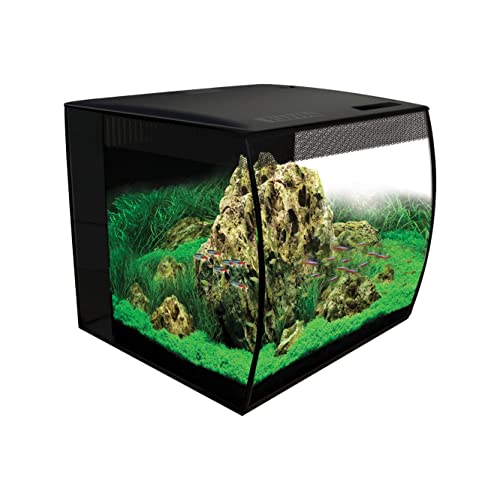
Fluval Flex 15 Gallon Aquarium Kit
Curved front glass and a hidden rear chamber make this read as a finished aquascape rather than a starter tank with gear bolted on. Three stage filtration sits behind the back wall, and the bundled LED handles low light plants. Chamber space is tight, so extra media or a small skimmer is a squeeze.
Pros
- Filtration hidden behind the rear wall
- LED grows anubias and java fern
- Looks finished without added equipment
Cons
- Rear chamber limits media upgrades
- Curved glass distorts at sharp viewing angles

Coralife LED BioCube 32
Rear sump chambers accept a protein skimmer, and the LED array covers the spectrum soft corals need without an upgrade. Thirty two gallons buffers the parameter swings that end smaller marine tanks. Front to back depth is generous, which makes a rated stand and a plan for reaching the back essential.
Pros
- Rear chamber fits a protein skimmer
- Volume buffers marine parameter swings
- Lighting suits soft corals as supplied
Cons
- Needs a stand rated for the filled weight
- Deep footprint makes the rear glass awkward

Aqueon Standard Glass Aquarium 20 Gallon
A silicone sealed glass box with nothing attached, which is exactly what experienced keepers want. Every component then gets chosen on merit rather than inherited. The long configuration gives community fish a proper swimming footprint while staying easy to place.
Pros
- Every component chosen on merit
- Long version favours active swimmers
- Standard dimensions fit common stands and lids
Cons
- Filter, heater and light all bought separately
- Plastic trim looks plainer than rimless glass
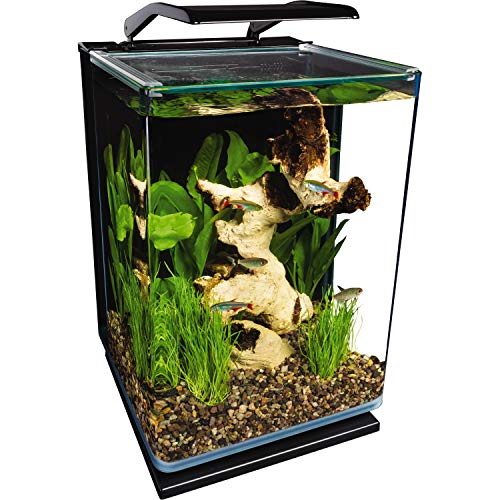
Marineland Portrait Glass LED Aquarium Kit
A vertical footprint claims very little desk or shelf width while still holding a workable volume. Rear filtration stays hidden and daylight plus moonlight modes are built in. Height comes at the cost of surface area, so gas exchange favours a small stocking rather than an active community.
Pros
- Very small desk footprint
- Rimless front glass looks clean
- Integrated filtration runs quietly
Cons
- Five gallons swings parameters quickly
- Tall shape limits surface gas exchange

Tetra 20 Gallon Complete Aquarium Kit
Tank, hood, filter, heater and accessories arrive together, so setup happens in one afternoon without a second shopping trip. Twenty gallons is a forgiving volume while you learn. Bundled filter and heater are entry level, and keepers commonly replace both inside a year.
Pros
- Everything needed arrives in one box
- Twenty gallons is forgiving for beginners
- Hang on back filter is easy to service
Cons
- Filter and heater are entry level
- Hood lighting is too weak for most plants

Landen 45P Rimless Low Iron Aquarium
Low iron glass removes the green tint standard glass shows at the edges, and polished mitred seams keep the view uninterrupted. Nothing else is included, so lighting, filtration and a level stand all need sourcing. Rimless construction is unforgiving of an uneven surface, making a mat and a spirit level mandatory.
Pros
- Low iron glass shows true plant colour
- No frame interrupting the view
- Clean silicone work at the seams
Cons
- No filtration or lighting included
- Rimless glass demands a perfectly level top

Fluval Spec V Aquarium Kit
Output from the bundled LED is genuinely strong enough for carpeting plants at this depth, which is rare in a nano kit. An aluminium case and etched glass give it a solid feel on a desk. Pump outflow runs strong for the volume, so many keepers fit a spray bar or baffle.
Pros
- Lighting supports demanding nano plants
- Aluminium and glass build feels solid
- Fits a desk or side table easily
Cons
- Outflow is strong for small fish
- Small volume shifts parameters quickly
How to choose
Why bigger aquariums are easier, not harder Buying the smallest tank on the shelf is the most common beginner mistake. Greater water volume dilutes waste, holds temperature steady and buys time to notice a problem. A five gallon nano can turn dangerous within a day when something dies unseen, while twenty gallons absorbs the same event. Where space allows, twenty gallons is a far kinder starting point.
All in one kit or separate components? Kits get a tank running quickly and hide filtration in a rear chamber, which suits people who want an aquarium rather than a project. You also inherit whatever filter and light the manufacturer chose, and upgrading inside a fixed chamber gets awkward. A bare tank costs more once equipment is added, but every component then matches your stocking plan.
Which aquarium tank suits a planted setup? Lighting separates kit tanks more than anything else. A basic hood LED handles fish and hardscape but will not sustain plants beyond anubias and java fern. Carpeting and stem species need considerably more output, and carbon dioxide raises the bar further. Deciding early saves buying a light twice, since that is the most common first year purchase.
Planning the stand, the floor and maintenance access Water weighs about a kilogram per litre before substrate and rock, so a modest 20 gallon setup passes 100 kilograms. That needs a rated aquarium stand on a level surface, not a bookshelf. Leave clearance above for lifting equipment out and behind for cables and hoses. A tank in an awkward corner gets maintained less often.
Compared at a glance
| # | Model | Volume | Best for | Score | Price |
|---|---|---|---|---|---|
| 1 | Fluval Flex 15 Gallon Aquarium Kit | 15 gallons, around 57 litres | Best overall | 9.4 | Check price |
| 2 | Coralife LED BioCube 32 | 32 gallons, around 121 litres | Best for reef setups | 9.2 | Check price |
| 3 | Aqueon Standard Glass Aquarium 20 Gallon | 20 gallons, around 76 litres | Best value | 9.0 | Check price |
| 4 | Marineland Portrait Glass LED Aquarium Kit | Around 5 gallons, 19 litres | Best for small spaces | 8.8 | Check price |
| 5 | Tetra 20 Gallon Complete Aquarium Kit | 20 gallons, around 76 litres | Best starter bundle | 8.6 | Check price |
| 6 | Landen 45P Rimless Low Iron Aquarium | Around 36 litres | Best for aquascaping | 8.3 | Check price |
| 7 | Fluval Spec V Aquarium Kit | Around 5 gallons, 19 litres | Best for planted nano tanks | 8.0 | Check price |
Common questions
What size aquarium is best for a beginner?
Around twenty gallons. Parameters stay stable while you learn, the footprint fits most rooms, and equipment at that size is widely available. Nano tanks look approachable and demand more precision.
Glass or acrylic aquarium tanks?
Glass resists scratching and stays clear for decades, which is why most keepers choose it. Acrylic is lighter and more impact resistant, useful at large sizes, but it marks during routine cleaning and can yellow with age.
Do I need to cycle a new aquarium?
Yes, and skipping it causes most early fish losses. Cycling establishes bacteria that convert ammonia to nitrite and then nitrate, typically over several weeks. A test kit tracks that process rather than leaving you guessing.
Can I put an aquarium on any furniture?
Only if it carries the weight and sits level. A filled 20 gallon setup passes 100 kilograms concentrated on a small footprint. Purpose built stands are designed for that load and for the water that lands on them.
How often do aquariums need water changes?
Weekly changes of roughly a quarter suit most freshwater setups, adjusted for stocking and test results. Heavily stocked tanks need more, lightly stocked planted tanks often less. Consistency beats the exact percentage.
Are all in one aquarium kits good for plants?
It depends entirely on the light. Fluval Spec V and Flex both grow plants, while hood lit bundles such as the Tetra kit need a light upgrade. Check the output figure before assuming a kit is planted ready.
What do I need for a saltwater tank?
Beyond the tank, plan on a protein skimmer or generous water changes, a refractometer, live rock, a powerhead and reef appropriate lighting if corals are the goal. Coralife LED BioCube 32 covers most of that structurally.
How long does an aquarium tank last?
Silicone seals on a well maintained glass tank commonly pass a decade. Cloudy or peeling silicone at the seams signals ageing. Moving a filled tank or setting it on an uneven top shortens that life considerably.
Is a rimless aquarium harder to look after?
Not to maintain, but harder to install. Without a frame, load spreads through the base pane, so a perfectly level surface and a foam mat are required rather than optional.
The bottom line
Fluval Flex 15 Gallon Aquarium Kit is the aquarium to recommend to most people starting out, because integrated filtration and a usable light remove the guesswork. Choose Coralife LED BioCube 32 when corals are the goal. Anyone who would rather assemble their own setup should take the Aqueon Standard Glass 20 Gallon and spend the difference on better equipment.