Top Smart Archive Storage Solutions for 2025
The Synology DiskStation DS923+ stands out as the best overall smart archive storage for its balance of performance, scalability, and intelligent data management. It suits small businesses and power users who need reliable backups and remote access. Its main limitation is the higher upfront cost compared to basic external drives.
Archiving important files requires more than just a hard drive; it demands smart features like automated backups, data integrity checks, and easy retrieval. This roundup compares leading smart archive storage solutions that balance capacity, security, and connectivity.
We analyzed specifications and owner feedback to highlight the best options for personal, home office, and small business archival needs.
What to look for
The top picks, ranked

Synology DiskStation DS923+
A 4-bay NAS that offers robust data protection, expandable storage, and a suite of smart applications ideal for archiving.
Pros
- Excellent file management and backup tools
- Hardware encryption engine
- Active data integrity checks
Cons
- No 10GbE port out of the box
- Premium price

Western Digital My Cloud EX2 Ultra
A 2-bay personal cloud that offers reliable archiving with RAID protection and easy remote access at a lower price.
Pros
- Affordable for a NAS
- Simple setup and mobile app
- Supports RAID 1 for data mirroring
Cons
- Limited processing power for heavy tasks
- No built-in encryption
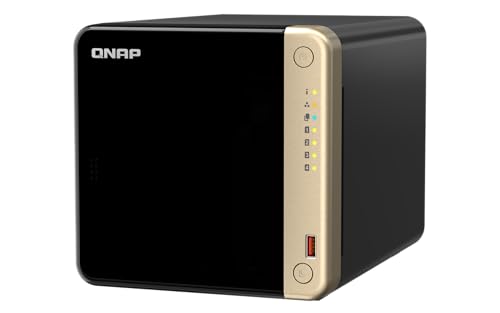
QNAP TS-464
A 4-bay NAS with PCIe expansion slot and 2.5GbE, ideal for archiving large media libraries while providing real-time transcoding.
Pros
- 2.5GbE networking
- PCIe slot for expansion
- Excellent multimedia support
Cons
- Learning curve for QTS software
- No ECC memory

TerraMaster F4-423
A 4-bay NAS that offers large storage capacity and 2.5GbE ports at a competitive price, suitable for bulk archiving.
Pros
- High capacity per dollar
- Dual 2.5GbE ports
- Good app ecosystem
Cons
- Less polished OS than Synology or QNAP
- Power consumption higher than some rivals

Asustor Drivestor 4 AS1104T
A user-friendly 4-bay NAS designed for plug-and-play archiving with a simple interface and ample storage.
Pros
- Very easy installation
- Mobile app for remote access
- Quiet operation
Cons
- No hardware encryption
- Limited for heavy multitasking

WD My Book Duo (24TB)
A dual-drive external desktop storage that offers RAID modes and hardware encryption for simple archival needs.
Pros
- Large capacity in one unit
- Hardware encryption
- Simple setup
Cons
- Not a network device
- Requires manual backup scheduling

Buffalo LinkStation 520
A 2-bay NAS known for its sturdy build and dependable operation, suitable for archival storage that requires minimal attention.
Pros
- High durability and low failure rate
- Quiet and energy efficient
- Good for basic archiving
Cons
- Limited app ecosystem
- No hardware encryption
How they compare
| # | Model | Drive Bays | Best for | Score | Price |
|---|---|---|---|---|---|
| 1 | Synology DiskStation DS923+ | 4 (expandable to 9) | Overall best smart archive storage | 9.4 | Check price |
| 2 | Western Digital My Cloud EX2 Ultra | 2 | Best for budget-conscious home archives | 8.7 | Check price |
| 3 | QNAP TS-464 | 4 | Best for multimedia archiving and Plex | 9.0 | Check price |
| 4 | TerraMaster F4-423 | 4 | Best for high storage capacity on a budget | 8.5 | Check price |
| 5 | Asustor Drivestor 4 AS1104T | 4 | Best for easy setup and basic archiving | 8.0 | Check price |
| 6 | WD My Book Duo (24TB) | 24TB (2x12TB) | Best for plug-and-play desktop archiving | 8.2 | Check price |
| 7 | Buffalo LinkStation 520 | 2 | Best for long-term durability and reliability | 8.3 | Check price |
Frequently asked questions
What is the difference between a NAS and an external drive?
A NAS (Network Attached Storage) connects to your network and can be accessed by multiple devices, offering features like remote access and automated backups. An external drive connects directly via USB and is typically used by one device at a time.
How much storage do I need for archiving?
It depends on what you are archiving. Photos and documents take less space, while video projects can be large. As a baseline, consider your current data volume and plan for at least double that for future growth.
What is RAID and why is it important?
RAID (Redundant Array of Independent Disks) combines multiple drives to improve performance and provide redundancy. For archiving, RAID 1 mirrors data on two drives, so if one fails, your data is safe. RAID 5 offers more efficient use of space with parity.
Can I access my archive remotely?
Many NAS devices offer remote access via mobile apps or web interfaces. However, you may need to configure port forwarding or use a cloud relay service. Some devices also support VPN for secure remote access.
What is the best RAID configuration for archiving?
For archiving, RAID 1 is a simple, safe choice because it duplicates data. If you have more drives, RAID 5 or RAID 6 provide a balance between capacity and redundancy, but they require more drives.
Are there any subscription fees for using a NAS?
Most NAS devices come with free operating systems and basic apps. However, some advanced features like cloud backup or security software may require subscriptions. Always check the included features.
How do I ensure my data is backed up offsite?
You can use built-in backup tools to sync to another NAS or to cloud services like Amazon S3 or Backblaze. Some NAS devices also support rsync for remote backups. Regular offsite backups are essential for disaster recovery.
Can I use a NAS for media streaming?
Yes, many NAS devices support media servers like Plex, allowing you to stream archived movies and music to smart TVs and mobile devices. Look for models with strong CPUs for transcoding.
The verdict
For most users needing smart archive storage, the Synology DS923+ is the best choice due to its reliable software, data protection features, and expandability. If you are on a tight budget, the WD My Cloud EX2 Ultra offers a solid balance of features and cost. For media-heavy archives, the QNAP TS-464 is excellent. But if you want plug-and-play simplicity without networking, the WD My Book Duo is a great external option.


