How to Choose an Ash Vacuum for Fireplace and Stove Cleanup
PowerSmith PAVC101 leads this comparison with a steel tank and multi-stage filter built for daily fireplace and wood stove ash. Snow Joe ASV1 matches much of that performance in a lighter poly tank at a lower cost. US Stove FSAVAC1 suits pellet stove owners best, thanks to its heat-rated hose.
PowerSmith PAVC101 tops this list for steel construction and multi-stage filtration built for daily ash duty. Snow Joe ASV1 trails closely, trading a poly tank for a lower price. Pellet stove owners get a dedicated pick in the US Stove FSAVAC1, built around a heat-rated hose.
Cool ash still carries enough heat to warp plastic or ignite trapped dust near a motor. Fine particulate also slips past a standard household filter far more easily than carpet debris. We compared tank material, filtration stages, hose heat rating, and stated capacity across seven models, then weighed owner reports of clogged filters and how often each tank needs emptying.
The shortlist, ranked
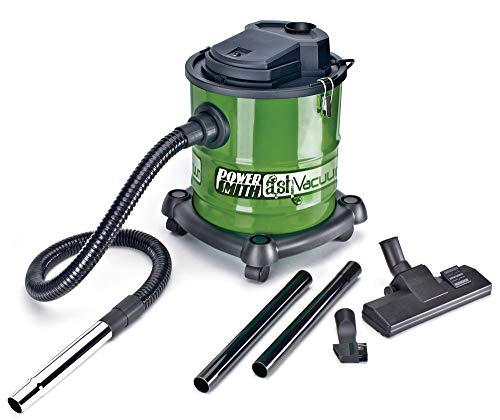
PowerSmith PAVC101 Ash Vacuum
A powder-coated steel tank shrugs off heat that would warp plastic housings on cheaper models. Inside, a 1200 watt motor pulls ash through a multi-stage filter before air reaches the exhaust. PowerSmith rates the unit for cool to warm ash only, so a full cool-down before use still matters.
Pros
- Steel tank tolerates warm ash without warping
- Multi-stage filter traps fine dust before exhaust
- Metal extension wand reaches deep into fireboxes
Cons
- Heavier to carry than plastic-tank models
- Filter needs manual tapping every few uses

Snow Joe ASV1 Ash Vac
Reinforced poly replaces the steel drum here, cutting several pounds without shrinking tank capacity. A fine mesh screen backed by a HEPA-style filter keeps ash out of the exhaust air. Metal intake tubing resists melting even when ash is still slightly warm.
Pros
- Lighter than steel-tank competitors at this capacity
- Dual filter stage limits fine dust escape
- Metal intake tube handles warm ash safely
Cons
- Poly tank feels less rugged under daily use
- No built-in storage for hose attachments
US Stove FSAVAC1 Ash Vacuum
A heat-resistant hose rated higher than most rivals makes this suited to pellet stove hoppers right after a burn. Steel tank construction and a reusable filter match typical fireplace-grade vacuums. Owners get a shoulder strap for easier trips between the stove and a shed.
Pros
- Heat-rated hose suits pellet stove hoppers
- Steel tank holds up to frequent use
- Shoulder strap eases carrying to storage
Cons
- Replacement filters cost more than generic brands
- Hose runs shorter than some fireplace-focused models

Vacmaster Ash Vacuum
Vacmaster fits the largest tank in this lineup, a 5 gallon steel drum that empties less often during a full firebox cleanout. Motor and filter design carry over from Vacmaster’s shop vacuum line, already proven against fine drywall dust. Swap out the ash canister and the unit works as a basic wet dry vacuum.
Pros
- Largest tank capacity reduces mid-job emptying
- Filter design proven on fine construction dust
- Doubles as a wet dry vacuum without ash canister
Cons
- Bulkier to store than smaller tank models
- Full tank adds noticeable weight when carrying
Ivation Ash Vacuum
Ivation trims both tank size and overall weight, aimed at charcoal grills and small wood stoves rather than large fireboxes. Its shorter hose still reaches most grill bowls and firepit basins without extra bulk. Plastic tank construction means cool-down time still matters before use.
Pros
- Compact size stores easily in a garage corner
- Lighter weight suits quick grill cleanups
- Shorter hose still reaches typical firepit basins
Cons
- Plastic tank tolerates less heat than steel
- Smaller capacity fills faster on large fireboxes
Costway Ash Vacuum Cleaner
A 4.8 gallon tank pairs with a single-stage fine mesh filter, skipping the HEPA-style layer found on pricier models. That trade-off keeps the price down while still handling routine fireplace and wood stove ash. Owners report emptying it less often than smaller budget models, thanks to the larger tank.
Pros
- Large tank needs less frequent emptying
- Lower cost than multi-stage filter competitors
- Handles routine fireplace and stove ash well
Cons
- Single-stage filter lets more fine dust through
- Motor runs louder than higher-tier models
WEN 3-Gallon Ash Vacuum
At 3 gallons, WEN’s tank is the smallest here, sized for a household that lights a fireplace a few times a month. A reusable filter and 6 foot hose cover the basics without extra accessories. Frequent wood stove users will empty this more often than the larger tank options allow.
Pros
- Compact size suits infrequent fireplace use
- Lower price fits an occasional-use budget
- Reusable filter avoids ongoing replacement cost
Cons
- Smallest tank fills quickly during heavy cleanout
- Motor lacks the power of larger models
The lineup, side by side
| # | Model | Tank capacity | Best for | Score | Price |
|---|---|---|---|---|---|
| 1 | PowerSmith PAVC101 Ash Vacuum | 4 gallons | Best overall | 9.4 | Check price |
| 2 | Snow Joe ASV1 Ash Vac | 4 gallons | Best value | 9.1 | Check price |
| 3 | US Stove FSAVAC1 Ash Vacuum | 4 gallons | Best for wood and pellet stoves | 8.9 | Check price |
| 4 | Vacmaster Ash Vacuum | 5 gallons | Best for large cleanouts | 8.6 | Check price |
| 5 | Ivation Ash Vacuum | 4 gallons | Best for grills and small stoves | 8.4 | Check price |
| 6 | Costway Ash Vacuum Cleaner | 4.8 gallons | Best budget | 8.2 | Check price |
| 7 | WEN 3-Gallon Ash Vacuum | 3 gallons | Best for occasional use | 8.0 | Check price |
What to look for
What to look for in an ash vacuum Tank material sets the ceiling for how warm ash can safely sit inside. Steel tolerates more heat than plastic, though it adds weight to the unit. Filtration stage count matters just as much, since fine ash slips past a single layer more easily than carpet dust. Motor power between 1000 and 1200 watts covers most household needs, so extra wattage rarely changes results.
Why a regular vacuum can’t handle ash Standard vacuum filters are sized for larger dust and debris, not the fine particulate in cold wood ash. Ash slips through a household filter and reaches the motor, where heat from a hidden ember can ignite trapped dust. Ash vacuums use tighter mesh or HEPA-style layers built for that particle size. A metal or heat-rated hose also resists melting near warm ash.
Matching tank size to how often you burn Daily wood stove users empty a 3 gallon tank constantly, so a 4.8 or 5 gallon tank saves real time over a season. Occasional fireplace users rarely fill even a small tank in one sitting, making a compact model like the WEN 3-Gallon practical. Grill owners need neither steel bulk nor a big tank, since charcoal ash volume stays low per cleanout. Pellet stove owners should prioritize a heat-rated hose over sheer capacity.
How long ash needs to cool before vacuuming Wood ash can hold enough heat to reignite for several days after a fire, even when the surface looks cold. Most ash vacuums are rated for cool to warm ash only, not active embers, regardless of tank material. Stir the ash bed and check for warm spots before vacuuming, and avoid vacuuming within 24 hours of a fire in a working stove. Waiting an extra day protects both the filter and the motor.
Frequently asked questions
Can you vacuum hot ash with a regular household vacuum?
No, standard filters let fine ash reach the motor, where lingering heat can ignite trapped dust. Use a vacuum built with a metal or heat-rated hose and a fine particulate filter instead.
How long should ash cool before vacuuming it up?
Wait at least 24 hours after the last fire, longer for a heavily used wood stove. Stir the ash bed first and check for warm pockets, since surface ash can look cool while embers persist underneath.
What is the difference between an ash vacuum and a shop vacuum?
Ash vacuums add a fine particulate or HEPA-style filter stage, and some models add a metal or heat-rated hose. A standard shop vacuum filter targets sawdust and debris, not the fine particle size in cold wood ash.
Which ash vacuum works best for a pellet stove?
The US Stove FSAVAC1 targets pellet stoves directly, with a heat-rated hose sized for reaching into a hopper right after a burn. Its steel tank and reusable filter match what most pellet stove owners already clean weekly.
Do ash vacuums work on fireplaces, wood stoves, and grills?
Yes, though tank size and hose length matter more depending on the source. Grills and firepits need less capacity, so a compact model like the Ivation suits them better than a large 5 gallon tank built for wood stoves.
How often should an ash vacuum filter be cleaned or replaced?
Tap or rinse a reusable filter after every few uses, since packed ash reduces suction fast. Replace it once cleaning no longer restores suction, typically once or twice a season for regular wood stove users.
Is a metal tank or a plastic tank better for ash?
Steel tolerates more residual heat without warping, which matters if ash is vacuumed slightly warm. Plastic tanks, like the one on the Ivation, stay lighter and work fine for fully cooled ash from grills.
Can an ash vacuum double as a regular shop vacuum?
Some can. The Vacmaster swaps out its ash canister to work as a basic wet dry vacuum, though dedicated ash vacuums generally stay set up for ash duty rather than switching roles often.
How much ash vacuum capacity does a wood stove need?
Daily burners do best with a 4.8 to 5 gallon tank to avoid emptying mid-cleanout. Occasional users, burning a few times a month, rarely need more than a 3 or 4 gallon tank.
Our take
PowerSmith PAVC101 remains the strongest all-around pick for daily fireplace and wood stove duty, backed by a steel tank that shrugs off warmth. Snow Joe ASV1 delivers close performance in a lighter build for less money. Pellet stove owners get the better match in the US Stove FSAVAC1, built around a heat-rated hose.