Which Attic Fan Actually Clears Summer Heat?
QuietCool’s AFG PRO-2.5 clears heat fastest for attics near 2500 square feet, iLIVING’s ILG8SF14V solar fan skips wiring entirely, and Broan-NuTone’s 355 fits smaller roofs on a tighter budget. Match CFM to attic square footage first, then decide between hardwired and solar power based on electrical access.
QuietCool’s AFG PRO-2.5 handles attics up to about 2500 square feet and needs no roof cutting, making it a strong pick for homeowners with an existing gable vent. Homes without one still get solid airflow from iLIVING’s solar-powered ILG8SF14V, though output dips on overcast days.
CFM requirements scale with attic square footage and roof pitch, not brand name, so specs were checked against ventilation sizing guidelines alongside owner feedback on installation and thermostat reliability.
The top picks, ranked
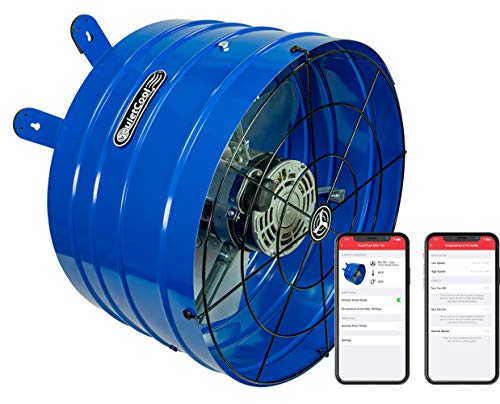
QuietCool AFG PRO-2.5 Gable Attic Fan
Airflow rated at 2500 CFM covers attics up to roughly 2500 square feet in most climates. Mounting through an existing gable vent means no roof penetration or reshingling. Once attic temperature crosses the thermostat’s set point, the motor switches on automatically without an app or manual switch.
Pros
- Moves enough air for larger attics
- Skips roof penetration entirely
- Thermostat runs the fan hands-free
Cons
- Needs an existing gable vent opening
- Wiring calls for a licensed electrician
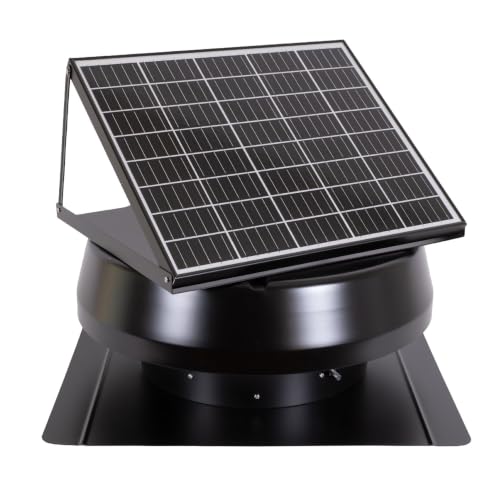
iLIVING ILG8SF14V Solar Powered Roof Attic Fan
A built-in solar panel powers this roof-mounted fan without running new electrical lines. Battery backup keeps the motor spinning through outages and for a few hours after sunset. Both a thermostat and humidistat trigger the fan, so it responds to heat and dampness alike.
Pros
- Costs nothing in electricity to run
- Battery keeps it working during outages
- Humidistat helps limit attic moisture
Cons
- Output falls on cloudy or short winter days
- Lower CFM than the hardwired QuietCool

Air Vent 53422 Power Gable Mount Attic Fan
Moisture triggers this fan just as easily as heat, thanks to a paired thermostat and humidistat. Mold risk drops in humid regions where mild, damp days would otherwise go unaddressed. Steel housing with a built-in bird screen keeps the gable opening clear of pests.
Pros
- Responds to humidity, not just heat
- Bird screen blocks pests at the vent
- Steel housing holds up outdoors
Cons
- CFM limits it to smaller or mid-size attics
- Humidistat needs periodic calibration

Master Flow PR1C Power Roof Mount Attic Ventilator
Homes without a gable vent can still get powered ventilation through this roof-deck mount. Galvanized steel resists rust better than the plastic domes on cheaper units. Thermostat range spans 80 to 140 degrees Fahrenheit, giving more control than fixed-setting fans.
Pros
- Fits roofs with no gable vent option
- Galvanized steel resists corrosion
- Wide adjustable thermostat range
Cons
- Roof penetration adds installation work
- Runs louder than comparable gable models

Broan-NuTone 355 Gable Mount Attic Ventilator
Attics under 1500 square feet get straightforward coverage from this gable fan. Its thermostat switches the motor on near 90 degrees Fahrenheit with no app or manual dial involved. Many owners use it as a direct swap for an aging gable fan of the same size.
Pros
- Costs less than the premium models here
- Drops in as a replacement for older units
- Runs automatically with no setup
Cons
- CFM falls short in larger attics
- No manual override switch

Natural Light 36-Watt Solar Attic Fan
A 36-watt solar panel, larger than most competing units, keeps airflow strong even in partial shade. Flashing kits for both shingle and tile roofs ship in the box, covering more roof types out of the gate. Without a thermostat or battery, the fan simply runs whenever sunlight reaches the panel.
Pros
- Bigger solar panel than typical rivals
- Ships with shingle and tile flashing
- Highest CFM among the solar options here
Cons
- No thermostat for automatic shutoff
- Stops the moment sunlight disappears

Broan-NuTone 12SGKR Solar Roof Mount Attic Fan
Smaller homes and additions up to around 1000 square feet suit this compact solar fan best. A curb-mount base matches standard roof jack dimensions, so flashing follows a familiar process. Battery storage lets a manual switch run the fan outside of direct sunlight.
Pros
- Sized right for smaller attics
- Battery extends run time past daylight
- Standard roof jack fits common flashing
Cons
- Lowest CFM in this lineup
- Not built for attics over 1000 square feet
The lineup, side by side
| # | Model | Airflow | Best for | Score | Price |
|---|---|---|---|---|---|
| 1 | QuietCool AFG PRO-2.5 Gable Attic Fan | 2500 CFM | Best overall | 9.3 | Check price |
| 2 | iLIVING ILG8SF14V Solar Powered Roof Attic Fan | 1400 CFM | Best solar-powered | 9.0 | Check price |
| 3 | Air Vent 53422 Power Gable Mount Attic Fan | 1020 CFM | Best for humid climates | 8.7 | Check price |
| 4 | Master Flow PR1C Power Roof Mount Attic Ventilator | 1200 CFM | Best for roofs without gable vents | 8.5 | Check price |
| 5 | Broan-NuTone 355 Gable Mount Attic Ventilator | 1050 CFM | Best budget option | 8.3 | Check price |
| 6 | Natural Light 36-Watt Solar Attic Fan | 1600 CFM | Best high-output solar | 8.1 | Check price |
| 7 | Broan-NuTone 12SGKR Solar Roof Mount Attic Fan | 800 CFM | Best for small attics | 8.0 | Check price |
Before you buy
What to look for in an attic fan Airflow, measured in CFM, has to match attic square footage and roof pitch, or the fan runs constantly without clearing heat. Power source shapes the tradeoffs too: hardwired units work in any weather, while solar fans depend on daylight. Existing vent openings decide the mounting style, gable or roof curb, more often than personal preference.
Sizing airflow to your attic’s square footage A common sizing rule calls for roughly 1 CFM per square foot of attic floor space. Steeper pitches and darker shingles absorb more heat, pushing that number higher still. QuietCool’s AFG PRO-2.5 and other high-CFM units suit attics near or above 2000 square feet.
Solar or hardwired: which fits your home Electrician costs disappear with solar fans like the iLIVING ILG8SF14V, useful where running new wiring is impractical. Hardwired fans keep spinning on cloudy days and typically move more air per unit. Homes in consistently sunny regions get the most value out of solar power specifically.
Attic fans for humid or coastal climates Standard thermostats react to heat alone, missing moisture that builds on mild, damp days. Humidistat-equipped fans such as the Air Vent 53422 activate based on humidity, cutting mold risk in the process. Coastal areas and regions with heavy rainfall benefit most from that added sensor.
Questions worth asking
How many CFM does an attic fan need for a typical house?
Attic ventilation guidelines call for about 1 CFM per square foot of attic floor space, adjusted upward for steep roof pitches or dark shingles that trap more heat.
Are solar attic fans powerful enough for a full-size attic?
Solar models generally move less air than hardwired fans, so they suit small to mid-size attics best unless paired with a larger panel like the Natural Light 36-Watt unit.
Do attic fans actually lower cooling bills in summer?
Cutting attic temperature by 20 to 30 degrees Fahrenheit eases the load on central air conditioning, though actual savings depend on insulation and local climate.
Gable mount vs roof mount, which attic fan design is better?
Gable fans install through an existing wall vent with no roof cutting, while roof-mount fans work on homes without a gable vent but require cutting into the deck.
Can an attic fan pull conditioned air from the rooms below?
An oversized or unbalanced fan can draw air from living spaces, so pairing it with enough soffit intake venting prevents that backdraft.
Is professional installation required for an attic fan?
Hardwired models usually call for a licensed electrician, while solar fans with no wiring suit most DIY installers.
What temperature should an attic fan thermostat trigger at?
Adjustable thermostats typically range from 80 to 140 degrees Fahrenheit, with most owners setting activation near 100 to 110 degrees.
Should an attic fan run in winter?
Most owners disable attic fans once temperatures drop, since venting heated air wastes energy, though humidistat models may still run for moisture control.
What size attic fan works for a small garage attic or addition?
Compact units like the Broan-NuTone 12SGKR cover roughly 1000 square feet, a fit for garages, additions, and smaller single-story homes.
Final word
QuietCool’s AFG PRO-2.5 fits most homeowners with an existing gable vent and an attic over 1500 square feet, thanks to its 2500 CFM output and hands-free thermostat. Anyone without electrical access to the attic should choose the iLIVING ILG8SF14V instead, accepting lower airflow for zero wiring. Homes under 1000 square feet of attic space are better served by the compact Broan-NuTone 12SGKR, since the larger units would run nonstop without the space to justify it.