Choosing an Audio Interface for Home Recording Setups
Focusrite Scarlett 2i2 4th Gen fits most home studios with clean Air-mode preamps and two combo inputs. Universal Audio Volt 2 brings vintage-style saturation for warmer vocal takes. Zoom PodTrak P4 suits podcasters who want onboard mixing and SD backup without a laptop running the session.
Focusrite Scarlett 2i2 4th Gen leads this list for solo and duo recording, pairing two low-noise preamps with USB-C power. Gain tops out at 69dB, enough headroom for most dynamic mics. Keyboard players may miss a dedicated MIDI port, since this model skips one entirely.
Preamp gain, driver latency and simultaneous input count rarely show up clearly on a retail spec sheet. We compared published gain ranges, sample rates and connector types against owner feedback on driver stability across current listings.
The top picks, ranked
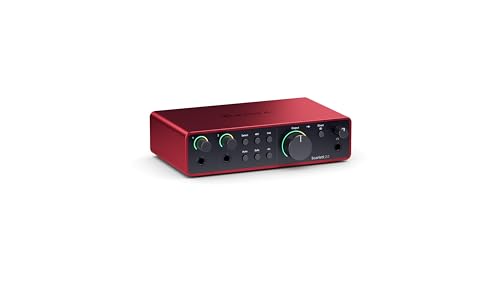
Focusrite Scarlett 2i2 4th Gen
Two Air-enabled combo inputs accept microphones or instruments with up to 69dB of clean gain. A USB-C connection works with Mac and Windows without separate driver installs on most machines. Automatic gain staging and clip-safe recording catch loud peaks before they ruin a take.
Pros
- Air mode brightens vocal presence on either input
- Automatic gain staging sets levels before recording starts
- Clip-safe capture protects against peaking on loud passages
Cons
- Lacks MIDI in/out for external keyboard controllers
- Two inputs cap simultaneous tracking for full bands
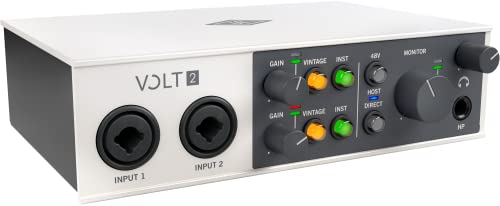
Universal Audio Volt 2
Vintage Mode applies analog-style saturation modeled after console preamps from the 1970s. Two combo inputs deliver 60dB of gain with 48V phantom power for condenser mics. Bus power over a single USB-C cable removes the need for a separate adapter.
Pros
- Vintage Mode adds analog warmth without extra plugins
- Included UAD software adds a compressor at no added cost
- Runs on bus power from one USB-C cable alone
Cons
- UAD software bundle requires creating an account first
- Routing options trail rack-mount interfaces at this price

Steinberg UR22C
Two D-PRE preamps capture audio up to 32-bit/192kHz through a single USB-C port. Built-in DSP loopback mixes streams for podcasting or live commentary without extra software. A steel chassis handles the wear of daily transport between home and studio.
Pros
- Steel housing withstands frequent transport and setup
- DSP loopback streamlines mixing for live broadcasts
- Bundled Cubase AI covers entry-level production needs
Cons
- Control software looks dated next to newer rivals
- Headphone output lacks a separate level control

Behringer UMC204HD
Midas-designed preamps on two mic inputs pair with two line inputs for four channels at once. Built-in MIDI in/out connects a keyboard controller directly, no extra interface needed. A direct monitoring dial blends input and playback signal without added latency.
Pros
- Built-in MIDI ports support keyboard controllers directly
- Four simultaneous inputs beat most rivals at this price
- Direct monitoring dial removes playback latency entirely
Cons
- USB-B cable is less common than USB-C on newer laptops
- Some Windows builds need a driver update before first use
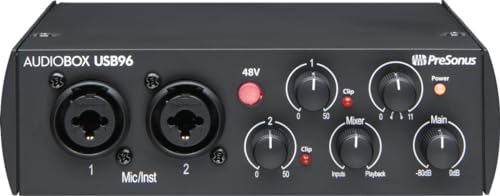
PreSonus AudioBox USB 96
Two combo inputs with Class A preamps cover a basic vocal and instrument setup at home. Studio One Artist recording software comes bundled at no added cost. A compact metal chassis slides easily into a laptop bag for travel.
Pros
- Studio One Artist bundle covers a full production workflow
- Compact metal build fits easily into a backpack
- Zero-latency monitoring built directly into the mixer knob
Cons
- 96kHz sample rate ceiling limits high-res mastering work
- USB-B connector feels dated next to USB-C competitors

Zoom PodTrak P4
Four combo mic inputs each get an individual fader, mute button and headphone monitor switch. Two phone connections through TRRS and Bluetooth bring remote guests into the mix directly. Recordings save straight to an SD card, so no computer needs to run during a session.
Pros
- Records to SD card directly, skipping a laptop entirely
- Bluetooth and phone inputs simplify remote guest calls
- Per-channel mute buttons prevent on-air mistakes
Cons
- 48kHz sample rate limits use for music production
- No standalone desktop app for advanced session control

RODE AI-1
A single combo input keeps setup minimal for solo voiceover or streaming work. An all-metal casing includes a built-in cable channel that keeps a desk tidy. High headroom lets it handle dynamic and condenser microphones without added noise.
Pros
- Single-cable design leaves minimal clutter on a desk
- High headroom suits both dynamic and condenser mics
- Metal housing resists everyday desk wear
Cons
- One input rules out any two-person duet recording
- No MIDI port or second line-level channel
How they compare
| # | Model | Inputs | Best for | Score | Price |
|---|---|---|---|---|---|
| 1 | Focusrite Scarlett 2i2 4th Gen | 2 combo XLR/TRS | Best overall | 9.4 | Check price |
| 2 | Universal Audio Volt 2 | 2 combo XLR/TRS | Best for vintage tone | 9.1 | Check price |
| 3 | Steinberg UR22C | 2 combo XLR/TRS | Best for high-res tracking | 8.8 | Check price |
| 4 | Behringer UMC204HD | 2 mic + 2 line | Best value | 8.6 | Check price |
| 5 | PreSonus AudioBox USB 96 | 2 combo XLR/TRS | Best budget | 8.4 | Check price |
| 6 | Zoom PodTrak P4 | 4 combo XLR/TRS | Best for podcasting | 8.2 | Check price |
| 7 | RODE AI-1 | 1 combo XLR/TRS | Best for single-mic simplicity | 8.0 | Check price |
What to look for
What to check before buying Input count, preamp gain and connector type decide whether an interface fits a specific setup. USB-C draws power more efficiently than USB-B and suits newer laptops with fewer ports. Mixing engineers working above 44.1kHz should also weigh sample rate closely.
Best for solo vocal or voiceover work A single or dual-input interface with a wide gain range keeps noise down with just one microphone. Auto-gain, built into the Scarlett 2i2, saves time over manually dialing in levels. Direct monitoring lets a speaker hear their own voice without software playback delay.
Best for multi-guest podcasts Four-input interfaces such as the Zoom PodTrak P4 give each guest a separate fader and mute switch. Recording to an SD card protects a session if a laptop crashes mid-episode. Shows hosting remote guests benefit from a phone or Bluetooth call-in input.
Bands and home studios that need MIDI MIDI in/out lets a keyboard or drum pad drive software instruments without an extra cable. Behringer UMC204HD includes this feature at a lower cost than most rivals. Four combined inputs on that same unit support a small band tracking guitar, bass, vocals and keys.
Questions worth asking
What is the difference between USB-C and USB-B on an audio interface?
USB-C moves more data and draws power more efficiently, useful on laptops with fewer ports. USB-B still performs reliably on budget interfaces for basic recording tasks.
How much preamp gain does a home studio actually need?
Dynamic microphones typically need 55 to 60dB of clean gain, while condenser mics need less. An interface with a lower gain ceiling can sound noisy when pushed near its limit.
Can a two-input interface record a full band?
Two inputs only capture two sources at once, so a band needs four or more combo inputs, similar to the Behringer UMC204HD.
Is a 192kHz sample rate necessary for podcasting?
Most podcast platforms compress audio well below 48kHz, so a higher sample rate mainly benefits music mixing and mastering.
Which interface works best for calling in remote podcast guests?
Zoom PodTrak P4 includes a Bluetooth input built specifically for taking remote calls into a live mix.
Do USB audio interfaces need external power?
Most current interfaces run on USB bus power alone, though some older USB-B models need a powered hub to hit a full 96kHz rate.
What does Air mode do on a Focusrite interface?
Air mode adjusts the preamp circuit to add high-frequency presence, similar to the effect of a classic Focusrite ISA console preamp.
Audio interface vs USB microphone, which suits a beginner better?
An interface adds flexibility for multiple mics and instruments down the road, while a USB mic is simpler but limits future upgrades.
Which audio interface fits a musician who also plays keyboard?
Behringer UMC204HD stands out here since its built-in MIDI ports connect a keyboard controller without extra hardware.
Our take
Focusrite Scarlett 2i2 4th Gen suits most single-voice or duo setups with the cleanest gain structure on this list. Podcasters running multi-guest shows get more value from the Zoom PodTrak P4’s per-channel mixing and SD backup. Anyone chasing vintage coloring over transparency should look at the Universal Audio Volt 2 instead.



