Auto Heat Presses Compared for Speed and Consistency
HTVRONT Auto Heat Press Machine suits most makers, lifting its platen the moment the timer ends. Cricut Autopress adds machine controlled pressure for batch runs. Cricut EasyPress 3 reaches hats, sleeves and small blanks a fixed clamshell cannot, with app set time and temperature.
HTVRONT Auto Heat Press Machine is the all round pick for hobbyists and side hustlers. Cricut Autopress steps up for batch work where pressure needs to stay identical across fifty shirts. Cricut EasyPress 3 handles the awkward items, from sleeves to hat panels.
Heat, time and pressure all have to stay correct at once, and a manual clamshell punishes a single lapse of attention with a scorched transfer. Machines that lift on their own remove that failure mode entirely. Ranking here compares platen dimensions, how pressure is applied, stated temperature ceilings and the results owners report across vinyl and sublimation, then matches each press to the work it actually suits.
The best picks, ranked

HTVRONT Auto Heat Press Machine
Set the timer, step away, and the upper platen lifts by itself the second the cycle ends. That one behaviour removes the most common cause of scorched vinyl. Guided settings on the touchscreen suggest time and temperature by material, which shortens the learning curve on a first press.
Pros
- Platen lifts on its own at time zero
- Heat stays even across the 12 by 10 plate
- Guided settings suit a first press
Cons
- Platen too small for oversized back prints
- App pairing adds a setup step

Cricut Autopress
Closing force comes from the machine rather than your shoulder, which starts to matter around the twentieth shirt. Autopress lowers, holds and lifts without any lever work. Shirt fifty gets the same pressure as shirt one, so layered vinyl adheres consistently through a long session.
Pros
- No lever to pull across a long run
- Identical pressure on every press
- Repeatable adhesion on layered vinyl
Cons
- Heavy for a light folding table
- Bigger outlay than hobby clamshells

Cricut EasyPress 3
Handheld rather than hinged, this one goes to the garment instead of the other way round. Sleeves, hat panels and small canvas blanks all sit flat under the 9 by 9 plate. Bluetooth pairing pulls time and temperature from the Heat Guide, so settings match the specific blank.
Pros
- Reaches sleeves, hats and small blanks
- Heat Guide sets time and temperature
- Stores in a drawer between projects
Cons
- You supply the downward pressure
- Slow across a stack of flat shirts
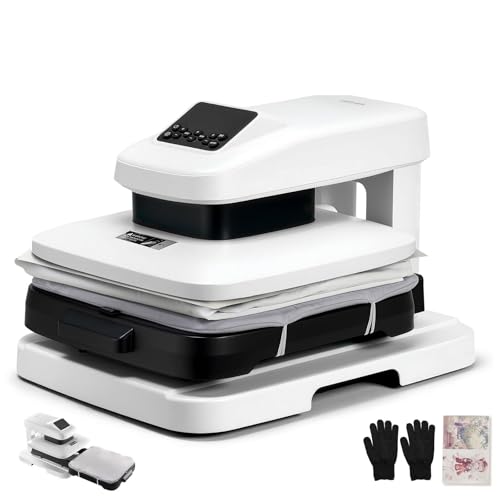
VEVOR Automatic Heat Press
Hands free timing without the premium badge. VEVOR pairs a 12 by 10 platen with a digital controller reaching around 480F, which covers sublimation blanks as well as heat transfer vinyl. Owners report steady everyday results on shirts and tote bags.
Pros
- Automatic opening at entry level
- Temperature ceiling covers sublimation
- Platen suits shirts and tote bags
Cons
- Fit and finish trails the name brands
- Manual leaves gaps for beginners

PowerPress Digital Heat Press
A 15 by 15 inch platen covers a full adult front graphic in one press, with no repositioning halfway through. Controls stay deliberately basic: time, temperature, press. Owners report years of vinyl and sublimation work from the same unit before anything needs attention.
Pros
- Full 15 inch graphic in a single press
- Nothing complicated to learn
- Holds up across years of projects
Cons
- You watch the clock and open it
- Takes over a small work table
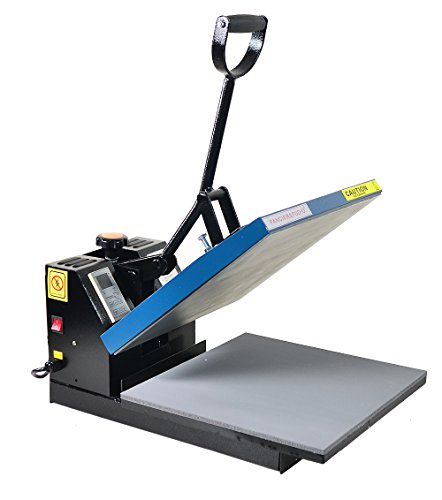
Fancierstudio Power Heat Press
This is the plain route into full size pressing. Fancierstudio supplies a 15 by 15 platen, a digital readout and a pressure knob, then stops. Useful for finding out whether shirt printing becomes a habit before committing to an auto cycle machine.
Pros
- Full size platen at entry level
- Straightforward to operate from day one
- Widely owned, so guidance is easy to find
Cons
- No automatic opening at all
- Pressure adjusts by knob only
HTVRONT Slide Out Heat Press
A drawer style base slides clear of the hot upper plate before the shirt goes down. Fingers stay away from metal running near 400F, and the transfer lands square on the first attempt. Timing remains your job, since this platen does not lift itself.
Pros
- Loading happens away from the hot plate
- Squaring a transfer is much easier
- Approachable for a nervous beginner
Cons
- Opening is not automatic
- Mid size platen only
What matters most
What to look for in an automatic heat press Three variables decide every transfer: temperature, dwell time and pressure. A press that holds all three steady produces the same result on shirt one and shirt thirty. Look at platen dimensions first, then how the machine applies pressure, then the stated temperature ceiling. Sublimation wants around 400F, some vinyl films want less, and a few specialty transfers climb higher. Even heating across the plate matters more than a big headline number, since cold corners peel first.
How does auto opening prevent scorched transfers? Leaving a transfer under heat too long is the single biggest cause of ruined shirts. A manual clamshell relies entirely on you hearing the timer and reacting. An automatic press lifts itself, so a phone call or a distracted moment costs nothing. Anyone pressing while cutting the next design, or running several items back to back, gets the most from that feature.
Which platen size fits the shirts you print? A 12 by 10 inch plate covers most standard adult front designs in one pass. Step up to 15 by 15 inches for oversized graphics, hoodie fronts and multiple small items pressed together. Smaller plates and handheld units suit hats, sleeves, baby clothes and craft blanks. Bench space is the counterweight, since a full size clamshell needs a sturdy, heat safe surface it can live on permanently.
Best heat press for beginners vs a small shop A first time crafter benefits from guided settings or a slide out base that keeps hands clear of hot metal. Someone filling regular orders needs the auto cycle and consistent pressure that keep results identical across a session. Be honest about volume before buying. An intimidating machine gathers dust, while an underpowered one frustrates anyone who moves from occasional gifts to steady output within a few months.
Side by side
| # | Model | Platen size | Best for | Score | Price |
|---|---|---|---|---|---|
| 1 | HTVRONT Auto Heat Press Machine | 12 by 10 inches | Best overall | 9.4 | Check price |
| 2 | Cricut Autopress | 12 by 10 inches | Best for batch volume | 9.2 | Check price |
| 3 | Cricut EasyPress 3 | 9 by 9 inches | Best for odd shapes | 9.0 | Check price |
| 4 | VEVOR Automatic Heat Press | 12 by 10 inches | Best value | 8.8 | Check price |
| 5 | PowerPress Digital Heat Press | 15 by 15 inches | Best for large prints | 8.6 | Check price |
| 6 | Fancierstudio Power Heat Press | 15 by 15 inches | Best budget clamshell | 8.3 | Check price |
| 7 | HTVRONT Slide Out Heat Press | 12 by 10 inches | Best for safe loading | 8.0 | Check price |
Questions worth asking
What does an automatic heat press actually do?
It manages the dwell time, often the pressure too, then lifts the upper plate by itself when the cycle finishes. That removes the most common mistake in pressing, which is leaving a transfer under heat too long.
Is an auto press better than a manual clamshell?
For consistency and safety, yes, because it cannot scorch a design while you are distracted. Manual clamshells still make sense on a budget and often come with larger platens, which is why two of the picks here open by hand.
What size platen do I need for adult shirts?
Around 12 by 10 inches covers most standard front designs. A 15 by 15 inch platen gives room for oversized graphics and lets you press larger items without repositioning. Hats, sleeves and small craft pieces work better on a smaller or handheld plate.
Can an automatic heat press do sublimation?
Most reach the temperatures sublimation needs, though you should confirm the ceiling and follow the guidance for your specific blanks and paper. Even heat and firm, consistent pressure matter more for clean sublimation than a high maximum temperature.
Which is better, a heat press or an EasyPress?
A clamshell press applies far more pressure and suits flat, repeated work. A handheld unit like the EasyPress 3 wins on portability and reaches shapes a fixed plate cannot. Makers who press varied items often keep both.
How much bench space does a heat press need?
Full size clamshell and auto presses are heavy and want a permanent, heat safe surface with clearance behind for the opening arm. Handheld options store in a drawer. Measure the footprint from the listing before clearing a spot.
Are heat presses safe for beginners to use?
Auto opening and slide out bases make them among the safer options, since the hot plate moves away from your hands. Heat resistant gloves and a silicone mat are still worth keeping beside the machine.
Can you press hats and mugs on a flat press?
Hats work on a handheld unit or with a dedicated cap attachment. Mugs and other curved items need a purpose built press with a wraparound element, since a flat platen cannot make even contact around a curve.
How long does a shirt transfer take to press?
Most heat transfer vinyl needs somewhere between ten and thirty seconds, and sublimation typically runs closer to a minute. Follow the material instructions rather than a general rule, since films from different suppliers behave differently.
Our pick
HTVRONT Auto Heat Press Machine covers the common case, with hands free lifting and even heat that keep results consistent without a steep learning curve. Cricut Autopress earns its place once you press in batches and need pressure that never drifts. Pick Cricut EasyPress 3 instead when the work is varied, portable or shaped in ways a clamshell cannot reach.