Top Automatic Heavy-Duty Mowers for Tough Lawns
The Husqvarna Automower 430XH tops our list for automatic heavy-duty mowing. It tackles slopes up to 45 percent and handles large areas. Owners report it cuts through wet and tall grass well. Its main drawback is the high price, but durability makes it a solid long-term pick.
Automatic heavy-duty lawn mowers save hours of manual work. They handle thick grass, uneven ground, and large yards without constant supervision. Robotic models navigate on their own, while self-propelled versions reduce pushing effort.
Choosing the right one depends on your lawn size, terrain, and budget. We looked at specifications and owner feedback for each model. The list includes both robotic and traditional self-propelled mowers for different needs.
What to look for
The top picks, ranked

Husqvarna Automower 430XH
The Husqvarna 430XH is a robotic mower built for demanding yards. It handles up to 0.8 acres and navigates slopes up to 45 percent. The all-wheel drive provides traction on wet grass. Owners report reliable performance in rough conditions.
Pros
- Excellent on steep hills
- Handles wet grass without slipping
- GPS-assisted navigation for complex yards
Cons
- High upfront cost
- Requires professional installation for best results

WORX Landroid L 20V Robotic Mower
The WORX Landroid L is an affordable robotic mower for medium lawns up to 0.25 acres. It cuts in a random pattern but ensures full coverage. It handles slopes up to 20 degrees and returns to its base automatically. Owners appreciate the easy setup and app control.
Pros
- Budget-friendly
- Simple DIY installation
- Smart app integration with voice control
Cons
- Not for very steep terrain
- Cutting height limited to 3 inches

Greenworks 40V 16-Inch Self-Propelled Mower
The Greenworks 40V self-propelled mower features rear-wheel drive for better traction. It has a 16-inch cutting deck, ideal for medium lawns. The variable speed control lets you set the pace. Owners report it is quiet and easy to start.
Pros
- Quiet operation
- No gas or oil needed
- Adjustable speed for walking comfort
Cons
- Battery run time about 45 minutes
- Not for very large lawns

EGO Power+ 21-Inch Select Cut XP Mower
The EGO Power+ 21-inch mower is a heavy-duty self-propelled model. It uses a 10Ah battery that delivers up to 70 minutes of runtime. The Select Cut XP has a dual-blade system for better mulching. Owners say it powers through dense grass without bogging down.
Pros
- Long runtime
- Mulch, bag, or side discharge options
- Weather-resistant construction
Cons
- Battery and charger sold separately
- Heavier than some competitors
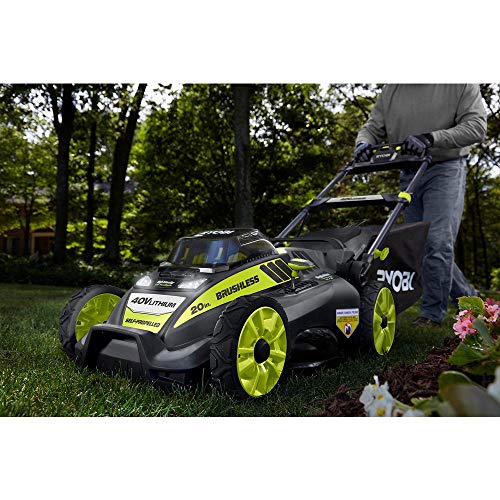
Ryobi 40V HP Brushless 21-Inch Self-Propelled Mower
The Ryobi 40V HP mower features a brushless motor for efficiency. It has a 21-inch steel deck and three-in-one capabilities. The self-propelled system uses rear-wheel drive. Owners report that the mulching performance is impressive, leaving fine clippings.
Pros
- Brushless motor for longer life
- Excellent mulching capability
- Folding handles for easy storage
Cons
- Battery not included
- Warranty requires registration
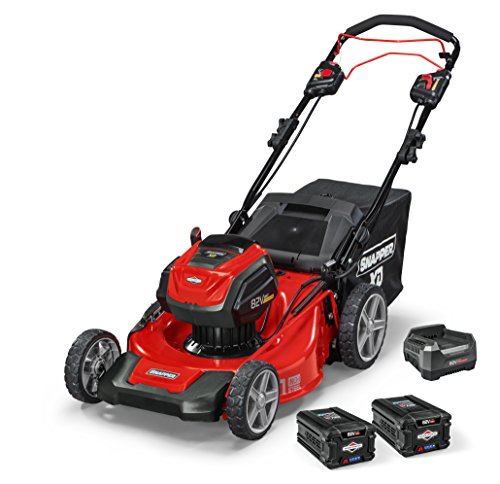
Snapper 82V 21-Inch Self-Propelled Mower
The Snapper 82V self-propelled mower is built for hills and tough grass. It features a high-torque motor and rear-wheel drive. The 21-inch deck provides a wide cut. Owners say it climbs slopes without slowing down significantly.
Pros
- Powerful motor for steep hills
- Cast aluminum deck base
- Long runtime with high-capacity battery
Cons
- Heavy weight
- Battery and charger extra

Mammotion Luba 2 AWD 1000 Robotic Mower
The Mammotion Luba 2 is a wire-free robotic mower using GPS and RTK for precise navigation. It handles slopes up to 60 percent and mows up to 0.25 acres per charge. The all-wheel drive provides traction. Owners report easy boundary setup via the app.
Pros
- No boundary wires needed
- Steep slope handling
- GPS mapping with multiple zones
Cons
- High price
- Requires strong GPS signal
Side by side
| # | Model | Cutting width | Best for | Score | Price |
|---|---|---|---|---|---|
| 1 | Husqvarna Automower 430XH | 9.4 inches | Large lawns with steep slopes | 9.4 | Check price |
| 2 | WORX Landroid L 20V Robotic Mower | 7 inches | Medium yards with simple layouts | 9.0 | Check price |
| 3 | Greenworks 40V 16-Inch Self-Propelled Mower | 16 inches | Medium yards needing push-assist | 8.8 | Check price |
| 4 | EGO Power+ 21-Inch Select Cut XP Mower | 21 inches | Large lawns with thick grass | 9.2 | Check price |
| 5 | Ryobi 40V HP Brushless 21-Inch Self-Propelled Mower | 21 inches | Customizable cutting options | 8.7 | Check price |
| 6 | Snapper 82V 21-Inch Self-Propelled Mower | 21 inches | Tough, hilly terrain | 8.5 | Check price |
| 7 | Mammotion Luba 2 AWD 1000 Robotic Mower | 10 inches | Tech-savvy users with complex yards | 9.1 | Check price |
Common questions
What is an automatic heavy-duty lawn mower?
An automatic heavy-duty lawn mower either self-propels or operates robotically. It is designed for thick grass, large areas, and slopes. Self-propelled models require you to walk behind but push themselves. Robotic models mow autonomously within a set boundary.
How do robotic mowers handle thick or wet grass?
High-end robotic mowers like the Husqvarna 430XH have all-wheel drive and powerful blades. They can cut through wet grass without clogging. However, very tall or dense grass may require multiple passes. Owners recommend regular mowing schedules for best results.
Can these mowers handle steep slopes?
Some models are rated for slopes as steep as 60 percent. For example, the Mammotion Luba 2 handles 60 percent, while the Husqvarna 430XH handles 45 percent. Self-propelled mowers with rear-wheel drive are generally better on hills than front-wheel drive.
Do battery-powered mowers have enough power for heavy-duty tasks?
Yes, modern battery mowers with higher voltages (40V, 56V, 82V) provide ample power for thick grass. Brushless motors improve efficiency and torque. Owners report they perform comparably to gas mowers for most residential tasks.
How long does a battery last on a self-propelled mower?
Run times vary from about 30 to 70 minutes depending on battery capacity and conditions. For instance, the EGO 10Ah battery runs up to 70 minutes. Cutting tall grass or using self-propulsion reduces runtime. You may need spare batteries for larger lawns.
Are robotic mowers worth the investment?
Robotic mowers save significant time but cost more upfront. They are best for owners who want a hands-off approach and have relatively simple lawns. For steep or complex terrain, choose a model with advanced navigation and slope ratings.
Do I need boundary wires for robotic mowers?
Many robotic mowers require boundary wires to define the cutting area. However, GPS-based models like the Mammotion Luba 2 use satellite signals and do not need wires. Wire-free models are easier to install but depend on a clear sky view.
What maintenance do automatic mowers require?
Keep blades sharp and clean the underside regularly. For battery mowers, store batteries at moderate temperatures. Robotic mowers need periodic software updates and cleaning of sensors. Check the user manual for specific maintenance schedules.
Can these mowers mulch clippings?
Most self-propelled mowers offer mulching, bagging, or side discharge. Robotic mowers typically mulch finely and return nutrients to the lawn. Check the product specifications for mulching capabilities.
What safety features should I look for?
Look for blade stop mechanisms, key locks, and lift sensors on robotic mowers. Self-propelled mowers should have a dead-man switch that stops the blades when you release the handle. These features prevent accidents.
The bottom line
For most large, challenging lawns, the Husqvarna Automower 430XH is the clear winner. It combines robust construction, excellent slope handling, and reliable automation. If you prefer a traditional mower, the EGO Power+ 21-inch offers the best balance of power and runtime for heavy-duty grass. Budget-conscious buyers should consider the WORX Landroid L for smaller simple lawns.