Automatic Watering Systems for Vacations and Busy Weeks
RAINPOINT’s Smart Drip Irrigation Kit covers garden beds and container plants with app-based scheduling and takes the top spot here. Orbit’s B-hyve controller suits whole-yard sprinkler retrofits with existing valve wiring, while Blumat’s terracotta cones handle potted plants using soil moisture alone, with no electronics involved.
RAINPOINT’s Smart Drip Irrigation Kit suits garden beds and container gardens best, combining app scheduling with a full drip-line kit in one purchase. Initial WiFi pairing takes more patience than a basic dial timer needs.
Coverage area, power source, and zone count vary more between drip kits and full sprinkler controllers than most buyers expect. We compared listed specs, water source requirements, and owner reports on emitter clogging and battery life.
How to choose
What to look for in an automatic watering system Water source availability narrows the choice first. Hose-bib kits need a working outdoor faucet nearby, while pump-fed kits draw from any container but add a part that can fail. Zone count matters next, since mixed lawn and garden areas benefit from independent schedules that a single-zone timer cannot offer.
Drip irrigation vs sprinkler timers Drip systems target individual plant roots and use less water overall. Garden beds and containers both suit drip better than overhead spray. Sprinkler timers cover wider lawn areas but lose more water to evaporation and wind drift. Existing in-ground valve wiring only works with a sprinkler controller, not a drip kit.
Best automatic watering for potted plants and containers Container gardens dry out at different rates depending on pot size and sun exposure. Moisture-sensing cones like Blumat respond to actual soil dryness instead of a fixed schedule. Overwatering risk drops, since each pot draws water only when it needs it. Vacation trips are the clearest use case for this style.
Best automatic watering for whole-yard sprinkler upgrades In-ground sprinkler systems already have valve wiring in place. Smart controllers like the Orbit B-hyve retrofit that wiring without replacing underground piping. Weather-based rain skip adds a layer fixed-schedule sprinklers lack. Twelve zones let lawn and garden areas run on separate schedules despite different sun exposure.
The shortlist, ranked
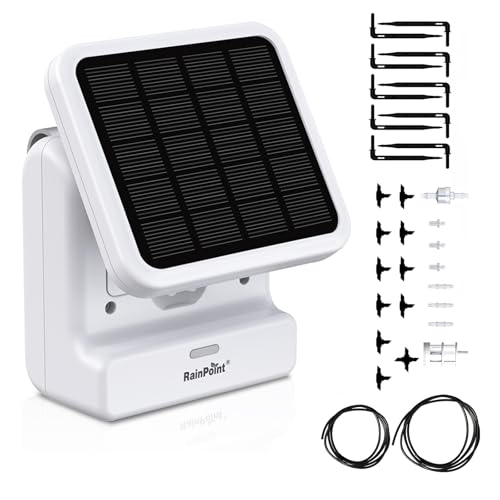
RAINPOINT Smart Drip Irrigation Kit with WiFi Timer
WiFi connects this timer to a phone app, enabling up to eight schedules per day. Two AA batteries power the unit, so no nearby outlet is required. The kit ships with drip line, stakes, and emitters sized for about 20 potted plants or one raised bed.
Pros
- Controls schedules remotely through the phone app
- Drip line, stakes, and emitters ship in one box
- AA batteries remove the need for a nearby outlet
Cons
- First-time WiFi pairing sometimes fails on the first try
- Frequent schedule changes drain batteries faster
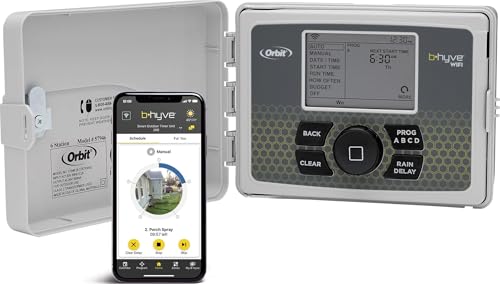
Orbit B-hyve Smart Indoor/Outdoor Sprinkler Controller
Existing in-ground sprinkler wiring plugs directly into this controller. Local weather data triggers an automatic rain skip, pausing watering during storms. Up to 12 zones run on separate schedules, useful when lawn and garden beds sit in different sun exposure.
Pros
- Rain skip cancels watering automatically during storms
- Twelve independent zones cover mixed sun exposure
- Reuses existing in-ground sprinkler valve wiring
Cons
- Only works where sprinkler valves are already wired
- Initial setup takes longer than a plug-in hose timer
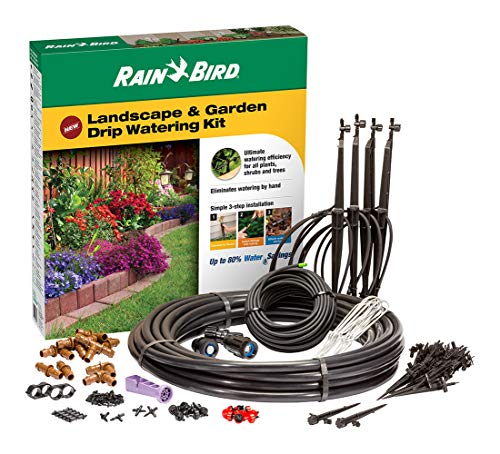
Rain Bird DIYD50 Drip Irrigation Kit
Fifty feet of drip line, emitters, and connectors arrive pre-assembled in this kit. A standard hose bib connection skips the need for a dedicated sprinkler valve. Flow adjusts at each emitter, so heavier drinkers get more water than nearby plants.
Pros
- Pre-assembled parts cut setup time to minutes
- Any standard outdoor faucet powers the system
- Adjustable emitters vary flow per plant
Cons
- No timer ships with the kit
- Fifty feet caps coverage before buying extension parts

Melnor XT4200M Digital Water Timer
Two separate outlets let this timer run a garden bed and a hanging basket on different schedules from one hose bib. A digital display shows remaining run time. One 9V battery powers the unit for roughly six months of typical use.
Pros
- Two outlets run independent schedules from one spigot
- Digital display removes guesswork on remaining time
- Works with hoses and drip lines already on hand
Cons
- No app or remote control option exists
- Battery replacement is needed about twice a year

Orbit 62061 Single-Outlet Hose Watering Timer
A single dial sets duration and frequency without a digital display, keeping cost low for one garden zone. Threading onto a standard hose bib takes seconds. No batteries or electronics are involved, so nothing needs charging or pairing.
Pros
- Fully mechanical design needs no batteries
- Lowest price of the seven options here
- Threads onto any outdoor hose bib in seconds
Cons
- Only one schedule runs per day
- Storms and rain days get no automatic skip

Blumat Classic Automatic Watering System (12-Pack)
Terracotta cones release water when soil actually dries out, not on a fixed clock. Twelve cones connect to an elevated reservoir through gravity feed. Vacation watering for container gardens needs no batteries or app setup at all.
Pros
- Soil moisture, not a timer, controls each cone
- No batteries or electronics can fail
- Suits unattended container watering during trips
Cons
- An elevated reservoir must be set up first
- In-ground garden beds are not a practical fit

RAINPOINT Automatic Drip Irrigation Kit for Greenhouse
A low-pressure pump feeds this kit from a water container instead of a hose bib, useful where no outdoor faucet sits nearby. Up to 15 micro-drip heads adjust flow per plant. Greenhouses and indoor plant walls both suit this setup.
Pros
- Pump option removes the need for a nearby faucet
- Fifteen drip heads adjust flow per plant type
- Indoor plant walls and greenhouses both work well
Cons
- The pump is another part that can fail
- Water pressure runs lower than hose-fed kits
The lineup, side by side
| # | Model | Zones | Best for | Score | Price |
|---|---|---|---|---|---|
| 1 | RAINPOINT Smart Drip Irrigation Kit with WiFi Timer | 1 (multi-schedule) | Best overall | 9.3 | Check price |
| 2 | Orbit B-hyve Smart Indoor/Outdoor Sprinkler Controller | Up to 12 | Best for whole-yard sprinkler systems | 9.0 | Check price |
| 3 | Rain Bird DIYD50 Drip Irrigation Kit | Up to 50 feet | Best for garden beds | 8.7 | Check price |
| 4 | Melnor XT4200M Digital Water Timer | 2 independent | Best value | 8.4 | Check price |
| 5 | Orbit 62061 Single-Outlet Hose Watering Timer | 1 | Best budget | 8.1 | Check price |
| 6 | Blumat Classic Automatic Watering System (12-Pack) | Moisture-sensing terracotta cone | Best for potted plants | 7.9 | Check price |
| 7 | RAINPOINT Automatic Drip Irrigation Kit for Greenhouse | Faucet or pump-fed container | Best for greenhouse and indoor use | 7.8 | Check price |
Frequently asked questions
How do automatic watering systems work without electricity
Gravity-fed and moisture-sensing kits, like terracotta cone systems, rely on water pressure differences and soil dryness instead of electronic timers.
Can I use an automatic watering system while on vacation
Yes. Most drip kits and timers are built for unattended watering during trips, and some run a week or more on batteries alone.
What is the difference between a drip irrigation kit and a hose timer
A drip kit includes tubing and emitters that deliver water straight to plant roots. A hose timer only controls when a connected hose or sprinkler runs.
Do automatic watering systems work with rain barrels
Some pump-fed kits draw from a rain barrel reservoir, though water pressure stays lower than a standard hose bib connection.
How many plants can one drip irrigation kit cover
Coverage depends on the kit, but most starter kits handle 15 to 20 individual drip points before extension parts become necessary.
Is a WiFi watering timer worth it over a basic dial timer
WiFi timers add remote schedule changes and weather-based adjustments, useful in unpredictable climates. Dial timers cost less and suit a fixed daily schedule.
Can automatic watering systems overwater plants
Fixed-schedule timers can overwater during rainy periods without a rain sensor. Moisture-sensing systems like Blumat cones adjust automatically to actual soil conditions.
What water pressure do drip irrigation kits need
Most hose-bib kits run fine on standard residential water pressure. Very low pressure situations usually call for a pump-fed system instead.
Which automatic watering system works best for raised garden beds
Pre-assembled drip kits like the Rain Bird DIYD50 fit raised beds well, since the tubing lays flat across soil without extra cutting or measuring.
Final word
RAINPOINT’s Smart Drip Irrigation Kit suits most garden beds and container setups, thanks to app control and an included drip line. Homes with existing in-ground sprinkler wiring should pick the Orbit B-hyve instead, since it reuses that wiring rather than replacing it. Container gardeners avoiding electronics entirely should rely on Blumat’s moisture-sensing cones.