Automotive Circuit Testers That Find Electrical Faults Fast
The INNOVA 3340 suits most home garages, pairing a wide voltage range with a backlit LCD readout. Actron CP7677 works for drivers who want a simple analog test light. Power Probe III fits pros running daily 12V and 24V diagnostics.
A dead circuit tester wastes more time than the fault it was meant to find. Wiring harnesses, fuse boxes, and corroded connectors hide most automotive electrical faults from plain sight. Seven testers here span basic test lights to digital multi-function models.
Voltage range and probe reach decide which tester fits a given repair, so we compared manufacturer specifications first. Owner feedback on durability and battery life filled in the gaps specs alone do not cover. Fit for DIY driveway work versus daily shop diagnostics shaped the final rankings.
Our top picks
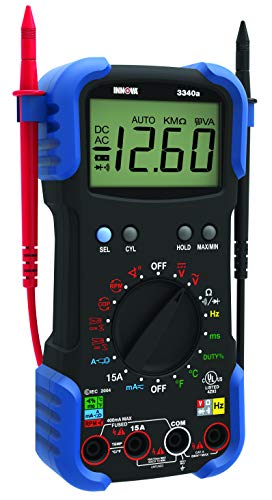
INNOVA 3340 Digital Circuit Tester
A backlit LCD screen reads voltage, continuity, and ground faults instead of relying on bulb brightness. Owners report the numeric display removes the guesswork common with analog test lights. Both 6V and 12V systems fall within range, covering most passenger vehicles on the road.
Pros
- Digital LCD removes reading ambiguity
- Coiled lead reaches deep into engine bays
- Works on both 6V and 12V circuits
Cons
- Requires a battery to power the display
- Bulkier than a simple analog test light

Actron CP7677 Circuit Tester
No battery powers this test light; current drawn straight from the circuit lights the bulb. A sharp steel probe pierces wire insulation for fast point checks without stripping wire. Many owners keep it as a backup tester tucked in the glove box.
Pros
- No battery to replace or leak
- Simple pass or fail bulb reading
- Compact enough for a door pocket
Cons
- No continuity buzzer for blind checks
- Bulb brightness varies with weak circuits

Cen-Tech 12V Circuit Tester
Fuses, grounds, and switched power checks cover the bulk of what DIY drivers actually need, and this tester handles all three. An alligator clip ground lead frees both hands during a test. Extra features like continuity buzzers get skipped to keep the price down.
Pros
- Low cost entry point for occasional use
- Alligator clip ground frees one hand
- Small enough to store in a door pouch
Cons
- Shorter lead limits reach on larger engines
- No LED or LCD readout

Astro Pneumatic 7778 LCD Circuit Tester
Two ways to confirm a reading come built in here: an LCD voltage display and a standard test light tip. Marginal voltage drops that a plain bulb would miss show up clearly on the digital screen, according to owner reports. A rotary dial switches between voltage and continuity modes without extra tools.
Pros
- Dual readout combines bulb and LCD screen
- Covers both 12V and 24V systems
- Rotary mode dial simplifies switching functions
Cons
- LCD adds bulk versus a plain test light
- Battery compartment access is tight
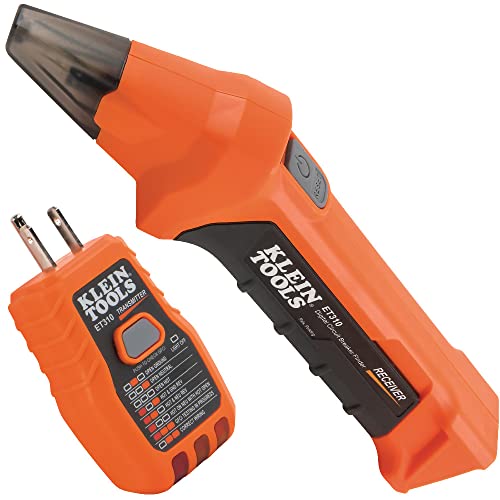
Klein Tools ET10 Digital Circuit Tester
Half-volt voltage increments let a DIY user pinpoint a partial short instead of guessing from a lit bulb. Hand fatigue during longer sessions drops thanks to a soft-grip handle. A spare fuse and probe tip ship in the box for the first repair.
Pros
- LED bar shows voltage in clear increments
- Comfortable grip for repeated testing
- Includes spare probe tip and fuse
Cons
- Limited to 12V systems only
- LED bar is harder to read in direct sunlight

Power Probe III Circuit Tester
One tool covers both 12V passenger vehicles and 24V diesel or commercial systems here. Relay testing and a built-in circuit breaker guard the unit against accidental shorts during testing. Shop owners report it replaces several single-function testers on the bench.
Pros
- Covers both 12V and 24V dual-voltage systems
- Built-in circuit breaker guards against shorts
- Retractable lead keeps the cord tangle-free
Cons
- Higher learning curve than a basic test light
- Heavier than pocket-style testers

Sealey Analog Circuit Test Light
No display and no battery complicate this bulb-and-probe design; it stays simple by choice. A continuity buzzer sounds on closed circuits, useful for a technician who cannot watch the tip and gauge at the same time. Repeated piercing of wire insulation barely wears the heavy-duty probe tip.
Pros
- Continuity buzzer works without watching the tip
- Heavy-duty probe resists wear over time
- Covers a wider 6V to 24V analog range
Cons
- No digital voltage reading for precise values
- Bulb needs periodic replacement
Side by side
| # | Model | Voltage range | Best for | Score | Price |
|---|---|---|---|---|---|
| 1 | INNOVA 3340 Digital Circuit Tester | 3V to 12V DC | Best overall | 9.4 | Check price |
| 2 | Actron CP7677 Circuit Tester | 4V to 12V DC | Best value | 9.0 | Check price |
| 3 | Cen-Tech 12V Circuit Tester | 6V to 12V DC | Best budget | 8.4 | Check price |
| 4 | Astro Pneumatic 7778 LCD Circuit Tester | 3V to 24V DC | Best digital or LCD circuit tester | 9.1 | Check price |
| 5 | Klein Tools ET10 Digital Circuit Tester | 3V to 12V DC | Best for DIY diagnostics | 8.8 | Check price |
| 6 | Power Probe III Circuit Tester | 0V to 30V DC | Best for 12V and 24V dual-voltage | 9.3 | Check price |
| 7 | Sealey Analog Circuit Test Light | 6V to 24V DC | Best analog test light | 8.6 | Check price |
What to look for
What to look for in an automotive circuit tester Voltage range matters most. A tester rated only for 12V cannot confirm faults on 24V diesel or commercial systems. Probe and lead length come next, since deep engine bays and rear wiring harnesses need real reach. Self-powered models skip batteries entirely, while digital models trade that simplicity for a numeric readout.
Digital circuit testers vs analog test lights An exact voltage figure shows up on digital testers, which helps when diagnosing a partial short or a voltage drop across a connector. Bulb brightness alone guides analog test lights, a method plenty of owners still trust for quick pass or fail checks. Neither type replaces a multimeter for precision work, though both diagnose common faults faster on the vehicle.
Choosing a tester for DIY repairs vs shop use Occasional home use rarely justifies a dual-voltage, multi-function tester like the Power Probe III. Fuses, grounds, and switched power checks get covered by a basic self-powered light such as the Cen-Tech or Actron model. Shops running diagnostics daily gain more from a digital model with a continuity buzzer and a wider voltage range.
Do you need a tester rated for 24V systems? Light trucks, diesel pickups, and some commercial vehicles run 24V electrical systems alongside standard 12V accessories. A false reading, or no reading at all, can result from using a 12V-only tester on a 24V circuit. Swapping tools becomes unnecessary with dual-voltage testers like the Astro Pneumatic 7778 and Power Probe III.
Frequently asked questions
What is an automotive circuit tester used for?
It checks for voltage, a blown fuse, or a broken ground along a vehicle’s wiring. A technician touches the probe to a wire or connector while the clip grounds to the chassis.
How is a circuit tester different from a multimeter?
A quick pass or fail signal comes from a circuit tester’s bulb, LED, or basic LCD. Exact voltage, resistance, and current get measured by a multimeter instead, which suits more detailed diagnostic work.
Can a circuit tester damage a vehicle’s computer?
Unwanted voltage can reach sensitive modules if a basic test light gets used incorrectly on computer-controlled circuits. Many technicians reach for a digital tester or multimeter instead when working near control modules.
Is a self-powered test light better than a digital one?
No battery is needed for self-powered testers, which work as long as the circuit carries current. A numeric readout on digital testers helps catch marginal voltage drops a bulb might miss.
Which automotive circuit tester works on 24V systems?
Both the Power Probe III and Astro Pneumatic 7778 cover 24V circuits found on diesel trucks and commercial vehicles, along with standard 12V passenger cars.
Do automotive circuit testers need batteries?
Current from the circuit itself powers self-powered models like the Actron CP7677 and Cen-Tech tester, so no battery is needed. A small internal battery typically runs digital models with an LCD or LED display.
What probe length works best for engine bay diagnostics?
Most connectors sit within reach of a 5 to 7 inch probe without an extension. A fuse box set far from the fault location calls for a longer coiled lead, such as the 9 feet on the INNOVA 3340.
Are automotive circuit testers accurate enough for professional diagnostics?
Quick checks suit basic test lights fine, but professionals often pair them with a digital tester or multimeter for precise voltage figures. Relay testing and a wider voltage range get added on models like the Power Probe III for shop use.
Is a circuit tester or a test light better for a beginner?
A basic self-powered test light like the Cen-Tech model is easier to learn on, since it only reports pass or fail. Digital testers add more information but take longer to read correctly at first.
How much does probe design affect diagnostic speed?
A sharp, narrow probe pierces wire insulation faster for point checks, cutting time spent stripping wire. Wider or blunter tips found on some analog testers work better for terminal blocks than for tight insulated wire runs.
The verdict
Digital accuracy and a coiled lead long enough for most engine bays make the INNOVA 3340 the strongest all-around pick. Solid value for occasional fuse and ground checks comes from the Actron CP7677 or Cen-Tech model instead. Anyone working on both 12V and 24V vehicles should look at the Power Probe III or Astro Pneumatic 7778.


