Which Baby Feeding Spoons Are Gentle on Sensitive Gums?
Olababy 100% Silicone Soft Tip Training Spoon handles first tastes best, since a teething baby can bite it without pain. Munchkin Soft Tip Infant Spoons cover the messiest months as a practical multipack. NumNum Pre Spoon GOOtensils hold thick puree in a grooved head that cannot be tipped off.
Start weaning with the Olababy 100% Silicone Soft Tip Training Spoon, which is soft the whole way through. Keep Munchkin Soft Tip Infant Spoons in the drawer so a clean one always exists. Once your baby grabs at the spoon, NumNum Pre Spoon GOOtensils solve the tipping problem, and Grabease follows for real cutlery.
Spoons look interchangeable and are not, because a six month old needs a shallow tip that clears a small mouth while a ten month old needs a handle a fist can hold. We compared tip materials, bowl depth, handle shape and length, self feeding design and heat tolerance. Owner reports on splitting tips, staining and dishwasher survival decided the order.
The shortlist, ranked
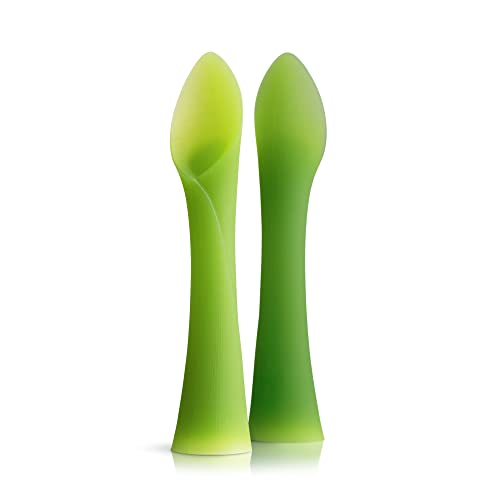
Olababy 100% Silicone Soft Tip Training Spoon
One piece silicone means a teething baby can bite down anywhere on it without hitting a hard edge. Its shallow curved tip carries a first mouthful sized portion rather than an adult scoop. Flexible handles invite grabbing, so babies start holding this spoon earlier than a rigid plastic one.
Pros
- Soft throughout, safe on sore gums
- Shallow bowl matches tiny first portions
- Flexible handle encourages early gripping
Cons
- Small bowl means more trips to the bowl
- Silicone absorbs strong food colours
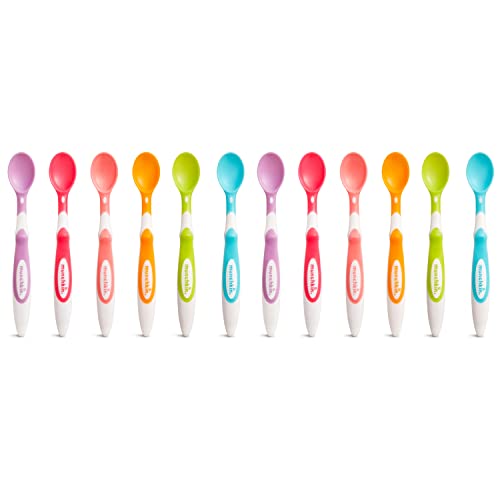
Munchkin Soft Tip Infant Spoons
Most families end up owning several of these, because weaning generates more dirty spoons than one dishwasher cycle can absorb. A soft coated tip protects gums while the rigid handle gives an adult proper control over each mouthful. They survive repeated top rack cycles better than most budget sets.
Pros
- Enough spoons to last between washes
- Soft tip with a handle an adult can steer
- Coating holds up through repeated washing
Cons
- Handles too short for deep jars
- Not designed for baby led self feeding

NumNum Pre Spoon GOOtensils
There is no bowl at all here, just a flat head with grooves that trap thick puree whatever angle a baby waves it at. Two heads come in the set, a shallow stage one and a deeper stage two as coordination improves. Short handles suit a fist grip rather than an adult reaching across a high chair tray.
Pros
- Food stays on the head at any angle
- Two stages track improving coordination
- Short handle sized for small hands
Cons
- Only works with thick purees
- Little use for adult led feeding

Grabease Double Sided Spoon and Fork Set
A choke guard collar sits partway down the shaft and stops the utensil travelling too far into the mouth. Stubby handles match a fist grip, since a pincer hold arrives much later than the urge to self feed. Blunt fork tines introduce stabbing food from around a year without the risk of a metal point.
Pros
- Choke guard limits how far it goes in
- Handle shape matches a fist grasp
- Fork teaches stabbing before metal cutlery
Cons
- Short handles struggle in deep bowls
- Blunt tines slide off firmer foods

OXO Tot Feeding Spoon Set
Long handles reach the bottom of a jar or a tall pouch without coating your knuckles in sweet potato. Non slip grip material keeps hold when your hands are wet from the last rinse. According to the listing, two spoons ship with a hinged travel case for the change bag.
Pros
- Reaches the base of jars and pouches
- Grip stays secure with wet hands
- Travel case keeps them clean in a bag
Cons
- Long handle is awkward for a baby to hold
- Bulkier in a drawer than short spoons

ezpz Tiny Spoon
Feeding specialists shaped this one around a small flat bowl that a baby clears with their lips rather than scraping on the gums. Its thick short handle fits a whole hand grasp, which is how babies actually hold things at this age. One piece silicone leaves no seam for puree to hide in.
Pros
- Shape teaches proper lip closure
- Works for adult led and baby led feeding
- Seamless silicone traps nothing
Cons
- Very small capacity per mouthful
- Sold in smaller quantities than budget packs

Bumkins Silicone Chewtensils
Textured handles double as teethers, so the spoon keeps a job even when nobody wants to eat. Moulding the whole utensil in one piece removes the joint where food usually collects. Owners report these outlast the sets that get thrown from a high chair week after week.
Pros
- Handle works as a teether between meals
- No joint where food can collect
- Survives repeated drops onto hard floors
Cons
- Flexible handle is harder for an adult to steer
- Stains from tomato and carrot
The lineup, side by side
| # | Model | Material | Best for | Score | Price |
|---|---|---|---|---|---|
| 1 | Olababy 100% Silicone Soft Tip Training Spoon | 100% food grade silicone | Best overall | 9.4 | Check price |
| 2 | Munchkin Soft Tip Infant Spoons | Plastic handle, soft tip | Best value multipack | 9.2 | Check price |
| 3 | NumNum Pre Spoon GOOtensils | Flat textured head, no bowl | Best for early self feeding | 9.0 | Check price |
| 4 | Grabease Double Sided Spoon and Fork Set | Spoon and fork | Best first cutlery set | 8.8 | Check price |
| 5 | OXO Tot Feeding Spoon Set | Long reach with non slip grip | Best for jars and pouches | 8.6 | Check price |
| 6 | ezpz Tiny Spoon | 100% food grade silicone | Best for teaching spoon skills | 8.3 | Check price |
| 7 | Bumkins Silicone Chewtensils | One piece silicone | Best budget | 8.0 | Check price |
How to choose
What to look for in a baby feeding spoon Tip softness matters most at the start, since gums may already be sore from a tooth coming through. Bowl depth should stay shallow, because a deep scoop delivers more than a new eater can manage. Handle length splits the category cleanly: long handles are for you reaching into a jar, short stubby ones are for a fist. Check for a one piece design where possible, and confirm the set tolerates the dishwasher before buying several.
Which baby spoon suits which weaning stage? Around six months, a soft shallow tip that fits a small mouth does everything needed. From roughly eight months, babies grab at the spoon, which is when a chunky handle and a head that holds food at an angle earn their place. By twelve months, the aim shifts to real cutlery skills, so a firmer spoon and a blunt fork beat another soft tip. Buying one set per stage costs less frustration than trying to stretch one design across the year.
Silicone, plastic or stainless steel: which is better? Silicone is gentlest on gums and completely safe to chew, but it flexes, which makes adult led feeding a little less precise. Plastic handles with soft coated tips feel firmer in your hand and usually cost least per spoon. Stainless steel belongs later, once a toddler uses cutlery properly, and it outlasts both. Look for BPA free labelling on any plastic component whichever route you take.
How do you clean and sterilise baby spoons? Weaning generates several washes a day, so top rack dishwasher tolerance is close to essential. Silicone handles steam sterilising and boiling without warping, while plastic handled spoons vary by brand. Tomato, carrot and beetroot will stain silicone, which is cosmetic rather than a hygiene problem. Retire any spoon whose soft tip has split, because that gap collects food and moisture where you cannot reach.
Frequently asked questions
When should a baby start using a spoon?
Purees usually begin around six months, guided by readiness signs such as sitting with support and steady head control. Self feeding attempts follow between eight and twelve months for most babies. The range is wide and normal, so watch your baby rather than the calendar.
Are silicone baby spoons better than plastic?
For first tastes, yes, because silicone stays soft against sore gums and is safe to chew. Plastic handled spoons with soft tips give an adult firmer control and cost less per spoon. Many families keep both and use each for a different job.
How many baby spoons do you need?
Six to ten is a realistic number for most households. Meals happen several times a day and spoons hit the floor constantly. Owning enough to last between dishwasher runs saves rinsing at the sink mid meal.
Can baby spoons go in a steriliser?
Silicone spoons generally handle steam sterilising and boiling, and most manufacturers state this on the packaging. Plastic handled sets vary, since some coatings soften at high temperature. Check the individual product guidance before the first cycle.
What is a pre spoon and do you need one?
A pre spoon has a flat textured head instead of a bowl, so thick puree clings on whatever angle a baby holds it. It bridges the stage where a baby insists on holding the spoon but empties it every time. Use is short lived but it removes a real source of mealtime frustration.
How do you stop silicone spoons staining?
Rinse straight after use rather than letting puree dry on the surface. Avoid leaving them soaking in tomato based sauces. Staining is cosmetic and does not affect safety, and a few hours in direct sunlight fades most marks.
When should a toddler move to metal cutlery?
Somewhere between eighteen months and two years for most children, once control improves and jabbing stops being the default. Small stainless steel toddler cutlery with rounded edges is the usual next step. Keep the choke guard set around for meals out until confidence settles.
Should you let a baby hold their own spoon?
Yes, alongside adult led feeding rather than instead of it. Many parents run two spoons at once, one for the baby to practise with and one that actually delivers food. That reduces the standoff without slowing the meal down.
Which baby spoon is best for teething?
Full silicone designs work best, since biting down meets give rather than a hard edge. Olababy and Bumkins both mould the entire utensil in one piece of silicone. Chilling the spoon briefly in the fridge adds a little relief before a meal.
Do you need a long handled spoon for pouches and jars?
Only if you feed from the container rather than decanting into a bowl. OXO Tot spoons reach the base of a tall jar without covering your fingers. Decanting into a shallow bowl removes the need, though it adds an item to wash.
Our pick
Begin with the Olababy 100% Silicone Soft Tip Training Spoon, which stays gentle through teething and matches a first mouthful sized portion. Stock a multipack of Munchkin Soft Tip Infant Spoons so the drawer never runs empty mid week. Add NumNum Pre Spoon GOOtensils when your baby demands to hold the spoon, then move to the Grabease set once real self feeding starts.