8 Baby Sock Styles That Actually Stay On Tiny Feet
Gerber Baby Wiggle-Proof Terry Socks lead thanks to a cuff that grips without marking the ankle. Burt’s Bees Baby Ankle Socks bring organic cotton and a flat toe seam for sensitive skin. Zando Baby Non-Slip Grip Socks take over once a baby starts cruising on hard floors.
Gerber Baby Wiggle-Proof Terry Socks solve the problem parents actually complain about, which is socks vanishing under the pram. Burt’s Bees Baby Ankle Socks are the softer, more breathable option for warm weather. Once a baby pulls up on furniture, add Zando Baby Non-Slip Grip Socks.
Whether a sock stays on comes down to cuff construction, not brand prestige or pattern. We ranked these on cuff design and elastane content, seam placement at the toe, fabric weight against the seasons and grip coverage across the sole, then weighed owner reports on sizing accuracy and how much a hot wash shrinks each knit.
Before you buy
What should you look for in baby socks? Four things decide it: cuff, toe seam, fabric weight and sizing. Cuff construction determines whether the sock survives a walk to the shops. A flat or seamless toe removes the ridge that bothers sensitive feet inside a shoe. Fabric weight has to match the season rather than the photograph. Sizing needs checking against a foot length measurement, because age labels vary wildly. Buy several pairs in one design so an odd sock still has a partner after laundry.
Why do baby socks keep falling off? Chubby ankles and constant kicking beat most cuffs. A cuff needs enough elastane to grip without constricting, and turn cuff designs add a second layer of fabric that helps considerably. Check the ankle after removing a sock: red marks mean the elastic is too tight and the sock is the wrong choice, not the right one. Pure cotton socks with minimal stretch feel lovely against skin and come off constantly, which is the trade parents eventually make deliberately.
Which baby socks work best in summer and winter? Thin combed cotton and bamboo blends breathe properly in warm weather, and bamboo in particular handles sweat well on feet inside a pram. Terry lined and full terry socks trap warmth for winter and cold hard floors, and they fill out booties that would otherwise slide off. Babies regulate temperature poorly and cannot tell you they are overheating, so keeping two weights in the drawer is more useful than twelve pairs of one type. Judge warmth by the back of the neck, not the feet.
When do babies need non slip grip socks? Grip dots do nothing for a baby who is not yet weight bearing, so there is no point buying them for a newborn. From the moment a baby pulls up on the sofa and starts cruising, usually somewhere between eight and twelve months, plain socks on wood or laminate become genuinely slippery. Look for coverage across the entire sole including the toe area, since a baby pushing up from a crawl loads the front of the foot first, exactly where a small central grip patch is useless.
The shortlist, ranked

Gerber Baby Wiggle-Proof Terry Socks
Everything about this cuff is engineered to hold an ankle without pinching it, and it works better than any other pack here. Terry lining adds warmth and a little cushioning, which suits newborns and cooler rooms. That same lining makes them the wrong choice for July, since terry traps heat a thin knit would release.
Pros
- Cuff genuinely resists kicking off
- Terry lining adds warmth and cushioning
- Large multi packs cover inevitable losses
Cons
- Too warm for hot weather
- Colours fade after repeated hot washes

Burt’s Bees Baby Ankle Socks
Organic cotton and a flat toe seam make these the pick for eczema prone feet, where a rough synthetic ridge causes real irritation. The knit breathes well enough for summer wear indoors and out. Less elastane in the cuff means a gentler hold, so an energetic kicker will lose one occasionally.
Pros
- Organic cotton suits sensitive skin
- Flat toe seam avoids pressure points
- Breathable enough for warm weather
Cons
- Gentler cuff comes off more easily
- Fewer pairs per pack than basic brands
Zando Baby Non-Slip Grip Socks
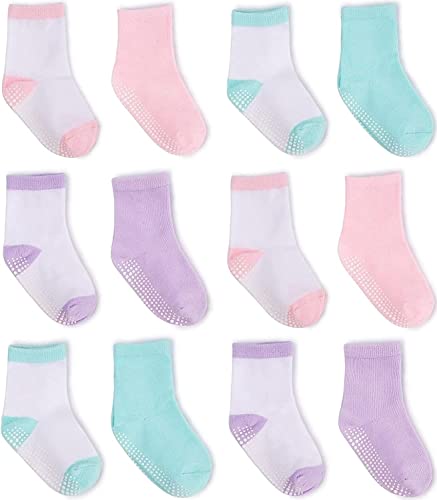
Rubber dots run across the entire sole rather than clustering under the ball of the foot, which is what actually stops a slide on laminate. Babies pushing up from a crawl load their toes first, so that forward coverage matters. Grip material costs some breathability, making these better for hard floors than a hot afternoon.
Pros
- Grip covers the whole sole, toes included
- Noticeably safer on wood and laminate
- Sizing continues through the toddler stage
Cons
- Grip layer reduces breathability
- Dots wear down with heavy daily use
Jefferies Socks Baby Seamless Turn Cuff Socks
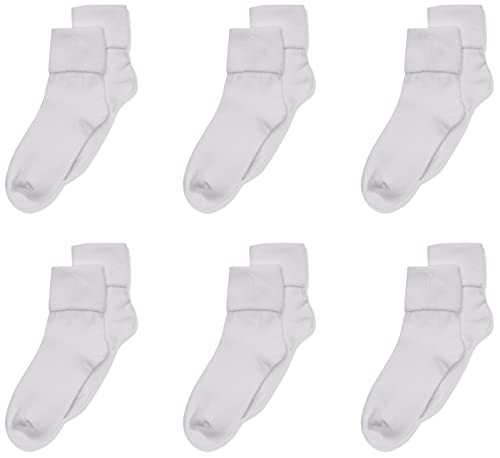
Construction here is genuinely seamless at the toe, not merely a flattened seam, which matters for babies who react to any internal ridge. Turning the cuff over doubles the fabric at the ankle and adds real stay on security. Colour choices lean traditional next to the pattern heavy supermarket multipacks.
Pros
- Truly seamless toe, no internal ridge
- Turn cuff doubles the ankle grip
- Holds shape through many washes
Cons
- Traditional colour range only
- Turn cuff bulks up under footed trousers

Hudson Baby Terry Socks
Terry runs through the whole sock rather than just the lining, making these the warmest pack on the list for winter babies and cold tile floors. Extra bulk also fills out a bootie that would otherwise slip off. Fitted shoes are where that thickness becomes a problem, changing the fit by half a size.
Pros
- Warmest option here for winter
- Cushioned terry throughout the sock
- Fills out loose booties nicely
Cons
- Too bulky for fitted shoes
- Uncomfortably warm in summer

Luvable Friends Baby Socks
Buying in bulk is the sensible response to how many baby socks disappear permanently, and these arrive in the largest packs here. Build quality covers everyday wear: a standard elasticated cuff on a plain cotton blend knit, nothing more. Sizing runs a touch small, so owners routinely order one size up.
Pros
- Most pairs per pack on this list
- Losses barely matter at this quantity
- Wide choice of patterns and colours
Cons
- Sizing runs small, so order up
- Thinner knit wears through sooner

Trumpette Baby Socks Gift Set
Designed to mimic tiny trainers, ballet flats and boots, these exist to be given rather than stockpiled. Underneath the styling sits reasonable cotton with a normal elasticated cuff. Printed detail softens and fades over repeated washes, which is why they suit a baby shower better than a daily drawer.
Pros
- Presentation box works straight as a gift
- Distinctive designs photograph well
- Decent cotton under the styling
Cons
- Far fewer pairs per pack
- Printed details fade with washing
The lineup, side by side
| # | Model | Fabric | Best for | Score | Price |
|---|---|---|---|---|---|
| 1 | Gerber Baby Wiggle-Proof Terry Socks | Cotton blend with terry lining | Best overall | 9.4 | Check price |
| 2 | Burt’s Bees Baby Ankle Socks | Organic cotton blend | Best organic cotton | 9.2 | Check price |
| 3 | Zando Baby Non-Slip Grip Socks | Cotton blend with rubber grip | Best for cruising babies | 9.0 | Check price |
| 4 | Jefferies Socks Baby Seamless Turn Cuff Socks | Combed cotton blend | Best for sensitive skin | 8.8 | Check price |
| 5 | Hudson Baby Terry Socks | Cotton terry blend | Best for cold weather | 8.6 | Check price |
| 6 | Luvable Friends Baby Socks | Cotton blend | Best budget | 8.3 | Check price |
| 7 | Trumpette Baby Socks Gift Set | Cotton blend | Best gift set | 8.0 | Check price |
Questions worth asking
Why do baby socks always fall off?
Most cuffs cannot hold a chubby ankle without being uncomfortably tight, and babies kick constantly. Purpose designed stay on cuffs and turn cuff constructions hold far better than a plain ribbed top.
Do newborns need to wear socks?
Usually yes, because newborns lose heat quickly through hands and feet and cannot regulate temperature well. Judge overall warmth by feeling the back of the neck rather than the feet, which naturally run cooler.
What size baby socks should I buy?
Use a foot length measurement in centimetres where the brand provides one, since age labels differ between packs. Sizing up slightly is safer than sizing down, provided the cuff still grips the ankle.
When do babies need grip socks?
From the point they pull up and cruise along furniture, typically eight to twelve months. Before weight bearing starts, grip soles add nothing beyond a bit of texture.
Are bamboo or cotton baby socks better?
Cotton is durable, cheap and everywhere. Bamboo blends manage moisture better and feel cooler, which suits sweaty feet and warm climates. Either works for sensitive skin as long as the toe seam is flat.
How do you stop losing baby socks?
Wash them inside a mesh laundry bag, buy several pairs of one design so orphans still match, and choose a stay on cuff so fewer disappear outdoors in the first place.
Should babies wear socks inside shoes?
Yes, a thin sock stops the shoe rubbing bare skin. Pick a lightweight knit rather than terry, since a thick sock changes the fit enough to make a well sized shoe feel tight.
How many pairs of baby socks do you need?
Ten to fifteen pairs suits most households, allowing for daily changes, a laundry cycle in progress and the ones that never come back.
Do baby socks shrink in the wash?
Cotton knits can lose a size permanently after a hot wash, especially if they are not labelled pre shrunk. Washing cool and air drying keeps sizing and cuff elastic intact far longer.
Our take
Gerber Baby Wiggle-Proof Terry Socks are the sensible default because they fix the only problem that really matters, staying on a kicking baby. Burt’s Bees Baby Ankle Socks justify the extra for sensitive skin and warmer months. Add a pack of Zando Baby Non-Slip Grip Socks the week your baby starts pulling up on the furniture.