How to Choose Baby Wipes for Sensitive Newborn Skin
WaterWipes Original lead overall, built from more than ninety nine percent water plus a fruit extract. Pampers Sensitive Baby Wipes handle everyday changes on a thicker textured sheet. Huggies Natural Care Sensitive carry more moisture and resist tearing, which matters through the blowout stage.
Newborn skin is thinner and more permeable than adult skin, so the shortest ingredient list usually wins. WaterWipes Original fit that brief. Once skin settles, Pampers Sensitive Baby Wipes become the more practical daily choice on a sheet that cleans in one pass.
Comparing wipes is harder than it looks, because gentle sounding claims sit on top of very different formulas. A thin sheet also hides its cost, since three of them replace one good wipe. We compared ingredient lists as published, stated fragrance and alcohol content, sheet construction, pack formats, and what parents report about pop up lids and skin reactions.
What matters most
How to read a baby wipe ingredient list Words like natural, pure and gentle carry no strict regulatory meaning, so turn the pack over. A short list led by water is the signal you want. Fragrance or parfum, alcohol and certain preservatives account for most contact irritation on baby skin. Free and clear formulas are the safest opening move for a newborn. Move to a richer, more lotioned wipe later, once you know skin tolerates it.
Does sheet thickness change how many wipes you use? It changes it dramatically. A thin sheet that tears mid change costs you three more, so a bigger pack count is not automatically better value. Embossed and textured sheets grip solids instead of spreading them, finishing in one pass. Compare sheet counts rather than pack sizes, because brands quietly vary the count between tubs and refills of the same product.
Which pack format dispenses best? Tubs with a firm pop up lid give the most reliable one handed pull. Refill packs with a resealable sticker hold more sheets, but the adhesive tires after a few weeks and the top layer dries. Flip top travel packs like the Babyganics format survive a changing bag best. A refillable tub at home plus travel packs elsewhere covers both situations without waste.
Can you flush baby wipes or use a wipe warmer? No baby wipe should go down a toilet, including anything labelled biodegradable, because the fibres do not disperse like toilet tissue and block pipes. Bin them or use a dedicated nappy bin. Wipe warmers are optional comfort rather than necessity. Refill one in small batches, since a stack sitting warm for days dries at the edges. Persistent redness despite a gentle wipe is worth raising with a health visitor or doctor.
What we recommend

WaterWipes Original Baby Wipes
Two ingredients make up the formula: purified water and a trace of fruit extract. That brevity is why midwives and parents reach for these in the first weeks, and why they suit skin that has already reacted. Less lotion also means less slip, so a heavy nappy takes an extra sheet.
Pros
- Two ingredient formula leaves little to react to
- No fragrance, alcohol or added preservatives
- Common first choice for newborn skin
Cons
- Little slip when tackling heavy messes
- Sheets feel thinner than lotion based rivals
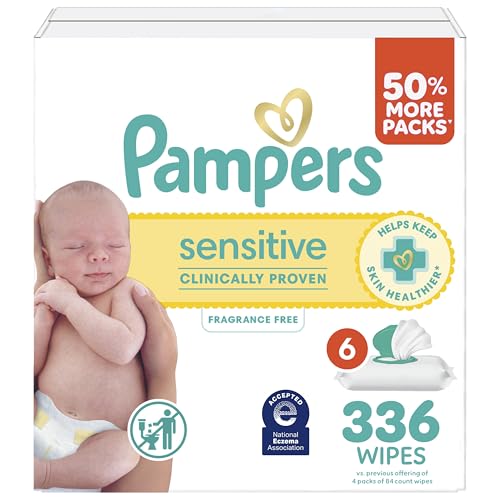
Pampers Sensitive Baby Wipes
Texture is the selling point here. A thicker embossed sheet grips solids rather than smearing them, so one wipe usually finishes the job. Pop up lids on both tubs and refills dispense a single sheet, which counts when your other hand is holding a wriggling baby.
Pros
- Embossed texture cleans in a single pass
- Pop up lid releases one sheet at a time
- Sold in large refill formats for bulk buying
Cons
- Longer ingredient list than water only wipes
- Top sheets in refill packs dry out once opened

Huggies Natural Care Sensitive Baby Wipes
Moisture content runs noticeably higher than average, and the sheet holds together when dragged across a mess. Blowouts get dealt with in two wipes instead of five. Aloe and vitamin E are in the formula, so check the label if your baby has reacted to botanical additions before.
Pros
- Sheet resists tearing even when soaked
- High moisture level covers large messes
- Stocked in almost every supermarket
Cons
- Aloe and vitamin E rule it out for some skin
- Tubs sometimes release two sheets at once

The Honest Company Clean Conscious Wipes
Fibres come from plant sources rather than a polyester blend, and the water based formula lists every component plainly. Thickness holds up to solid food stage messes, which thinner eco wipes struggle with. Print designs rotate between batches, so packs rarely match.
Pros
- Full ingredient list printed on the pack
- Plant derived fibres instead of polyester
- Thick enough for solid food stage messes
Cons
- Sheet counts vary between tubs and travel packs
- Print designs change without notice

Seventh Generation Free & Clear Baby Wipes
Fragrance, alcohol, dyes and parabens are all left out, and the pack explains why in plain language. Sheets run thinner than the heavyweight options, which suits sticky fingers and mouths more than nappy duty. Many families keep a pack in the kitchen and a stronger wipe on the changing table.
Pros
- Four common irritants left out of the formula
- Thin soft sheet suits faces and hands
- Packaging designed around recyclability
Cons
- Too thin for heavy nappy changes
- Needs several sheets on solid messes

Babyganics Fragrance Free Baby Wipes
Flip top travel packs are the real advantage, sealing properly after being thrown around a changing bag for a week. Most brands fail exactly there. Plant derived oils add slip to a fragrance free formula, on a sheet of medium thickness.
Pros
- Rigid flip top keeps sheets damp in a bag
- Plant derived oils add slip without fragrance
- Pack shape survives car and pram storage
Cons
- Sheet count per pack is low
- Not economical as a household main supply

Pampers Aqua Pure Baby Wipes
Aqua Pure is Pampers answering water only wipes on their own terms, using mostly water plus premium cotton in the sheet. You keep the mainstream pop up lid and the bulk availability. Thickness sits just below Pampers Sensitive, so heavy changes still take two.
Pros
- Water led formula in a widely stocked brand
- Pop up lid dispenses one sheet cleanly
- Cotton content suits newborn skin
Cons
- Thinner than Pampers Sensitive sheets
- Less slip than lotion based wipes
How they stack up
| # | Model | Formula | Best for | Score | Price |
|---|---|---|---|---|---|
| 1 | WaterWipes Original Baby Wipes | Over 99 percent water | Best overall | 9.4 | Check price |
| 2 | Pampers Sensitive Baby Wipes | Fragrance free, dermatologist tested | Best value | 9.2 | Check price |
| 3 | Huggies Natural Care Sensitive Baby Wipes | Fragrance free with aloe and vitamin E | Best for messy changes | 9.0 | Check price |
| 4 | The Honest Company Clean Conscious Wipes | Water based, fragrance free | Best plant based | 8.8 | Check price |
| 5 | Seventh Generation Free & Clear Baby Wipes | Free of fragrance, alcohol, dyes and parabens | Best for faces and hands | 8.6 | Check price |
| 6 | Babyganics Fragrance Free Baby Wipes | Fragrance free with plant derived oils | Best for travel packs | 8.3 | Check price |
| 7 | Pampers Aqua Pure Baby Wipes | Water led with premium cotton | Best water based alternative | 8.0 | Check price |
Good to know
Which baby wipes are best for newborns?
Water based wipes with the shortest ingredient lists are the standard first choice, since newborn skin absorbs more of what touches it. Fragrance free and alcohol free are the two labels that matter most in the early weeks.
Are water wipes better than regular baby wipes?
They are gentler simply because there is less in them. The trade is grip: without lotion they slide over heavy messes and take an extra sheet. Many families use water wipes early and switch to a thicker sensitive wipe once solids start.
Can baby wipes be flushed down the toilet?
No. Even wipes marked biodegradable or flushable stay intact far longer than toilet tissue and are a leading cause of household and sewer blockages. Use a bin every time.
Do baby wipes expire?
Unopened packs generally keep for two to three years, with a date or batch code printed on the pack. After opening, drying out is the real problem, so reseal the lid and finish an open pack within a few weeks.
Are fragranced wipes bad for babies?
Fragrance is among the most common triggers for contact irritation on infant skin. Plenty of babies never react, but for newborns and any child with eczema the fragrance free version is the sensible default.
Can you use baby wipes on a baby’s face?
Yes, provided the wipe is fragrance free and alcohol free. Thinner free and clear wipes suit faces better than heavyweight nappy wipes. Avoid the eye area and pat rather than rub.
How many baby wipes will I need per day?
Newborn routines often involve six to ten changes daily using two or three wipes each, so around twenty a day at the peak. That figure falls steadily once feeding settles into a pattern.
Is a wipe warmer worth buying?
It is a comfort item, not a necessity. If you use one, refill in small batches, because a warm stack left for days dries at the edges and sits in a less hygienic environment than a sealed pack.
What is the difference between sensitive and regular baby wipes?
Sensitive versions drop fragrance and usually simplify the preservative system. Regular wipes often add lotion and scent for a richer feel. Formulas differ by brand, so compare the actual lists rather than the label wording.
Do baby wipes cause nappy rash?
Wipes rarely cause rash on their own, though fragrance and alcohol can aggravate skin that is already sore. If redness persists, switch to plain water and cotton wool for a few days and speak to a doctor if it does not settle.
Final word
WaterWipes Original are the safest opening choice for a newborn or for skin that has already flared, because there is almost nothing in them to react to. Move to Pampers Sensitive Baby Wipes when you need a thicker sheet for daily changes. Keep Huggies Natural Care Sensitive for the messiest weeks, when tear resistance saves both wipes and patience.


