Balcony Privacy Screens That Skip Drilling Entirely
Coarbor’s knitted HDPE mesh works across most balcony sizes and cuts cleanly without fraying. Amagabeli’s reinforced-edge roll stretches further for multi-section railings. VICLLAX blocks nearly 90 percent of sightlines for anyone facing a neighboring unit directly.
Wind, rail spacing, and a no-drill lease clause decide whether a balcony screen earns its spot.
Seven current Amazon listings were compared on mesh material, wind permeability, grommet spacing, and owner feedback to separate all-around picks from narrower cases like renters or high-wind floors.
The best picks, ranked
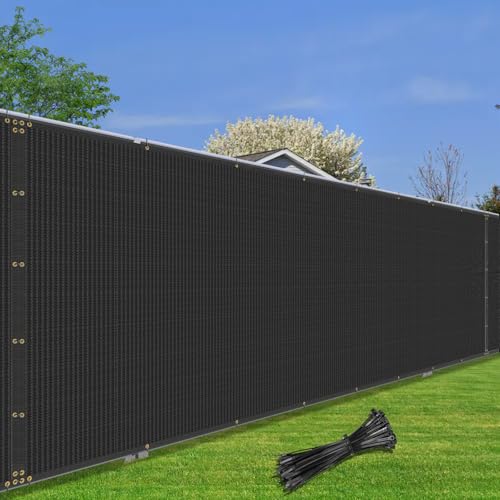
Coarbor 6′ x 50′ Privacy Fence Screen
A 6 by 50 foot roll of knitted HDPE mesh ships long enough for most owners to trim down. Brass grommets sit every 24 inches for zip-tie or rope mounting. Cut edges resist fraying, unlike cheaper woven mesh.
Pros
- Cuts to custom balcony length without fraying
- Brass grommets hold up to repeated zip-tie removal
- UV-stabilized weave resists fading across seasons
Cons
- Full roll is oversized for a single small balcony
- Dark color options absorb more heat in direct sun

Amagabeli 6′ x 50′ Garden Privacy Fence Screen
A stitched polyester border wraps the mesh edge on this Amagabeli screen, stopping zip-tie holes from tearing out. One 6 by 50 foot roll stretches across several balcony sections. That length beats buying multiple smaller panels on cost per foot.
Pros
- Reinforced border resists grommet tear-out
- Extra roll length covers multiple railings or fence runs
- Grommet spacing matches most standard balusters
Cons
- Only two color options for matching building exteriors
- Mesh reads semi-sheer rather than fully opaque

Windscreen4less Custom Size Heavy Duty Privacy Screen
Custom height and length replace the fixed-roll format here, cut to order per balcony. Roughly 30 to 40 percent of wind passes through the knitted mesh, cutting the sail effect that rips zip-tied screens off high-rise railings. Double-stitched hems run along all four edges.
Pros
- Custom sizing fits irregular balcony rail dimensions
- Wind-permeable weave holds up on upper floors
- Double-stitched hems add tear resistance
Cons
- Custom orders ship slower than stocked rolls
- Higher permeability shows more visual gaps than dense mesh

VICLLAX 6′ x 50′ Privacy Fence Screen
Higher-density weave sets VICLLAX apart from most balcony screens, blocking close to 90 percent of the view through. Grommets run every 20 inches along a reinforced border. Owners report it beats semi-sheer alternatives at blocking sightlines from neighboring units.
Pros
- Near-opaque weave blocks sightlines from adjacent units
- Reinforced grommet border withstands repeated tensioning
- Roll length works for wraparound balcony rails
Cons
- Denser weave catches more wind load in storms
- Limited color selection compared to lighter-duty screens

Ideaworks Fence and Deck Privacy Screen
Deck and balcony railings, not ground fencing, are what this Ideaworks screen targets. Cable ties sized for standard railing spindles ship in the box, so no drilling or permanent hardware is needed. Renters can pull it off in minutes at move-out without leaving marks.
Pros
- Cable-tie mounting leaves no holes in railings
- Compact panel size suits single balcony sections
- Fits most no-alteration lease clauses
Cons
- Smaller panel size needs multiple units for wraparound rails
- Less wind-permeable weave can flap in gusty conditions

Yaheetech Natural Reed Fence Screen
Natural reed stalks tied with galvanized wire replace synthetic mesh in this Yaheetech screen. Its tan finish suits balconies near gardens or wood-toned buildings better than plastic mesh. Garden shears trim rolls easily to fit narrow railing widths.
Pros
- Natural tan finish blends with wood railings and planters
- Trims to custom width without fraying edges
- Lighter weight than dense HDPE mesh rolls
Cons
- Untreated reed weathers faster than UV-stabilized mesh
- Offers less wind resistance than knitted synthetic screens

Sunnyglade 6′ x 50′ Privacy Fence Screen
Lower cost than reinforced-edge competitors is the main draw of this Sunnyglade roll. Standard HDPE mesh spans 6 by 50 feet, with grommets spaced for zip-tie mounting. Short-term rentals and seasonal balcony setups suit it better than multi-year use.
Pros
- Lower cost per foot than reinforced-edge screens
- Standard grommet spacing fits common zip-tie kits
- Roll length covers multiple small balconies
Cons
- Edges lack the reinforced webbing of pricier screens
- Thinner mesh shows more wear after a full season outdoors
Side by side
| # | Model | Material | Best for | Score | Price |
|---|---|---|---|---|---|
| 1 | Coarbor 6′ x 50′ Privacy Fence Screen | Knitted HDPE mesh | Best overall | 9.4 | Check price |
| 2 | Amagabeli 6′ x 50′ Garden Privacy Fence Screen | HDPE mesh with woven edge binding | Best value | 9.1 | Check price |
| 3 | Windscreen4less Custom Size Heavy Duty Privacy Screen | Knitted HDPE mesh | Best for high wind | 8.8 | Check price |
| 4 | VICLLAX 6′ x 50′ Privacy Fence Screen | High-density HDPE mesh | Best for full privacy | 8.6 | Check price |
| 5 | Ideaworks Fence and Deck Privacy Screen | Woven polyester mesh | Best for renters | 8.4 | Check price |
| 6 | Yaheetech Natural Reed Fence Screen | Natural reed, galvanized wire ties | Best for natural look | 8.2 | Check price |
| 7 | Sunnyglade 6′ x 50′ Privacy Fence Screen | HDPE mesh | Best budget | 8.0 | Check price |
Before you buy
What to Look for in a Balcony Privacy Screen Material and mounting method matter more than color for balcony use. Knitted HDPE mesh resists fraying at cut edges, while woven mesh can unravel once trimmed. Grommet spacing sets how many zip ties or clips a screen needs per foot of railing. Roll length matters too, since most balcony sections need only a fraction of a 50 foot spool.
How Do You Install a Privacy Screen Without Drilling? Leases often forbid drilling into railings or exterior walls. Zip ties and cable ties thread through grommets or a stitched border without tools. Ideaworks builds its screen specifically for railing spindles, cutting install time to under 30 minutes. Move-out removal leaves no visible marks on metal or vinyl rails.
Which Screens Hold Up Best in Wind? Upper floors see stronger gusts than ground-level patios. Wind permeability, the share of airflow a mesh lets through, reduces the sail effect that tears screens loose. Windscreen4less rates its knitted mesh around 30 to 40 percent permeability. Reinforced hems and grommets spaced under 24 inches apart also cut down on edge tearing during storms.
Semi-Sheer or Full Privacy: Which Opacity Fits Your Balcony? Semi-sheer mesh dulls sightlines and lets wind pass without full opacity. Dense weaves like VICLLAX block close to 90 percent of visibility, useful for balconies facing a neighboring unit directly. Reed and bamboo screens sit in between, blocking view through overlapping stalks rather than a plastic weave. Corner or end-unit balconies with fewer sightlines can often get by with lighter, more wind-permeable mesh.
Common questions
Do balcony privacy screens block wind or just visibility?
Most knitted mesh screens do both, but the ratio depends on wind permeability. A screen rated near 30 percent permeability lets that share of airflow through while still blocking most of the view.
Can I install a privacy screen without drilling into my balcony railing?
Yes. Screens with grommets or a reinforced border attach with plastic zip ties or cable ties threaded around railing spindles, and panels like the Ideaworks screen ship with ties included.
What size privacy screen fits a standard balcony railing?
Most rolls come in a 3 to 6 foot height, which covers common railing heights, and get trimmed to the balcony’s width. Custom-cut brands like Windscreen4less skip trimming entirely by cutting to order.
Is mesh or reed better for balcony privacy?
HDPE mesh blocks more wind and view per foot and lasts longer outdoors. Natural reed screens weather faster but suit balconies near gardens or wood-finished buildings where a plastic look would stand out.
How long do balcony privacy screens last outdoors?
UV-stabilized HDPE mesh commonly holds up for multiple seasons before noticeable fading, based on manufacturer specifications. Untreated reed screens typically show weathering sooner without added sealant.
Do privacy screens violate apartment lease rules?
Rules vary by building, but zip-tie or cable-tie mounted screens that avoid drilling usually meet no-alteration clauses. Checking the lease before installing anything on a shared or exterior railing is worth the extra step.
What does wind permeability mean on a privacy screen listing?
It is the percentage of wind that passes through the mesh weave instead of pushing against it as a solid sheet. Higher permeability reduces strain on grommets and mounting ties in gusty conditions.
Can balcony privacy screens handle heavy rain and snow?
HDPE mesh sheds water and does not absorb moisture, so rain passes through rather than pooling. Heavy wet snow can still add weight to a screen, so clearing accumulation after storms extends its lifespan.
Balcony privacy screen vs bamboo fencing: which lasts longer?
HDPE mesh generally outlasts bamboo outdoors since it resists rot and does not need yearly sealant. Bamboo and reed suit a natural look but weather faster without added treatment.
What is the best privacy screen for a high-rise apartment?
Wind-permeable knitted mesh, like Windscreen4less at 30 to 40 percent permeability, holds up better on upper floors than dense, low-permeability weaves that catch more gusts.
The bottom line
Coarbor’s knitted mesh screen fits the widest range of balconies without fraying at cut edges. Renters facing strict lease rules should look at Ideaworks’ cable-tie railing panel instead. Those on upper floors or exposed corners get more durability from Windscreen4less’s wind-permeable weave.