Basketballs Tough Enough for Asphalt and Concrete Courts
Spalding NBA Street takes the top spot, since its thick rubber cover and deep channels outlast blacktop abrasion. Wilson NCAA Killer Crossover grips best once dust coats a court. Under Armour Undeniable 495 crosses between driveway and gym floor without ruining itself on either.
Spalding NBA Street leads because its cover is built for abrasion rather than feel. Wilson NCAA Killer Crossover grips harder on a dusty outdoor court. Anyone moving between blacktop and a gym floor should look at the Under Armour Undeniable 495 instead.
Choosing badly here is easy, because the ball that feels best in a shop is usually composite leather, and asphalt strips that surface within weeks. Rubber is what actually survives, and rubber balls separate on compound softness, channel depth and how long the bladder holds pressure. We compared cover materials, panel and channel design, stated sizes and air retention behaviour. Owner reports on dusty-court grip and how fast pebbling wears smooth settled the close calls.
The best picks, ranked
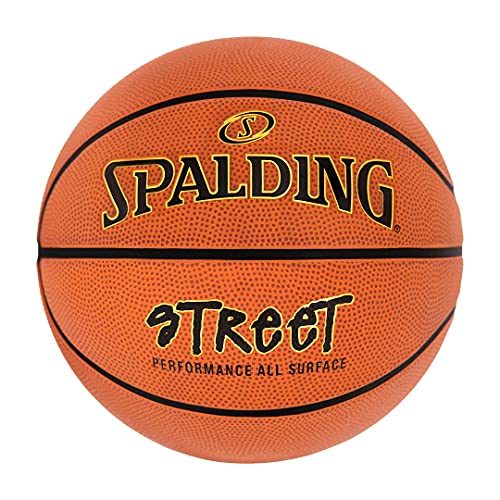
Spalding NBA Street Basketball
Blacktop takes months to wear the pebbling off this cover, which is why it sits in so many driveways. Wide, deep channels give fingers something to catch once dust settles on the court. Firmness is the honest downside, and it hardens the feel on a jump shot compared with composite.
Pros
- Outlasts composite covers by many months on asphalt
- Deep channels hold grip as pebbling wears
- Sold in size five, six and seven
Cons
- Harder in the hand than composite leather
- Wants a few sessions before it grips properly

Wilson NCAA Killer Crossover Basketball
Aggressive pebbling is the headline here, and it keeps hold of your fingers once court dust builds. Wilson uses a softer compound, so the ball feels comfortable on a release rather than punishing. Softer rubber does surrender surface faster on rough concrete.
Pros
- Grips better than any other rubber ball here when dusty
- Softer compound feels kinder on shooting hands
- Bounces true straight out of the box
Cons
- Cover thins faster than heavy duty rubber
- Pebbling flattens noticeably after a season

Under Armour Undeniable 495 Basketball
Built as a crossover ball, the 495 handles asphalt without feeling wrong on hardwood. Air retention holds up well, useful when the ball lives in a car boot between games. Pure outdoor rubber lasts longer, but nothing here covers two surfaces this evenly.
Pros
- Playable on both hardwood and blacktop
- Keeps pressure for weeks between sessions
- Comfortable feel for shooting repetition
Cons
- Shorter outdoor life than pure rubber
- Grip drops off sooner on abrasive courts
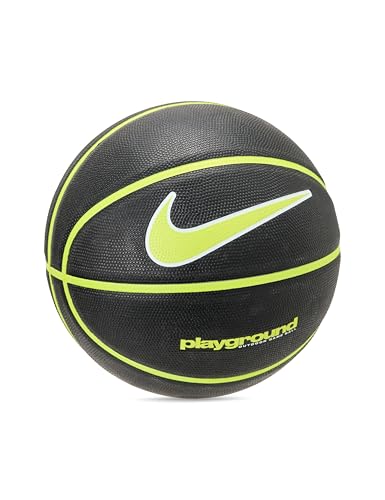
Nike Everyday Playground 8P Basketball
Pickup games are the target, and the soft rubber cover feels right from the first possession with no break-in wait. Eight panel construction and bold colourways make your ball easy to spot in a pile at the fence. Daily blacktop sessions will wear it faster than heavy duty rubber.
Pros
- Grips well from the first session, no break-in needed
- Bright colourways stay easy to identify
- Forgiving feel for younger hands
Cons
- Soft cover erodes quicker on rough courts
- Bounce stiffens noticeably below freezing

Spalding TF-150 Rubber Basketball
Ball carts and PE lessons are where the TF-150 earns its place, built for volume abuse rather than sensation. Unit-to-unit consistency is its quiet strength, so a dozen of them bounce alike. Feel and finish stay plain next to flagship street balls.
Pros
- Consistent bounce across every unit in a set
- Retains pressure through long storage
- Handles constant handling from many players
Cons
- Plainer feel than premium rubber covers
- Grip is only average once dust builds

Molten BGR Rubber Basketball
Molten engineers for true flight and repeatable bounce, which is why coaches keep these in the drill bag. Twelve panel construction adds channel length and makes rotation easy to read in the air. Surface tack falls short of Wilson or Spalding street covers.
Pros
- Bounce stays repeatable through long drill sets
- Panel pattern shows spin clearly in flight
- Cover holds up to daily practice volume
Cons
- Less tacky than the grippiest rubber balls
- Firm feel that some shooters never warm to

Baden Contender Rubber Basketball
Driveways and school yards are the brief, and the Contender fills it without pretence. Buy it for a child likely to lose the ball long before wearing through the cover. Grip and feel stay basic against the premium picks above.
Pros
- Sensible entry ball for casual driveway play
- Rubber cover copes with concrete better than composite
- Straightforward construction with nothing to fail
Cons
- Grip turns slick once dust settles
- Pebbling wears flat relatively early
Before you buy
Which basketball cover material lasts outdoors? Genuine and composite leather belong on sealed wood. Asphalt works like sandpaper against those covers, and a good indoor ball can look ruined after a few weeks of pickup games. Rubber covers run thicker and shed material slowly, which is the entire reason they exist. Any ball that will touch concrete should be rubber, and the firmer feel is simply part of the deal. Composite blends sit between the two and suit players splitting time across both surfaces.
How channels and pebbling affect your grip Fingers hold two features: the channels between panels and the fine pebbling across the cover. Pebbling wears away first on any outdoor ball, usually within a season of regular play. Deeper, wider channels keep working long after that texture flattens, which is why they matter more outdoors than indoors. Balls combining both stay usable far longer. Wet or dusty conditions widen that gap further, since a smooth cover offers nothing to catch.
What size basketball do you need? Size seven measures 29.5 inches around and is standard for men and older teens. Size six at 28.5 inches serves women and younger teens. Size five at 27.5 inches is the youth ball. Oversized balls teach children to push from the chest, a habit that takes years to unlearn. Read the size printed on the cover rather than trusting a product photo, since listings often show several sizes in one image.
How to make an outdoor basketball last longer Most covers want roughly seven to nine PSI, and the correct range is moulded near the valve. Overinflation stresses seams and makes cold-weather bounce erratic; underinflation kills rebound and drags the cover along the ground. Wet the needle before inserting it so the valve does not tear. Wipe the ball after outdoor sessions to lift grit from the channels. Store it indoors, because freezing garages leave rubber stiff and prone to surface cracking.
Compared at a glance
| # | Model | Cover | Best for | Score | Price |
|---|---|---|---|---|---|
| 1 | Spalding NBA Street Basketball | Thick performance rubber | Best overall | 9.4 | Check price |
| 2 | Wilson NCAA Killer Crossover Basketball | Textured rubber | Best for grip | 9.2 | Check price |
| 3 | Under Armour Undeniable 495 Basketball | Composite rubber blend | Best value | 9.0 | Check price |
| 4 | Nike Everyday Playground 8P Basketball | Soft rubber | Best for casual play | 8.8 | Check price |
| 5 | Spalding TF-150 Rubber Basketball | Durable rubber | Best for schools and clubs | 8.6 | Check price |
| 6 | Molten BGR Rubber Basketball | Moulded rubber | Best for training drills | 8.3 | Check price |
| 7 | Baden Contender Rubber Basketball | Standard rubber | Best budget | 8.0 | Check price |
Good to know
Can an indoor basketball be used outside?
Physically yes, practically no. Composite and leather covers abrade fast on asphalt and turn slick within weeks. Keep leather for wood floors and buy a dedicated rubber ball for the driveway.
How long does an outdoor basketball last?
A quality rubber ball played several times a week usually stays grippy for a year or more before the pebbling flattens. Rough broom-finished concrete shortens that considerably against smooth asphalt. Owners report that clearing grit from the channels extends useful life.
What PSI should a basketball be inflated to?
Seven to nine PSI covers most balls, with the exact figure printed beside the valve. Drop it from shoulder height as a field check; a correctly filled ball rebounds to about waist level. Use a gauge rather than judging by squeeze.
Which basketball size should a child use?
Size five suits children up to roughly age eleven, size six fits younger teens and most women, and size seven is the men’s standard. Too large a ball encourages pushing rather than shooting. Confirm the number stamped on the cover.
Why does my basketball feel slippery?
Court dust has probably filled the pebbling, or the texture has worn flat. Wipe it with a damp cloth and dry it fully, which restores grip on a cover with texture left. Still slick afterwards means the cover is finished.
Do outdoor basketballs need breaking in?
Heavy duty rubber often feels stiff and overly bouncy for the first few sessions, then settles. Playing with it is the only method that works. Composite blends generally feel correct straight away.
Does cold weather affect a basketball?
It does. Falling temperature drops internal pressure, so the ball bounces low and feels dead, while cold rubber stiffens and cracks more readily over time. Check pressure in winter and avoid overnight storage in an unheated garage or car.
How should you clean an outdoor basketball?
Mild dish soap on a damp cloth handles most build-up. Work along the channels where grit collects, then dry the ball completely. Skip solvents and degreasers, which break down rubber, and never submerge a ball because water can pass the valve.
Is a rubber or composite basketball better for a driveway?
Rubber, in almost every case. Composite feels better and shoots softer, but a driveway grinds it down within a season. Choose composite only when the same ball spends most of its life on a gym floor.
The verdict
Cover thickness decides how many months you get outdoors, and that puts the Spalding NBA Street ahead for regular blacktop play. Pick the Wilson NCAA Killer Crossover when dusty-court grip outranks longevity. For a ball splitting time between the driveway and a gym, the Under Armour Undeniable 495 remains the sensible compromise.