Youth Basketballs Sized Right for Smaller Hands
Spalding Rookie Gear leads because reduced weight lets a small player shoot one handed instead of shoving from the chest. Wilson NCAA Killer Crossover in a youth size is the rubber pick for driveways. Molten BGR5 gives clubs consistent bounce across a whole ball cart.
Spalding Rookie Gear tops this list on weight alone, since a lighter ball is what lets a small player shoot from the shoulder. Concrete driveways call for the Wilson NCAA Killer Crossover in a youth size, whose rubber cover handles abrasion. Clubs buying several balls at once are better served by the Molten BGR5 and its predictable bounce.
Most mistakes start with buying the ball adults recognise, which is a full size seven. Too much circumference or weight forces a two handed chest push, and that habit takes years to unpick. Surface causes the second mistake, because a composite ball meant for a gym floor scuffs bare within weeks on a driveway. We compared circumference and weight against official youth specifications, cover materials, pebbling depth and stated surface suitability. Owner reports on underinflated deliveries and cover wear settled the rest.
Before you buy
What size basketball should a child use? Size five measures twenty seven and a half inches and generally suits players up to eight or nine years old. Size six, at twenty eight and a half inches, covers older children, most girls competitions and many under fourteen leagues. Size seven at twenty nine and a half inches is the adult men standard. Leagues specify a size, so ask the coach before ordering. Children sitting between sizes should stay on the smaller ball while skills are developing.
Why weight matters as much as circumference Two balls can share a circumference and still differ in weight, and weight decides whether a child can reach the rim with one hand. Anything too heavy forces a two handed chest shove that grooves in fast and resists correction. Lighter youth and rookie models exist for this exact reason. Players under about eight benefit most from choosing one.
Which cover suits your court: rubber or composite? Composite leather feels excellent on a wooden gym floor and holds grip there for years. That same cover can look visibly worn after a few weeks on a concrete driveway. Rubber covers are thicker and designed to be dragged across abrasive surfaces. Buy rubber when most play happens outside, even if the school gym uses composite indoors. Keeping one ball for each surface solves the problem outright.
How to inflate, clean and store a youth ball Balls frequently arrive underinflated, and a soft ball bounces badly enough to discourage a beginner. Correct pressure is printed near the valve, usually between seven and nine pounds per square inch. A pump with a gauge pays for itself quickly. Moisten the needle before inserting it so the valve does not tear. Wipe grit out of the channels after outdoor sessions, and keep the ball out of a freezing garage, where cold stiffens rubber and shortens its life.
The shortlist, ranked

Spalding Rookie Gear Youth Basketball
Reduced weight is the entire point here, and it does more for a young shooter than any other feature. Soft composite cover suits small hands and grips from the first bounce. Development is the design brief, so players who reach club level will move past it.
Pros
- Lighter weight supports one handed shooting form
- Soft cover fits small hands
- Grips well straight out of the box
Cons
- Outgrown once a player reaches club level
- Composite cover scuffs fast on concrete

Wilson NCAA Killer Crossover Basketball
Deep pebbling on a rubber cover holds grip on dusty concrete and in dry hands. Youth, intermediate and official sizes are all offered, so families can match circumference to age rather than guess. Rubber feels firmer than composite until a few sessions soften it.
Pros
- Rubber cover handles concrete and asphalt
- Deep pebbling grips dry hands
- Sold in every youth size
Cons
- Firmer feel than composite balls
- Wants a short break in period

Molten BGR5 Rubber Basketball
Bounce consistency explains why these fill club ball carts. Size five measures a true twenty seven and a half inches instead of an approximation, which matters when a coach runs shooting drills. Grip sits at adequate, behind premium rubber balls with deeper channels.
Pros
- Predictable bounce across a whole cart
- True size five specification, not approximated
- Stands up to club training loads
Cons
- Grip trails premium rubber balls
- Plain looks hold little appeal for children

Under Armour Undeniable 295 Basketball
295 refers to intermediate size at twenty eight and a half inches, which fits older children and most girls leagues. A composite rubber blend cover works on a gym floor and a driveway without failing outright on either. Air retention is strong, useful for a ball that lives in a garage between games.
Pros
- Usable on both wood and concrete
- Holds pressure between sessions
- Comfortable grip for older children
Cons
- Wears sooner outdoors than pure rubber
- Feels less refined indoors than composite leather
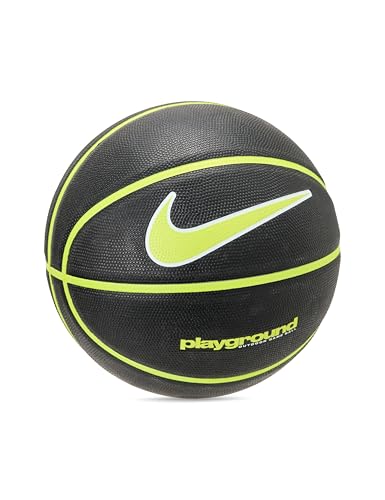
Nike Everyday Playground 8P Basketball
Soft rubber grips from the first bounce with no break in required. Bright colourways make it easy to tell whose ball is whose at a busy park. Youth through official sizes exist, and the softer cover trades some life on rough surfaces.
Pros
- Grips immediately with no break in
- Colourways help children track their own ball
- Offered across youth and official sizes
Cons
- Soft cover wears sooner on rough asphalt
- Bounce stiffens noticeably in cold weather

Franklin Sports Youth Basketball
Franklin covers the case where nobody yet knows whether the sport will stick. Bounce stays consistent and grip is fine for a beginner learning to dribble. Regular training will show the cover’s limits within a season.
Pros
- Correct youth sizing for the smallest outlay
- Grip is adequate for beginners
- Fine for driveway hoops and school yards
Cons
- Cover wears quickly under regular use
- Bounce less consistent than training balls

Baden Contender Rubber Basketball
School programmes are the target here, and handling by dozens of children is the design load. Youth and official sizes both exist, and the ball holds air through long storage in a cupboard. Feel is basic, so a keen young player will not find it inspiring.
Pros
- Built to take heavy shared use
- Holds air through months of storage
- Available in correct youth sizes
Cons
- Basic feel and grip
- Pebbling smooths under constant use
Side by side
| # | Model | Size | Best for | Score | Price |
|---|---|---|---|---|---|
| 1 | Spalding Rookie Gear Youth Basketball | Youth size, twenty seven and a half inches | Best overall | 9.4 | Check price |
| 2 | Wilson NCAA Killer Crossover Basketball | Available in youth, intermediate and official | Best for outdoor play | 9.2 | Check price |
| 3 | Molten BGR5 Rubber Basketball | Size five, twenty seven and a half inches | Best value | 9.0 | Check price |
| 4 | Under Armour Undeniable 295 Basketball | Intermediate, twenty eight and a half inches | Best for indoor and outdoor | 8.8 | Check price |
| 5 | Nike Everyday Playground 8P Basketball | Youth through official sizes | Best for casual play | 8.6 | Check price |
| 6 | Franklin Sports Youth Basketball | Youth sizes | Best budget | 8.3 | Check price |
| 7 | Baden Contender Rubber Basketball | Youth and official sizes | Best for schools | 8.0 | Check price |
Common questions
What size basketball should a 7 year old use?
Size five, at twenty seven and a half inches, fits most seven year olds. A lighter rookie model in that size helps more still, because it lets a one handed shot develop. Check the league rules first, since some under eight competitions specify their own ball.
What is the difference between size five and size six basketballs?
Size five measures twenty seven and a half inches around and weighs about seventeen ounces. Size six measures twenty eight and a half inches and weighs roughly twenty ounces. Size six covers older children, women’s play and many under fourteen leagues.
Does a lighter basketball really help a young player?
Yes. Anything too heavy forces a two handed push from the chest instead of a proper one handed shot. Lighter youth balls let correct mechanics form from the start, which is far easier than retraining them later.
Can a youth basketball be used on a driveway?
Only when the cover is rubber. Composite and leather youth balls scuff rapidly on concrete and turn slick. Keep composite balls for indoor courts and buy rubber for outdoor play.
What pressure should a youth basketball be inflated to?
Usually seven to nine pounds per square inch, with the exact range printed beside the valve. Dropped from shoulder height, a correctly inflated ball rebounds to about waist height. Many arrive soft and need topping up before first use.
Should I buy the ball my child will grow into?
No. An oversized ball encourages poor shooting mechanics that persist long after the child grows. Buy the correct current size and step up when the league or their development calls for it.
How long does a youth basketball last?
Rubber balls used outdoors several times a week typically hold up for a year or more. Composite balls used on concrete can wear out in weeks. Indoor use extends any ball’s life considerably, and clearing grit from the channels helps.
Do rubber basketballs need breaking in?
Rubber often feels stiff for the first few sessions, then softens and grips better. Composite balls generally feel right immediately. A ball still slick after several sessions usually has court dust packed into the pebbling.
How do you clean a youth basketball?
Wipe it with a damp cloth and mild soap, working along the channels where grit collects, then dry it fully. Solvents damage both rubber and composite covers. Never soak a ball, since water can pass through the valve.
Which basketball works for indoor and outdoor play?
A composite rubber blend such as the Under Armour Undeniable 295 handles both without ruining itself on either. Expect a compromise: it wears faster outdoors than pure rubber and feels coarser indoors than composite leather. Families splitting time between a gym and a driveway usually accept that trade.
The bottom line
For a young player still learning to shoot, Spalding Rookie Gear is the right buy, because reduced weight shapes form more than any other feature. Concrete changes the answer to the Wilson NCAA Killer Crossover in a youth size, which survives abrasion for far longer. Clubs stocking a ball cart should take the Molten BGR5 for its bounce consistency.
You might also need
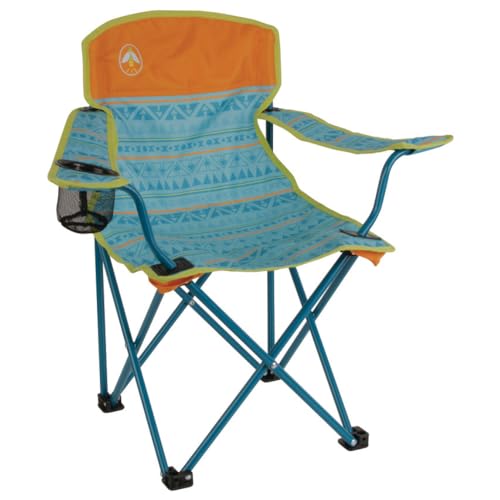
Camping Furniture Sized Right for Kids and Teens
