Building Blocks a Toddler Can Actually Handle First
For toddlers learning to connect pieces, the LEGO DUPLO Classic Brick Box handles the widest range of builds. Infants still mouthing toys need the softer Fisher-Price Baby’s First Blocks instead. Families who want a natural material over plastic should choose the Melissa & Doug Wooden Building Blocks Set.
A block set sized for a four year old can be a choking hazard for a one year old, so age rating matters before piece count or brand. The LEGO DUPLO Classic Brick Box handles that range best once a toddler passes 18 months, thanks to oversized bricks built for developing hands. Infants who still mouth toys need the softer Fisher-Price set instead, while families avoiding plastic often land on the Melissa & Doug wooden pieces.
Age range drives nearly every other decision with building blocks, since grip strength and mouthing behavior change fast between six months and three years. We compared piece dimensions, stated material, printed age ratings and owner reports on durability through drops, chewing and repeated stacking.
Our top picks
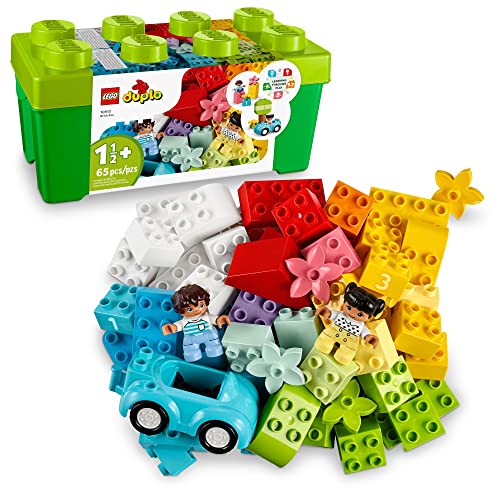
LEGO DUPLO Classic Brick Box
Oversized bricks click together with enough resistance for a toddler to feel the connection, yet loose enough for small hands to pull apart. Eighty five pieces fill a plastic storage box that doubles as a first cleanup habit. Every DUPLO set uses the same connector size, so a family can add train or animal sets later without piece mismatch.
Pros
- Large pieces suit hands still developing grip strength
- Same connector size across the entire DUPLO lineup
- Storage box turns cleanup into part of the play routine
Cons
- Loose bricks scatter across a room and go missing
- Costs more per piece than generic chunky block sets

Mega Bloks First Builders Big Building Bag
Eighty pieces travel in a zippered carry bag sized for a toddler to drag between rooms. Rounded edges and a soft-touch coating suit fingers that have not yet mastered a firm pinch grip. Owners with younger toddlers report the bag keeps pieces from spreading across the house between play sessions.
Pros
- Carry bag contains pieces between play sessions
- Rounded chunky shapes match early motor skills
- Age range stretches from 1 to 5 years
Cons
- Zipper on the carry bag wears out before the blocks
- Offers fewer connection styles than DUPLO bricks

Fisher-Price Baby’s First Blocks
Fabric-covered foam blocks have no hard edge or detachable piece, which suits a baby still exploring toys by mouth. Ten blocks stack without any locking mechanism, matching the motor skills of a child under one. Parents often use this set as a first toy before moving to harder connecting bricks.
Pros
- Soft fabric surface is gentle for mouthing infants
- No small connector parts that could come loose
- Simple stacking action matches early motor development
Cons
- Child outgrows the set quickly once ready to connect pieces
- Fabric covers can fray after repeated machine washing

Melissa & Doug Wooden Building Blocks Set
One hundred solid wood pieces arrive in varied shapes instead of uniform bricks, which pushes a child toward balance and structure rather than simple snapping. A wooden crate holds the full set on a shelf. Parents who want to limit plastic toys in the house often pick this set for its natural material and tactile weight.
Pros
- Varied shapes build balance and structural thinking
- Solid wood avoids added plastic in the toy bin
- Wooden crate keeps every piece in one place
Cons
- Small pieces make it unsuitable for children under 3
- Wood adds weight that young children struggle to carry

VATOS Jumbo Building Blocks STEM Toy
One hundred twenty pieces span wheels, windows and connectors, giving a toddler more building options than a basic brick-only set at a comparable price. The connector size matches several major large-brick brands, so the set merges with blocks a family already owns. Reviewers frequently cite the piece count as strong value among jumbo block sets.
Pros
- High piece count relative to price among jumbo sets
- Wheels and windows expand building possibilities
- Connector size crosses over with other major brick brands
Cons
- Plastic feels lighter and less rigid than name-brand bricks
- Age rating starts at 3, skipping younger toddlers
Battat Wooden Blocks 100-Piece Set
Geometric shapes in primary colors cover arches, cylinders and cubes for open-ended building instead of a single set design. Sanded edges hold up through years of stacking, toppling and rebuilding. Preschool teachers often choose this shape variety over uniform bricks when several children share one bin.
Pros
- Classic shapes support open-ended, imaginative building
- Sanded edges resist splintering after repeated use
- Shape variety suits classroom and group settings
Cons
- No connecting mechanism limits builds to stacking alone
- Age rating excludes children under 3

LEGO DUPLO My First Number Train
Numbered bricks stack directly onto a pull-along train, folding basic counting practice into the building process. A push-along design adds cause-and-effect play beyond static stacking. Parents introducing early numbers alongside building skills often use this set as a bridge from a plain brick box to a themed toy.
Pros
- Combines number recognition with brick building
- Push-along train adds interactive, cause-and-effect play
- Connector size matches the wider DUPLO collection
Cons
- Twenty three pieces is fewer than a general brick set
- Train theme limits how open-ended the building gets
How they compare
| # | Model | Piece count | Best for | Score | Price |
|---|---|---|---|---|---|
| 1 | LEGO DUPLO Classic Brick Box | 85 pieces | Best overall | 9.4 | Check price |
| 2 | Mega Bloks First Builders Big Building Bag | 80 pieces | Best for toddlers ages 1 to 3 | 9.2 | Check price |
| 3 | Fisher-Price Baby’s First Blocks | 10 blocks | Best for infants | 9.0 | Check price |
| 4 | Melissa & Doug Wooden Building Blocks Set | 100 pieces | Best wooden set | 8.8 | Check price |
| 5 | VATOS Jumbo Building Blocks STEM Toy | 120 pieces | Best value | 8.6 | Check price |
| 6 | Battat Wooden Blocks 100-Piece Set | 100 pieces | Best classic wooden set | 8.3 | Check price |
| 7 | LEGO DUPLO My First Number Train | 23 pieces | Best for counting and numbers | 8.0 | Check price |
How to pick the right one
What matters most in a first set of building blocks? Piece size and stated age rating decide whether a set is safe before color or brand come into play. Larger pieces reduce choking risk and suit hands that have not developed a full pinch grip. Material shapes both feel and durability, since plastic bricks click firmly while wood pieces rely on balance instead of connection. Check the manufacturer’s age rating against a child’s actual grip strength and mouthing habits, not just their age in years.
Connecting bricks or wooden stacking blocks, which fits first? Connecting bricks such as LEGO DUPLO or Mega Bloks teach cause and effect through a click a toddler can feel and repeat. Wooden stacking sets such as Melissa & Doug or Battat build balance and spatial reasoning with no locking mechanism at all. Many households end up owning both, since each style targets a different stage of hand development. Connector-based sets tend to suit toddlers past 18 months, while wooden shapes work once fine motor control catches up around age 3.
Best blocks for infants versus toddlers who are ready to connect Babies under one still explore new objects by mouth, so soft fabric-covered blocks like Fisher-Price Baby’s First Blocks avoid hard edges and detachable parts. Toddlers past 18 months usually have the grip strength to push DUPLO bricks together, a challenge younger infants are not ready for. Introducing connecting bricks before a child can manage the push force leads to frustration rather than play. Watching how a child handles a soft block first can signal when to move up to harder pieces.
Building blocks for solo play, classrooms, or shared sibling bins A larger piece count, like the 120-piece VATOS set, gives one child more variety during independent play without needing a second set. Classic uniform shapes, like the Battat wooden set, hold up better when several children share a single bin in a classroom or playroom. Storage also matters more in shared settings, since a zippered bag or crate keeps pieces from scattering between groups of kids. Match the set to how it will actually be used, not just to the piece count on the box.
Frequently asked questions
What age can a baby start playing with building blocks?
Soft stacking blocks suit babies from around 6 months, once a child can sit up and grasp objects. Connecting bricks like DUPLO generally fit children from 18 months, once grip strength allows pushing pieces together firmly.
Are wooden or plastic building blocks better for a beginner?
Wood offers more durability and teaches balance, while plastic connecting blocks add the challenge of locking pieces together. Neither wins outright, since each material builds a different set of motor skills.
Is LEGO DUPLO safe for a one year old?
DUPLO bricks are sized for children starting around 18 months, with pieces larger than standard LEGO specifically to lower choking risk. Follow the printed age rating on the box rather than assuming a younger sibling can share the set safely.
How many pieces should a first building block set have?
Sets between 80 and 120 pieces give enough variety for real building without overwhelming a toddler, based on common set sizes across major brands. Older toddlers with more building experience can handle larger counts.
Can building blocks help a toddler’s motor skill development?
Stacking and connecting pieces build fine motor control, hand-eye coordination and early spatial reasoning. Larger blocks suit developing grip strength first, with smaller connecting pieces introduced once coordination improves.
Do blocks from different brands like DUPLO and Mega Bloks connect together?
Most large-format brands, including LEGO DUPLO, Mega Bloks and VATOS jumbo blocks, share a compatible connector size that lets sets merge. Standard-size LEGO bricks do not fit DUPLO pieces, so check connector size before combining collections.
What is the safest material for baby building blocks?
BPA-free plastic and untreated solid wood are the two most common safe materials, and both appear across the sets compared here. Skip painted wood blocks unless the listing confirms non-toxic, child-safe paint.
Are themed sets like the DUPLO Number Train worth buying over basic bricks?
Themed sets add a learning angle, such as counting, but usually include fewer pieces than a basic brick box at a similar price. They work best as a second set alongside a larger general brick collection rather than the only set a child owns.
What is the difference between DUPLO and regular LEGO bricks?
DUPLO bricks run roughly twice the size of standard LEGO studs and target children from 18 months through about age 5. Standard LEGO bricks suit older children, generally from age 6 up, and include small parts unsuitable for toddlers.
How do I choose building blocks for a classroom or daycare setting?
Classic shape sets like the Battat wooden blocks hold up well when several children share one bin and rotate through builds. Look for sanded or rounded edges and a stated age rating that fits the youngest child in the group.
Our pick
Toddlers past 18 months get the widest building range from the LEGO DUPLO Classic Brick Box. Infants still exploring by mouth stay safer with the soft Fisher-Price Baby’s First Blocks. Families wanting a natural material over plastic should reach for the Melissa & Doug Wooden Building Blocks Set.

