Which Beginner Educational Game Fits Your Toddler
Melissa & Doug Wooden Alphabet Match Puzzle earns top marks for letter recognition, using sturdy wooden pieces that survive years of handling. LeapFrog Learning Friends 100 Words Book works best for toddlers who respond to sound and repetition. Learning Resources Smart Snacks Counting Cookies fits slightly older kids ready for early counting.
Melissa & Doug Wooden Alphabet Match Puzzle tops the list, since chunky wooden knobs suit fine motor skills from around age two. LeapFrog Learning Friends 100 Words Book adds spoken audio that keeps a wandering toddler engaged without a screen. Learning Resources Smart Snacks Counting Cookies pushes early counting for four and five year olds who have outgrown simple matching.
Packaging rarely states an exact age window or skill target. Some games teach letters, others teach counting, and a few build matching or sorting logic instead. We compared stated age ranges, piece counts and materials, whether play needs batteries, and how well each game holds up for repeat use by one child or a small group.
The best picks, ranked

Melissa & Doug Wooden Alphabet Match Puzzle
Twenty six wooden letter pieces sit in individual cutouts, each paired with a picture that starts with that letter. Chunky knobs on early production runs help toddlers grip and place pieces before switching to flat pieces for preschoolers. A double layer board keeps a dropped puzzle from losing a piece across the room.
Pros
- Wood construction survives years of handling
- Picture pairing reinforces letter sounds
- No batteries or charging required
Cons
- Offers no audio feedback for self correction
- Board takes up more shelf space than a card set
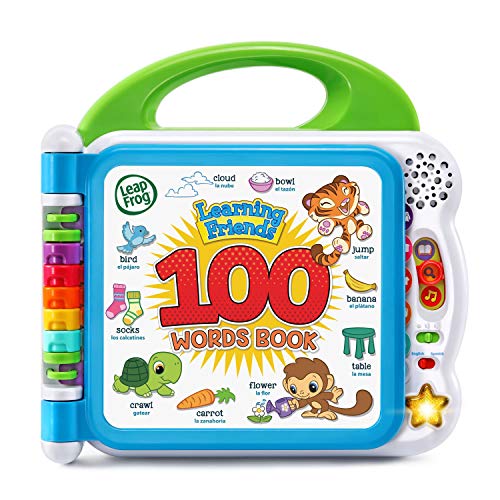
LeapFrog Learning Friends 100 Words Book
Pressing a picture triggers a word, a fun fact, or a short song, giving toddlers audio feedback without a screen. Ten thick board pages group words by theme, spanning animals, food, and colors. Volume control and automatic shutoff help the book survive a long car ride.
Pros
- Immediate audio response holds attention
- Board pages resist tearing and drooling
- Volume and shutoff controls limit noise
Cons
- Needs batteries to function at all
- Songs repeat quickly during long sessions

Learning Resources Smart Snacks Counting Cookies
Ten plastic cookies with numbered chips teach one to one counting as a child places the correct chip count on each cookie. A cookie jar container doubles as sorting storage and a light lesson in cleanup. Numbers run from 1 to 10, matching the range most preschool programs introduce first.
Pros
- Jar storage keeps pieces from scattering
- Chips teach one to one correspondence
- Plastic wipes clean after sticky hands
Cons
- Numbers stop at ten with no expansion set
- Small chips are a choking risk under three

Osmo Little Genius Starter Kit
A base and reflective mirror turn an iPad into a shared play surface, letting a toddler stack physical shapes and letters while the app tracks progress. Five games cover shapes, letters, numbers, and early drawing in one kit. Unlike pure screen apps, a child still handles real pieces on the table.
Pros
- Blends screen guidance with tactile pieces
- Five games cover several skill areas
- App tracks which concepts need review
Cons
- Requires a compatible iPad not included
- Least screen free option on this list

Educational Insights Cariboo Matching Game
Players match letters, numbers, shapes, or colors on cards together, then insert a key to open a treasure door on the board. Cooperative play suits siblings of different ages taking the same round. Four separate card sets adjust difficulty as a child grows.
Pros
- Cooperative play suits mixed age siblings
- Four card sets extend replay value
- Treasure door mechanic keeps interest high
Cons
- Plastic board takes assembly out of the box
- Cards can bend if stored loosely

VTech Sort and Discover Activity Cube
Five sides pack a shape sorter, gears, spinning rollers, and a light up piano into one stationary cube. Large shapes suit small hands still building grip strength before letters or numbers make sense. Music, sound effects, and a quiz mode extend use past the first birthday.
Pros
- Stable base suits early standing play
- Multiple panels prevent quick boredom
- Volume control keeps sound manageable
Cons
- Too basic once a child reads letters
- Cube is bulky for small living spaces

Hasbro Candy Land Kingdom of Sweet Adventures
Colored path spaces and matching cards teach color recognition and basic turn order, with no reading or counting required. A preschooler plays alongside older siblings on equal footing. Short rounds fit the attention span of a three or four year old.
Pros
- No reading required to play a full round
- Short rounds match preschool attention spans
- Simple rules teach turn taking early
Cons
- Little challenge for kids past five
- Cardboard board wears at the folds over time
Before you buy
What Should a Beginner Educational Game Actually Teach Early games fall into a few clear categories: letters, numbers, shapes and colors, or matching logic. Most toddlers benefit from starting with one category instead of a game that tries to cover everything at once. Melissa & Doug Wooden Alphabet Match Puzzle and Learning Resources Smart Snacks Counting Cookies each focus tightly on one skill. Owners report that narrow focus makes progress easier to track.
How Age Range Affects Which Game to Pick A two year old and a five year old need different pacing and piece sizes. VTech Sort and Discover Activity Cube suits a child still building grip strength, while Educational Insights Cariboo Matching Game and Hasbro Candy Land Kingdom of Sweet Adventures fit a preschooler ready for short rounds and simple rules. Checking the stated age range against a child’s current interests matters more than box claims.
Screen Free Versus Electronic Play LeapFrog Learning Friends 100 Words Book and VTech Sort and Discover Activity Cube use batteries and built in audio to hold attention through repetition. Osmo Little Genius Starter Kit pairs a tablet with physical pieces, landing between fully electronic and fully manual play. Melissa & Doug Wooden Alphabet Match Puzzle stays screen free entirely, relying on picture pairing instead of sound.
Solo Play Versus Group and Family Games Some games work best with one child working through a puzzle alone. Others need two or more players to function as intended. Educational Insights Cariboo Matching Game and Hasbro Candy Land Kingdom of Sweet Adventures both require at least one other player and reward turn based play. Learning Resources Smart Snacks Counting Cookies and Melissa & Doug Wooden Alphabet Match Puzzle work equally well solo or with a parent guiding the session.
How they compare
| # | Model | Age range | Best for | Score | Price |
|---|---|---|---|---|---|
| 1 | Melissa & Doug Wooden Alphabet Match Puzzle | 2 to 5 years | Best overall | 9.4 | Check price |
| 2 | LeapFrog Learning Friends 100 Words Book | 1 to 3 years | Best for audio learning | 9.1 | Check price |
| 3 | Learning Resources Smart Snacks Counting Cookies | 3 to 6 years | Best for early math | 9.0 | Check price |
| 4 | Osmo Little Genius Starter Kit | 3 to 5 years | Best for tablet based play | 8.9 | Check price |
| 5 | Educational Insights Cariboo Matching Game | 3 to 7 years | Best for group play | 8.8 | Check price |
| 6 | VTech Sort and Discover Activity Cube | 1 to 3 years | Best for toddlers under two | 8.6 | Check price |
| 7 | Hasbro Candy Land Kingdom of Sweet Adventures | 3 years and up | Best first board game | 8.5 | Check price |
Questions worth asking
What age should a child start beginner educational games?
Most manufacturers set a starting age between one and three years, depending on small pieces or fine motor control needs. Shape sorters and activity cubes suit the youngest range. Letter and number games target two and up.
Which is better for toddlers, wooden or plastic educational toys?
Wooden pieces like those in Melissa & Doug Wooden Alphabet Match Puzzle tend to last longer and resist chewing damage. Plastic pieces, as in Learning Resources Smart Snacks Counting Cookies, stay lighter and wipe clean more easily.
How many pieces should a beginner puzzle or matching game have?
Beginner sets for two and three year olds typically run 5 to 26 pieces, short enough to finish without frustration. Games aimed at four and five year olds, like Educational Insights Cariboo Matching Game, include more cards since attention spans grow.
Are electronic educational toys better than screen free ones for toddlers?
Neither format wins outright, since each teaches differently. LeapFrog Learning Friends 100 Words Book gives instant audio feedback, while Melissa & Doug Wooden Alphabet Match Puzzle needs a caregiver to reinforce learning through conversation.
Can siblings of different ages play the same educational game together?
Cooperative formats work best for mixed ages. Educational Insights Cariboo Matching Game and Hasbro Candy Land Kingdom of Sweet Adventures both use simple rules that let a younger and older sibling play the same round without a clear advantage.
What is the best beginner educational game for teaching letters?
Melissa & Doug Wooden Alphabet Match Puzzle pairs each letter with a matching picture, reinforcing recognition through repetition. LeapFrog Learning Friends 100 Words Book adds spoken words for children who respond better to sound than sight.
Is Osmo worth it compared to a traditional board game for toddlers?
Osmo Little Genius Starter Kit needs an iPad and more setup effort than a board game, but it tracks which concepts a child struggles with automatically. Hasbro Candy Land Kingdom of Sweet Adventures needs no device and works anywhere.
How do I know if a game is too advanced for my child?
Check the stated age range first, then watch whether a child loses interest quickly or needs constant help finishing a round. Reading or counting past ten can frustrate a child who has not mastered basic letters or numbers yet.
What is the safest first board game for a preschooler?
Hasbro Candy Land Kingdom of Sweet Adventures needs no reading or counting, so a three or four year old plays a full round without help. Short rounds match a preschooler’s attention span better than longer strategy games.
Our take
Melissa & Doug Wooden Alphabet Match Puzzle earns the top spot for a durable letter matching design that needs no batteries. LeapFrog Learning Friends 100 Words Book and Osmo Little Genius Starter Kit suit families open to audio or tablet paired learning. Match the age range and skill focus to your child first, since the right game depends more on readiness than brand.