Jigsaw Puzzles That Match a Beginner’s Skill Level
Most beginners succeed with the Ravensburger Disney Moments 100 Piece Puzzle, which balances challenge and payoff. Toddlers do better with Melissa & Doug’s Wooden Vehicles set, since solid wood resists bending. Preschoolers often start with Buffalo Games’ My First Puzzle Dinosaurs, whose 24 oversized pieces suit developing hands.
A puzzle that’s too advanced gets abandoned before the last piece goes in, so age fit matters more than the box art. Ravensburger’s Disney Moments set, Melissa & Doug’s Wooden Vehicles trio, and Buffalo Games’ My First Puzzle each solve that problem for a different age group.
We compared piece count, material, and recommended age across seven current Amazon listings, then checked owner feedback on durability and how fast each design gets abandoned.
What we recommend

Ravensburger Disney Moments 100 Piece Puzzle
Linen-finish cardboard cuts glare and keeps pieces from sliding during assembly. Ravensburger’s Softclick shapes interlock firmly, so a bumped table will not undo a finished section. At 100 pieces, most new puzzlers finish in one sitting.
Pros
- Softclick pieces click audibly into place
- Linen finish resists glare under bright light
- Licensed Disney artwork motivates first finishes
Cons
- An hour or more for a young child to finish
- Franchise art limits variety across the set

Melissa & Doug Wooden Vehicles Jigsaw Puzzles (Set of 3)
Three vehicle-themed puzzles ship in one set, covering cars, trucks, and planes. Solid wood pieces shrug off drops and repeated handling better than cardboard. Each puzzle runs 36 to 48 pieces, so a toddler advances as skills grow.
Pros
- Wood pieces withstand drops and chewing
- Three difficulty steps let skills build gradually
- Flat pieces store without small parts to lose
Cons
- Wood adds bulk compared to cardboard sets
- Vehicle themes may not appeal to every toddler
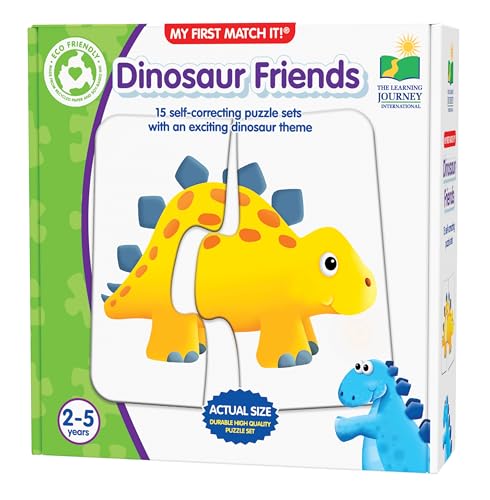
Buffalo Games My First Puzzle Dinosaurs
Pieces measure larger than a standard children’s puzzle, suiting hands still learning fine motor control. Rounded corners lower the odds of a scraped finger mid-assembly. Dinosaur artwork gives new puzzlers a bold, high-contrast image to reference.
Pros
- Oversized pieces suit developing motor skills
- 24-piece count keeps sessions short and successful
- Bold contrast makes edge pieces easy to spot
Cons
- Little challenge remains once preschool age passes
- No reference poster ships with the box

Cobble Hill Family Pieces Puzzle, 350 Piece
Standard and oversized pieces mix together in this 350-piece set, so younger relatives can join in alongside adults. A group working together over an evening suits the piece count well. Recycled paperboard gives the finished puzzle a firm, matte surface.
Pros
- Mixed sizing lets young kids contribute alongside adults
- 350 pieces suit a multi-session group project
- Matte board resists glare during long sessions
Cons
- Too advanced for a solo beginner under 6
- Group assembly needs more table space than smaller sets
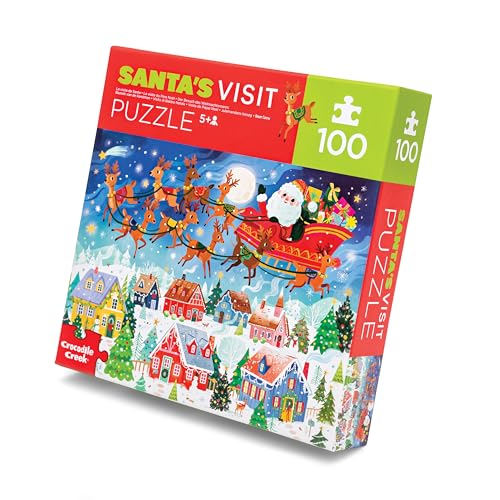
Crocodile Creek 100 Piece Puzzle & Poster
A full-size reference poster ships inside the box, letting beginners check progress against the finished image. 100 pieces sit above toddler puzzles yet stay manageable for a first solo attempt. Pieces store inside a round tin once assembly wraps up.
Pros
- Included poster removes guesswork during assembly
- Tin storage keeps loose pieces from scattering
- Bright artwork appeals to school-age puzzlers
Cons
- Tin lid can be tight for small hands
- 100 pieces may frustrate solvers under 5

Mudpuppy Extra-Thick Piece Puzzle, 64 Piece
Extra-thick chipboard holds up to repeated handling better than thinner stock. At 64 pieces, the finished puzzle spans about 15 by 11 inches, small enough for one sitting. Rounded edges soften corners for younger hands.
Pros
- Thick pieces resist bending during play
- Compact finished size fits small tables
- Rounded edges are gentler on small hands
Cons
- Chipboard adds weight for travel packing
- Only one image ships per box

Springbok 500 Piece Jigsaw Puzzle
Randomly shaped pieces replace the repeating grid pattern found in most starter puzzles, forcing image-based matching instead of guesswork. 500 pieces suit an adult trying jigsaw puzzles for the first time, not a young child. Recycled board keeps the finished piece rigid enough to display.
Pros
- Random cuts teach real image-matching skills
- Recycled board holds shape once assembled
- Sturdy enough to frame once finished
Cons
- 500 pieces is a jump from typical starter counts
- Not sized for toddlers or young preschoolers
How to pick the right one
What Makes a Jigsaw Puzzle Beginner-Friendly? Piece count decides whether a first attempt ends in success or frustration, more than the picture on the box. Puzzles under 100 pieces finish in one sitting, which builds confidence before a bigger set. Thick cardboard or solid wood resists bending when small hands press too hard. A reference poster, or a clear box image, cuts down on guesswork along the way.
Which Piece Count Fits Which Age? Age three toddlers do best with 24 to 48 chunky wood pieces rather than flat cardboard. Kids from four to six can handle 64 to 100 pieces once the pieces stay oversized. Standard 100-piece cardboard puzzles suit most six-year-olds without extra-large cuts. Adults new to puzzles can jump straight to 500 pieces, since pattern matching, not motor control, becomes the real hurdle.
Wood vs Cardboard: Which Holds Up Better for Beginners? Wooden puzzles cost more per set but survive drops, chewing, and years of handling better than cardboard. Cardboard weighs less and packs flat, which suits travel or a rotating collection. Extra-thick chipboard splits the difference, adding durability without wood’s extra weight. Either material works for a beginner as long as piece size matches hand span.
Solo Puzzle or Family Puzzle: What Should Change? A puzzle built for one child usually stays under 100 pieces in a single size grade. Family sets mix standard and oversized pieces, so a toddler places a few large pieces while an older sibling handles the rest. Group puzzles often run 300 pieces or more to keep several people busy in one sitting. Matching the format to how it gets used avoids a frustrating mismatch.
Compared at a glance
| # | Model | Piece count | Best for | Score | Price |
|---|---|---|---|---|---|
| 1 | Ravensburger Disney Moments 100 Piece Puzzle | 100 | Best overall | 9.4 | Check price |
| 2 | Melissa & Doug Wooden Vehicles Jigsaw Puzzles (Set of 3) | 36 to 48 per puzzle | Best for toddlers | 9.1 | Check price |
| 3 | Buffalo Games My First Puzzle Dinosaurs | 24 | Best for preschoolers | 8.8 | Check price |
| 4 | Cobble Hill Family Pieces Puzzle, 350 Piece | 350 | Best for family game night | 8.6 | Check price |
| 5 | Crocodile Creek 100 Piece Puzzle & Poster | 100 | Best for visual learners | 8.4 | Check price |
| 6 | Mudpuppy Extra-Thick Piece Puzzle, 64 Piece | 64 | Best for small hands | 8.2 | Check price |
| 7 | Springbok 500 Piece Jigsaw Puzzle | 500 | Best for adult beginners | 8.0 | Check price |
Common questions
How many pieces should a beginner jigsaw puzzle have?
Most first attempts work best under 100 pieces. Toddlers do well with 24 to 48 chunky pieces, while older kids and adults can start closer to 100 or push to 500 with more experience.
What age can kids start doing jigsaw puzzles?
Wooden puzzles with 24 to 48 pieces suit children around age 2 to 3. Standard cardboard puzzles become manageable around age 5 or 6, once fine motor skills catch up.
Is wood or cardboard better for a child’s first puzzle?
Wood holds up better to rough handling and resists bending, which suits toddlers. Cardboard is lighter and cheaper, and works fine once a child stops pressing pieces too hard.
Can adults use kids’ jigsaw puzzles to get started?
Yes, though a 500-piece adult set with randomly shaped pieces teaches image-matching skills that oversized children’s pieces skip entirely.
Which jigsaw puzzles work best for preschoolers just starting out?
Look for 24 to 64 extra-large pieces with rounded edges, like Buffalo Games’ My First Puzzle or Mudpuppy’s extra-thick line, so little hands can grip and place pieces easily.
Do beginner puzzles need a reference poster?
Not always, but a poster or clear box image speeds up assembly for a first-timer. Crocodile Creek includes a full-size poster in the box for exactly this reason.
What’s the difference between a family puzzle and a kids’ puzzle?
Family puzzles like Cobble Hill’s mix standard and oversized pieces so multiple ages can work together. Kids’ puzzles use one piece size sized for a single age group.
How long does a 100-piece puzzle take a beginner to finish?
Most new puzzlers finish 100 pieces in 30 to 90 minutes, depending on age and whether a reference poster is available.
What piece shape is easiest for a first-time puzzler?
Interlocking Softclick-style pieces, like Ravensburger uses, snap firmly and resist coming apart mid-assembly, which helps a beginner avoid restarting a finished section.
Our take
The Ravensburger Disney Moments 100 Piece Puzzle offers the strongest mix of durability and an achievable challenge for most households. Toddlers and preschoolers succeed faster with oversized, thick pieces from Melissa & Doug or Buffalo Games. Once piece count and material match the puzzler’s age, any of these seven options builds real assembly skill.


