Which Model Kit Should a First-Time Builder Buy?
The Bandai Star Wars X-Wing Starfighter fits most first-time builders since it snaps together with zero glue or paint. The Airfix Quickbuild Spitfire suits younger builders, while the Bandai HGUC RX-78-2 Gundam works for those ready for poseable mecha. All three skip cement entirely.
Snap-fit spaceships, clip-together aircraft, and traditional glue-and-paint builds all fall under beginner model kits. Three stand out for zero tools and fast results: the Bandai X-Wing Starfighter, the Airfix Quickbuild Spitfire, and the Bandai HGUC Gundam. Each uses a different assembly method, so fit matters more than brand name.
A wrong pick often means a frustrated attempt and a kit shelved half-finished. Skill level, scale, and whether cement is required vary widely between manufacturers. Listed specifications, owner feedback, and stated skill ratings across seven kits covering cars, planes, ships, and mecha shaped this comparison.
The best picks, ranked

Bandai Hobby Star Wars X-Wing Starfighter 1/72 Scale Model Kit
Snap-fit parts arrive pre-colored, so no cement or paint touches this build. Panel lines mirror the on-screen X-Wing without extra painting steps. Owners typically finish it in one sitting, often under two hours.
Pros
- Skips cement, paint, and tools entirely
- Pre-colored plastic matches the film ship
- Wings open and close for display
Cons
- Surface detail trails glue-built kits at the same scale
- Limited to Star Wars subject matter

Airfix Quickbuild Supermarine Spitfire
Oversized clip-together blocks replace sprues and cement on this Quickbuild kit. Each piece fits one way, cutting down assembly mistakes for young builders. A display stand holds the finished 20-centimeter model upright.
Pros
- No tools, glue, or paint needed
- Large blocks suit small hands
- Display stand included in the box
Cons
- Detail falls short of standard plastic kits
- Blocks don’t connect with other Airfix lines
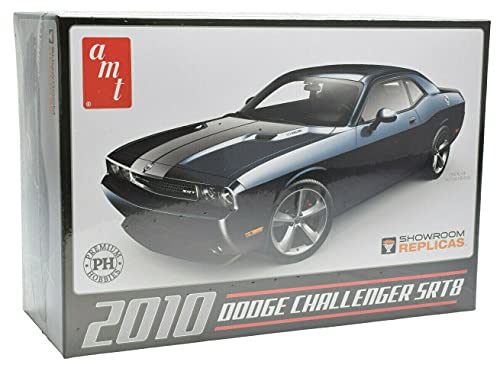
Revell SnapTite Max Dodge Challenger SRT8 1/25 Scale Model Kit
Body panels click onto a preassembled chassis without cement on this SnapTite Max kit. Wheels roll freely once the build is finished. Molded-in color makes painting optional rather than mandatory.
Pros
- Rolling chassis works straight from the box
- No cement required for the main build
- Large 1/25 scale highlights body lines
Cons
- Unpainted panel seams can show at the joints
- Engine bay detail stays minimal versus glue kits

Bandai Hobby HGUC RX-78-2 Gundam 1/144 High Grade Model Kit
Color-separated snap-fit molding means most parts skip paint on this High Grade kit. Multiple joints let the finished figure hold action poses. Runners split by color, which speeds up sorting during assembly.
Pros
- Poseable joints beyond static car or plane kits
- Color separation cuts down on painting
- Compact size fits easily on a shelf
Cons
- Small joint pieces get fiddly for first-timers
- Panel lines may need a marker for contrast

Minicraft Titanic 1/350 Scale Model Kit
A simplified part count sets this Titanic kit apart from other ship builds at 1/350 scale. Plastic cement joins the hull halves and superstructure. Included decals cover deck markings and hull lettering once assembly finishes.
Pros
- Reduced part count for a first ship build
- Large finished size anchors a display shelf
- Decals cover the major hull markings
Cons
- Cement and drying time stretch build sessions
- Long hull demands careful storage space

Academy 1/72 F-16C Fighting Falcon Model Kit
Part count stays low for a modern jet at this scale on the F-16C. A molded cockpit and ejection seat add detail without extra assembly steps. Multiple decal sheets allow different squadron markings on one kit.
Pros
- Low part count for a modern jet subject
- Decal sheet offers squadron marking variety
- Affordable entry point into jet aircraft kits
Cons
- Cement and paint are both required to finish
- Landing gear pieces are small and easy to lose

Tamiya 1/48 Sopwith Camel Model Kit
Tamiya rates this WWI biplane skill level 1, its entry point for cement-based kits. Struts and rigging stay simpler than later-war aircraft designs. Low part count makes it a common first pick for new glue-kit builders.
Pros
- Tamiya’s skill level 1 rating confirms beginner fit
- Simple biplane shape needs minimal rigging
- Solid introduction to cement and paint technique
Cons
- Struts need careful alignment while glue sets
- Wing bracing stays fragile once assembled
Side by side
| # | Model | Scale | Best for | Score | Price |
|---|---|---|---|---|---|
| 1 | Bandai Hobby Star Wars X-Wing Starfighter 1/72 Scale Model Kit | 1/72 | Best overall beginner kit | 9.4 | Check price |
| 2 | Airfix Quickbuild Supermarine Spitfire | Clip-together blocks, Lego-style | Best for kids and tool-free building | 9.2 | Check price |
| 3 | Revell SnapTite Max Dodge Challenger SRT8 1/25 Scale Model Kit | 1/25 | Best snap-fit car kit | 9.0 | Check price |
| 4 | Bandai Hobby HGUC RX-78-2 Gundam 1/144 High Grade Model Kit | 1/144 | Best mecha and Gunpla starter kit | 8.8 | Check price |
| 5 | Minicraft Titanic 1/350 Scale Model Kit | 1/350 | Best ship kit for beginners | 8.6 | Check price |
| 6 | Academy 1/72 F-16C Fighting Falcon Model Kit | 1/72 | Best budget jet kit | 8.3 | Check price |
| 7 | Tamiya 1/48 Sopwith Camel Model Kit | 1/48 | Best first glue-and-paint kit | 8.0 | Check price |
How to pick the right one
What Makes a Model Kit Beginner-Friendly? Manufacturers rate kits on a skill scale, usually 1 to 5 or 1 to 4. Level 1 kits use fewer parts, thicker plastic, and simpler panel lines. Airfix, Revell, and Tamiya print this rating directly on the box. Bandai’s snap-fit kits skip cement entirely, removing a common failure point for new builders. Owners report that part count affects difficulty more than subject choice. A 20-part biplane goes together faster than a 120-part car with a full engine bay.
Snap-Fit vs Glue Kits: Which Should You Start With? Snap-fit kits like the Revell SnapTite Max Dodge Challenger click together without cement or paint. Parts arrive pre-colored, so a finished model looks presentable straight out of the box. Glue kits, including the Tamiya Sopwith Camel and Minicraft Titanic, need plastic cement and usually benefit from paint. Precision improves with practice, though early attempts often show visible seams. Builders chasing a quick win typically start with snap-fit. Those wanting a display-quality finish often move to cement kits within a few builds.
Cars, Planes, Ships, or Gundam: Which Subject Fits You? Model cars like the Revell Dodge Challenger feature rolling chassis and opening body panels. Aircraft kits, from the Airfix Spitfire to the Academy F-16C, focus on cockpit detail and decal markings. Ship kits such as the Minicraft Titanic bring more parts and longer build sessions due to hull length. Gunpla, represented by the Bandai HGUC Gundam, adds multi-jointed articulation that cars and planes skip. Subject choice often drives long-term interest more than kit difficulty. Pick the category a builder already collects or watches on screen.
What Scale and Age Range Work Best for New Builders? Scale sets both final size and part count; 1/144 and 1/72 kits stay compact for shelf display. Larger scales, like 1/25 car kits, show more panel detail but need steadier hands. Airfix Quickbuild uses clip-together blocks rated for builders as young as six, with no tools needed. Cement-based kits carry warnings for younger children due to fumes and small parts. Teen and adult builders generally handle any scale on this list without issue. Matching scale to available shelf space also heads off storage headaches later.
Questions worth asking
What is the easiest model kit for a complete beginner?
Snap-fit kits that need no glue or paint, such as the Bandai Star Wars X-Wing Starfighter, are typically easiest since building means pressing pre-colored pieces together.
Do beginner model kits need glue and paint?
It depends on the kit. Snap-fit lines from Bandai, Revell SnapTite Max, and Airfix Quickbuild need neither, while a traditional kit like the Tamiya Sopwith Camel requires plastic cement and benefits from paint.
Snap-fit or glue: which is better for kids?
Snap-fit and clip-together kits like the Airfix Quickbuild Spitfire suit younger builders since they avoid cement fumes and small loose parts common in glue kits.
What skill level should a first model kit be?
Look for a kit labeled skill level 1, the lowest rating manufacturers like Airfix, Revell, and Tamiya use for simplified part counts and thicker plastic.
Is Gunpla harder to build than a regular plastic kit?
High Grade Gunpla, such as the Bandai HGUC RX-78-2 Gundam, uses snap-fit assembly like beginner car and plane kits, though its multi-jointed articulation adds extra small pieces.
What scale is best for a first model kit?
Smaller scales like 1/144 or 1/72 keep part count and finished size manageable, while 1/25 car kits offer more visible detail for a bigger project.
Do snap-fit kits last as long as glue-built models?
Glue kits generally hold together more permanently once cement cures, while snap-fit kits can loosen at the joints after years of handling or moving.
Are ship model kits harder than plane or car kits?
Ship kits like the Minicraft Titanic tend to involve more total parts and longer hull assembly, making them a step up once a builder finishes a first plane or car kit.
Can a six-year-old build a model kit alone?
Clip-together kits like the Airfix Quickbuild Spitfire are rated for ages six and up since they need no tools, cement, or small loose parts.
Final word
Snap-fit kits remove the biggest early hurdles: cement, paint, and drying time. Builders who enjoy a first quick build often graduate to glue-and-paint kits like the Tamiya Sopwith Camel or Minicraft Titanic within a few projects. Matching subject and scale to genuine interest matters more than chasing the lowest skill rating.


