Beginner Quilting Supply Kit: 7 Really Useful Picks
For most beginners, the Fiskars Classic Rotary Cutter is the top pick because it is comfortable, safe, and delivers clean cuts, though you will need to replace blades regularly.
Starting quilting is exciting, but the long list of tools can feel overwhelming. You need a rotary cutter, a self-healing mat, a clear ruler, and reliable thread.
We compared the most recommended beginner supplies on Amazon, focusing on safety, ease of use, and value. Every product here has proven helpful for those just starting out.
The best picks, ranked

Fiskars Classic Rotary Cutter 45mm
This 45mm rotary cutter is a staple in many sewing rooms. It has a comfortable handle and a safety lock that engages easily. The blade is sharp and glides through multiple layers of fabric. Owners report that the blade stays sharp for a long time with regular use. Replacement blades are widely available.
Pros
- Comfortable grip reduces hand fatigue
- Safety lock is easy to engage
- Cuts cleanly through several layers
Cons
- Blade may need frequent replacement if used on thick layers
- Lock can be stiff initially

Oliso Smart Iron TG1050
Pressing seams is crucial in quilting, and this smart iron makes it effortless. It lifts itself when you set it down, preventing scorch marks on your fabric. The steam boost helps set creases. It heats up quickly and has a smooth ceramic soleplate. While pricier than basic irons, many quilters find it worth the investment.
Pros
- Auto-lift feature prevents burns
- Heats fast and evenly
- Great steam distribution
Cons
- More expensive than standard irons
- A bit heavy for some users

Olfa 24×36 Self-Healing Rotary Cutting Mat
A large cutting mat is essential for quilting, and this 24×36 inch mat gives you plenty of room to cut fabric strips and squares. The self-healing surface closes up small cuts, extending its life. It lies flat on the table and has grid lines for easy measuring. Both sides are usable, although one side is more common.
Pros
- Large surface accommodates full fabric widths
- Self-healing property lasts for years
- Dual-sided grids offer flexibility
Cons
- Can be heavy to move around
- May warp if left in direct sunlight

Creative Grids 6.5 x 24 Inch Ruler
A clear ruler is a must for accurate cuts. This one has easy-to-read markings and a non-slip grip on the back. The 6.5 x 24 inch size is versatile for cutting strips and squaring up blocks. The grid lines are crisp and include 45 and 60 degree angles. It is a favorite among quilters for its precision.
Pros
- Non-slip grip prevents shifting
- Clear markings for accurate measuring
- Durable acrylic resists warping
Cons
- Longer size may be unwieldy for small hands
- Can scratch if not stored properly

Gingher 8 Inch Knife Edge Dressmaker’s Shears
While a rotary cutter is essential, a good pair of scissors is still needed for trimming threads and cutting curves. These Gingher shears are known for their sharpness and durability. They have a comfortable handle and are made in Germany. With proper care, they can last a lifetime.
Pros
- Extremely sharp and precise
- Balanced for comfortable use
- Quality steel holds edge well
Cons
- Requires maintenance to avoid rust
- Not for cutting paper or multiple layers

Clover Hand Needle Set
Hand quilting adds a personal touch. This set includes a variety of needle sizes, from sharps to betweens, so you can find your preference. The needles are smooth and sturdy, reducing friction as you stitch. A storage case keeps them organized and safe.
Pros
- Variety for different hand sewing tasks
- Smooth needles glide through fabric
- Case is convenient for travel
Cons
- Needles are short for some users
- No threader included
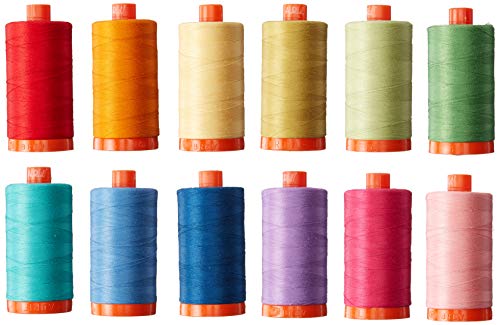
Aurifil 50wt Cotton Thread 10-Pack Assortment
Thread is the unsung hero of quilting. This Aurifil collection includes ten spools in a range of colors, perfect for piecing and quilting. The 50wt cotton thread is strong yet fine, producing flat seams and minimal lint. Many quilters swear by Aurifil for its quality.
Pros
- Produces minimal lint, keeps machine clean
- Strong and durable for seams
- Color assortment covers many projects
Cons
- Thread can be pricey
- Spools are not large, may need more for big quilts
What matters most
Compared at a glance
| # | Model | Blade size | Best for | Score | Price |
|---|---|---|---|---|---|
| 1 | Fiskars Classic Rotary Cutter 45mm | 45mm | Best overall rotary cutter | 9.4 | Check price |
| 2 | Oliso Smart Iron TG1050 | Ceramic | Best iron for precise pressing | 9.2 | Check price |
| 3 | Olfa 24×36 Self-Healing Rotary Cutting Mat | 24 x 36 inches | Best cutting mat size | 9.1 | Check price |
| 4 | Creative Grids 6.5 x 24 Inch Ruler | 6.5 x 24 inches | Best quilting ruler | 9.0 | Check price |
| 5 | Gingher 8 Inch Knife Edge Dressmaker’s Shears | 8 inches | Best fabric scissors | 8.9 | Check price |
| 6 | Clover Hand Needle Set | Multiple needle types and sizes | Best needles for hand quilting | 8.7 | Check price |
| 7 | Aurifil 50wt Cotton Thread 10-Pack Assortment | 50wt | Best thread for piecing | 9.3 | Check price |
Good to know
What basic supplies do I need to start quilting?
To start quilting, you need a rotary cutter, a self-healing cutting mat, a clear acrylic ruler, fabric scissors, straight pins, needles, thread, and a sewing machine. Optional items include an iron and ironing board for pressing seams.
Is a rotary cutter better than scissors for cutting fabric?
A rotary cutter is generally more accurate and faster when cutting straight lines and multiple layers. Scissors are better for cutting curves and trimming threads. Most quilters use both tools.
What size rotary cutter should a beginner use?
A 45mm rotary cutter is ideal for beginners because it is easy to control and can cut through a few layers of fabric. Larger cutters are heavier and better for cutting many layers at once.
Do I need a special cutting mat?
Yes, you need a self-healing cutting mat to protect your work surface and keep your rotary blade sharp. Mats also have grid lines that help with measuring and cutting straight lines.
How do I choose fabric for my first quilt?
For your first quilt, choose 100% cotton quilting fabric, which is easy to work with and comes in a wide variety of prints. Pre-cut fabric like fat quarters can be great for practicing.
What is the best thread for piecing a quilt?
A 50wt cotton thread, such as Aurifil, is recommended for piecing because it is strong yet fine, producing less bulk in seams. It also creates less lint than polyester thread.
Can I quilt without a sewing machine?
Yes, you can hand piece and hand quilt, but it takes much longer. Many beginners start with machine piecing for speed, then hand quilt for the finishing touches.
How do I care for my quilting tools?
Rotary blades should be replaced when dull, and scissors should be wiped clean and oiled occasionally. Mats should be stored flat. Rulers should be kept out of sunlight to prevent warping.
What is the easiest quilt pattern for a beginner?
A simple patchwork quilt made of squares or rectangles is the easiest. Patterns like ‘rail fence’ or ‘nine patch’ are great for learning basic piecing and pressing.
How much fabric do I need for a beginner quilt?
For a small lap quilt, you might need 2 to 3 yards of fabric in total. It depends on the pattern and the size. It’s always safer to buy a little extra to account for shrinkage and mistakes.
Our take
Start with the Fiskars rotary cutter, an Olfa cutting mat, and a Creative Grids ruler. These three tools form the core of your kit. Add Gingher scissors for detail work and Aurifil thread for quality piecing. This combination offers reliability and precision without breaking the bank.