Beginner Sewing Patterns That Build Skills Fast
The Simplicity Misses Blouse and Dress pattern is the top choice for most beginners because it offers multiple views with minimal fitting challenges. Its strength lies in clearly numbered steps and straightforward construction. The main limitation is that some users find the sizing runs large, so checking measurements matters.
Sewing your first garment can feel overwhelming. A good pattern makes the difference between frustration and fun. We looked for patterns with simple shapes, clear directions, and forgiving designs.
The best beginner patterns avoid tricky zippers, precise fitting, and complex seams. Instead, they focus on elastic waists, loose fits, and minimal finishing. Below are seven patterns that owners report as great starting points.
What matters most
The best picks, ranked

Simplicity Misses Blouse and Dress Pattern
This multi-view pattern offers a blouse or dress with a relaxed fit and simple neckline. It uses basic seams and a back zipper, which some beginners can skip by choosing the pullover view. Instructions include clear diagrams. Many users praise the sizing options.
Pros
- Multiple style options in one envelope
- Printed instructions are very clear
- Forgiving fit for various body shapes
Cons
- Back zipper may be tricky for absolute beginners
- Pattern pieces overlap, requiring careful cutting

Butterick Easy Scarf and Cowl Pattern
Perfect for practicing straight stitches and simple hemming. This pattern includes a scarf, cowl, and infinity scarf. Each piece is a rectangle or tube, so there is no fitting involved. Great for using up fabric scraps. Finished projects look professional.
Pros
- No fitting or darts
- Quick projects you can finish in an hour
- Teaches hemming and seam finishing
Cons
- Limited to accessories only
- May not hold interest after a few projects

New Look Apron and Kitchen Set Pattern
This pattern creates a classic apron with pockets, a pot holder, and an oven mitt. It introduces bias binding and simple pocket construction. The pieces are large and easy to handle. Owners find the instructions straightforward, and the projects are useful around the home.
Pros
- Practical items you will actually use
- Teaches bias tape application
- Large pattern pieces are easy to cut
Cons
- Binding curves can be fiddly for some
- Not a garment, so no wear test
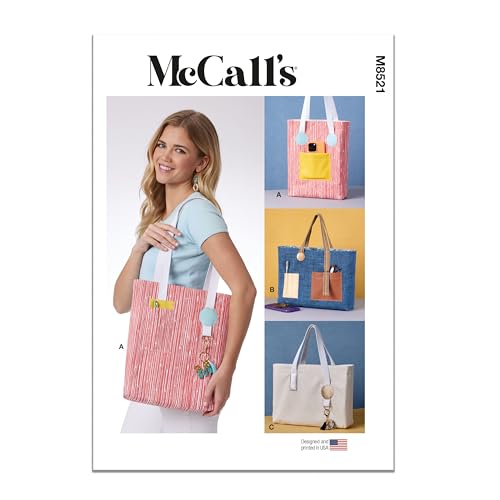
McCall’s Easy Tote Bag Pattern
This pattern makes a roomy tote with inside pockets and straps. The construction is mostly straight seams, and it includes a simple lining. It is an ideal second or third project. The pattern has clear markings for interfacing and topstitching.
Pros
- Straight seams only
- Teaches interfacing and lining
- Sturdy bag for everyday use
Cons
- Needs heavy fabric or interfacing for structure
- Straps can be thick to sew

Simplicity Pajama Pants Pattern
These pajama pants feature an elastic waist and loose legs. The pattern includes two lengths and a drawstring option. It is a great introduction to sewing garments because fitting is forgiving. The crotch curve is a new skill, but the instructions help.
Pros
- Elastic waist is easy to insert
- Loose fit hides minor mistakes
- Can be made in knit or woven
Cons
- Crotch seam can be confusing at first
- Pattern pieces are large and need space

Butterick Leggings and Tunic Pattern
This pattern offers leggings and a simple tunic. It is designed for knit fabrics, which do not fray. The tunic has a neckband and can be sewn with a regular machine using a stretch stitch. Owners say the fit is true to size.
Pros
- No zippers or buttons
- Teaches knit handling and stretch stitches
- Comfortable, wearable garments
Cons
- Needs a ballpoint needle and possibly a walking foot
- Neckband can stretch out if handled too much

Simplicity Scrunchies and Headband Pattern
This pattern makes scrunchies and headbands from fabric scraps. It is a great project for children or for practicing on a machine. The instructions are simple, and the pieces are tiny. It is not a comprehensive pattern but a fun add-on.
Pros
- Uses small fabric scraps
- Teaches gathering and turning
- Fun for kids to make
Cons
- Very limited in scope
- Not enough for a full sewing session
The lineup, side by side
| # | Model | Sizes | Best for | Score | Price |
|---|---|---|---|---|---|
| 1 | Simplicity Misses Blouse and Dress Pattern | 6 to 22 | First garment project | 9.4 | Check price |
| 2 | Butterick Easy Scarf and Cowl Pattern | One size fits most | Quick win projects | 9.2 | Check price |
| 3 | New Look Apron and Kitchen Set Pattern | One size | Learning to follow directions | 9.0 | Check price |
| 4 | McCall’s Easy Tote Bag Pattern | One size | Learning to sew in a straight line | 8.9 | Check price |
| 5 | Simplicity Pajama Pants Pattern | XS to XXL | First clothing fit | 8.8 | Check price |
| 6 | Butterick Leggings and Tunic Pattern | XS to XL | Stretchy fabric practice | 8.6 | Check price |
| 7 | Simplicity Scrunchies and Headband Pattern | One size | Zero waste small projects | 8.0 | Check price |
Good to know
What is the easiest type of sewing pattern?
Patterns with straight seams and minimal pieces are easiest. Scarves, tote bags, and pajama pants are common first projects. Look for the word easy on the envelope.
How do I know what size to cut?
Take your measurements at the bust, waist, and hips. Compare them to the pattern size chart. If you are between sizes, choose the larger size. You can always take in seams later.
Do I need a serger to sew beginner patterns?
No. You can use a regular sewing machine. Use a zigzag stitch or pinking shears to finish seams. Some patterns are designed for knit fabric and only need a stretch stitch.
How long does it take to sew a simple garment?
A simple project like pajama pants can take two to four hours. Accessories like scrunchies take less than an hour. Factor in time for cutting and pressing.
What fabric should I avoid as a beginner?
Avoid silk, chiffon, and other slippery fabrics. Also avoid very stretchy knits until you are comfortable. Slippery fabric shifts and causes misaligned seams. Heavy denim is hard to sew through.
Can I use PDF patterns instead of printed?
Yes. PDF patterns are downloaded and printed at home. They require taping pages together. Some beginners prefer printed patterns because they are ready to use. Both are fine.
Why are my seams puckering?
Puckering can happen from incorrect tension, dull needle, or pulling fabric. Check your needle size and replace it if needed. Guide the fabric gently, letting the machine feed it.
What is a muslin and should I make one?
A muslin is a test garment made from cheap fabric. It helps check fit before cutting your good fabric. For very loose patterns, you can skip it. But if you are unsure about size, a muslin is wise.
How do I read a sewing pattern envelope?
The envelope shows views, fabric requirements, and sizing. The back lists materials needed. Read the instruction sheet inside before cutting. It explains each step and shows diagrams.
Can I sell items made from these patterns?
Most commercial patterns do not allow mass production. They permit small-scale selling, but check the fine print. Some brands have specific rules. If you plan to sell, read the pattern label carefully.
Our take
Start with the Simplicity Misses Blouse and Dress if you want to sew a garment. Its clear instructions and multiple style options give you room to grow. For a smaller commitment, the Butterick Scarf and Cowl is an excellent confidence builder. Avoid patterns with zippers and set-in sleeves until you finish a few projects. Pick the pattern that excites you most because motivation will carry you through challenges.