Top-Rated Sewing Threads for Beginners
For most beginners, the Coats & Clark Dual Duty XP All Purpose Thread is the top pick because it is widely available, comes in many colors, and handles well on basic machines. Its main limitation is that it is not ideal for very delicate fabrics or high-stretch knits.
Starting a new sewing hobby is exciting, but choosing the right thread can be overwhelming. The wrong thread can cause skipped stitches, tangles, or breakage, frustrating beginners.
We compared popular threads sold on Amazon that are known for being reliable. Our goal is to help you pick a thread that reduces frustration and lets you focus on learning.
The best picks, ranked
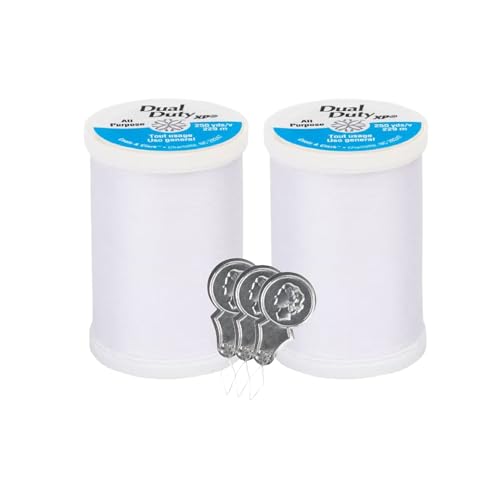
Coats & Clark Dual Duty XP All Purpose Thread
Coats & Clark Dual Duty XP is a polyester-wrapped cotton thread that combines strength and flexibility. It is the go-to thread for many beginners because it works well on both natural and synthetic fabrics. It produces minimal lint, which keeps your machine cleaner. Available in a wide range of colors, it suits most everyday projects.
Pros
- Strong and durable
- Low lint production
- Wide color selection
Cons
- Not ideal for heavy fabrics like denim
- Can be slippery on some machines

Gutermann Sew-All Thread
Gutermann Sew-All is a 100% polyester thread known for its smoothness and resistance to shrinkage. It is designed for use on all fabrics and is a favorite among sewists who want consistent tension. The thread glides through the machine without fraying, making it excellent for practice. It comes in a compact spool that stores easily.
Pros
- Very smooth, reduces tangles
- Colorfast and shrink-resistant
- Works on a variety of fabrics
Cons
- Slightly thinner, may need double stitching for heavy fabrics
- Spools are small, need frequent replacement

Brother Sewing Thread Set
Brother’s thread set includes 24 spools of assorted colors, perfect for beginners who want to experiment. The thread is 100% polyester and works with Brother machines and most other brands. It offers good strength and elasticity. The set comes in a handy storage case, keeping your threads organized.
Pros
- Great value for the number of spools
- Organized storage case
- Good quality for practice
Cons
- Limited shades, not for exact color matching
- Some users report occasional fuzz

Sulky Blendables Thread
Sulky Blendables is a 40-weight cotton thread with beautiful color transitions. It is ideal for adding decorative elements to projects, such as visible topstitching or quilting. While it is not a basic all-purpose thread, beginners who want to explore creative stitching will enjoy its smooth finish and vibrant colors. It is slightly more expensive but offers unique effects.
Pros
- Beautiful color gradients
- Smooth for machine stitching
- Large spool for many projects
Cons
- Not suitable for all-purpose sewing
- Higher price point

DMC Embroidery Floss
DMC Embroidery Floss is a six-strand cotton thread that is perfect for hand sewing and embroidery. Beginners learning hand stitches will appreciate its softness and ease of threading. It is available in an enormous range of colors. When separated, the strands are ideal for fine work. This thread is not intended for use in a sewing machine.
Pros
- Exceptional color variety
- Soft and gentle on fabric
- Easy to work with for hand sewing
Cons
- Not for machine use
- Requires separating strands for fine work
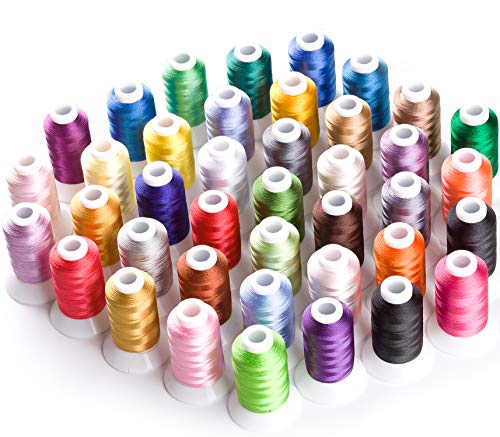
Simthread 40 Colors Polyester Thread Kit
Simthread offers a 40-color polyester thread kit at an affordable price. It is a popular choice for beginners who want a vast selection without a huge investment. The thread performs adequately on standard machines, though it may produce more lint than premium brands. It comes with a clear storage case.
Pros
- Very affordable
- Large color selection
- Convenient case
Cons
- More lint than higher-end threads
- Color may not be exact as shown on screen
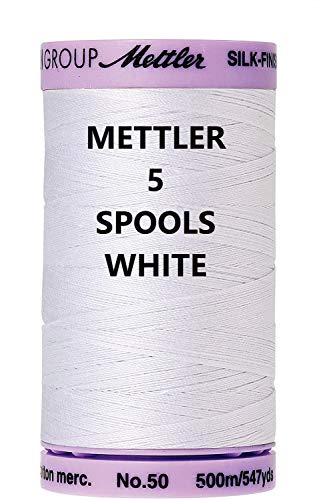
Mettler Silk Finish Cotton Thread
Mettler Silk Finish Cotton Thread is a high-quality 100% cotton thread with a smooth finish that reduces friction. It is excellent for sewing natural fabrics like cotton and linen. The thread is strong and relatively lint-free. Beginners working with natural fibers will find it behaves predictably. It is a bit more expensive but worth it for specific projects.
Pros
- Smooth finish prevents tangling
- Ideal for natural fibers
- Low shrinkage
Cons
- Higher cost
- Not suitable for stretchy fabrics
How to pick the right one
Compared at a glance
| # | Model | Fiber | Best for | Score | Price |
|---|---|---|---|---|---|
| 1 | Coats & Clark Dual Duty XP All Purpose Thread | Polyester-wrapped cotton | All-purpose use on woven fabrics | 9.4 | Check price |
| 2 | Gutermann Sew-All Thread | 100% polyester | Smooth feeding on various machines | 9.2 | Check price |
| 3 | Brother Sewing Thread Set | 100% polyester | Learning with a variety of colors | 8.8 | Check price |
| 4 | Sulky Blendables Thread | 100% cotton | Decorative stitching and quilting | 8.5 | Check price |
| 5 | DMC Embroidery Floss | 100% cotton | Hand sewing and embroidery | 8.7 | Check price |
| 6 | Simthread 40 Colors Polyester Thread Kit | 100% polyester | Budget-friendly color collection | 8.4 | Check price |
| 7 | Mettler Silk Finish Cotton Thread | 100% cotton | Natural fiber sewing projects | 8.9 | Check price |
Good to know
What is the best thread for a beginner to use?
The best thread for beginners is a high-quality all-purpose polyester thread like Coats & Clark Dual Duty XP or Gutermann Sew-All. These threads are strong, low-lint, and work well on most fabrics.
Is polyester or cotton thread better for beginners?
Polyester is generally better for beginners because it is strong, elastic, and resistant to shrinking. Cotton is more suitable for natural fabrics but can be less forgiving.
How many colors should a beginner buy?
Start with a basic set of white, black, and a few neutral colors. As you gain experience, you can expand your collection. A set with 20 to 40 colors is a good start.
Can I use embroidery floss for regular sewing?
No, embroidery floss is meant for hand embroidery, not machine sewing. It is too thick and textured for regular seams. Use all-purpose thread for construction.
Why does my thread keep breaking?
Thread breaking can be caused by poor quality thread, incorrect tension, or a needle that is too small. Try adjusting your tension and using a fresh needle. Also, ensure the thread is threaded correctly.
What does thread weight mean?
Thread weight is a number that indicates the thickness of the thread. Lower numbers like 30 are thicker, while higher numbers like 50 are thinner. Most sewing uses 40 or 50 weight.
Do I need different thread for hand sewing?
Hand sewing can use the same all-purpose thread, but some prefer a thread that is easy to work with like DMC floss for decorative stitches. For sturdy seams, use a strong polyester thread.
How should I store my thread?
Store thread in a cool, dry place away from sunlight. Use a thread organizer or case to keep spools clean and prevent dust accumulation.
Can I mix different thread brands?
Yes, you can mix brands, but for consistent tension, use the same type of thread in the needle and bobbin. Different fibers may behave differently, so test first.
Is expensive thread worth it?
High-quality thread often has fewer breaks and less lint, making sewing more enjoyable. For beginners, investing in a couple of good spools is worthwhile before buying in bulk.
The verdict
For most beginners, the Coats & Clark Dual Duty XP is the best starting point due to its balance of strength, availability, and ease of use. If you prefer a thread that glides smoothly on a machine, choose Gutermann Sew-All. For budget-conscious learners, the Simthread kit offers variety at a low cost. Avoid using specialty threads for everyday projects until you are comfortable.