9 Bike Tires Riders Trust for Grip and Mileage
Continental’s Grand Prix 5000 balances rolling speed, wet grip and wear better than any other road tire here. Commuters get more from Schwalbe’s Marathon Plus and its 5 mm SmartGuard belt. On dirt, the Maxxis Minion DHF remains the default front tire for cornering bite.
Continental’s Grand Prix 5000 is the road tire most riders should buy. Schwalbe’s Marathon Plus ends roadside repairs on a debris-heavy commute, and Maxxis’ Minion DHF still sets the standard for front-end grip on trails. Each answers a different surface, so match the tire to your riding before comparing scores.
Tire qualities fight each other. Puncture belts add rubber and slow a wheel down, supple casings roll faster but cut more easily, and a wide tire that transforms rough pavement may not clear your chainstays. We compared casing construction, protection layers, tread patterns, tubeless support and published width ranges. Owner reports on flats, sidewall cuts and tread life then ranked each tire inside its intended use rather than against every other.
What we recommend

Continental Grand Prix 5000
A 3 by 180 tpi casing keeps the tire supple enough to roll quickly over coarse chipseal. Vectran breaker fibers sit under the tread to catch glass without stiffening the whole carcass. Riders report long wear for a performance tire, and a tubeless version exists for anyone chasing lower pressures.
Pros
- Low rolling resistance for the grip on offer
- Wet cornering stays predictable
- Wears longer than most race rubber
Cons
- Costs more than a training tire
- Tight bead fit on some rims

Schwalbe Marathon Plus
A 5 mm SmartGuard rubber belt sits between tread and casing, stopping the glass and thorns that end commutes. Weight is the price, and these are slow to spin up from every light. Reflective sidewall striping earns its keep on dark winter rides.
Pros
- Puncture resistance beyond anything else here
- Tread life measured in years, not seasons
- Reflective sidewall for side-on visibility
Cons
- Heavy and sluggish to accelerate
- Hard work to mount by hand

Maxxis Minion DHF
Ramped center knobs let the tire roll while tall, siped side knobs bite hard once the bike leans over. EXO and EXO Plus casings cover trail through enduro use, and 3C compounds run from MaxxTerra to the softer MaxxGrip. Most riders fit it up front and pair it with a faster rear.
Pros
- Cornering bite arrives predictably
- Casing and compound choices for most trails
- Knobs survive rocky terrain
Cons
- Rolls slower than a rear specific tire
- MaxxGrip compound wears quickly

Panaracer GravelKing SK
Small square knobs stay quiet on pavement yet dig into loose gravel and hardpack. Widths run from 35 mm to 50 mm, which covers most modern gravel frames. Tubeless versions seal quickly and let you drop pressure enough to calm washboard.
Pros
- Genuinely quick on pavement and dirt
- Wide size range fits most gravel frames
- Seats and seals reliably tubeless
Cons
- Shallow knobs give up in deep mud
- Sidewalls need care on sharp rock
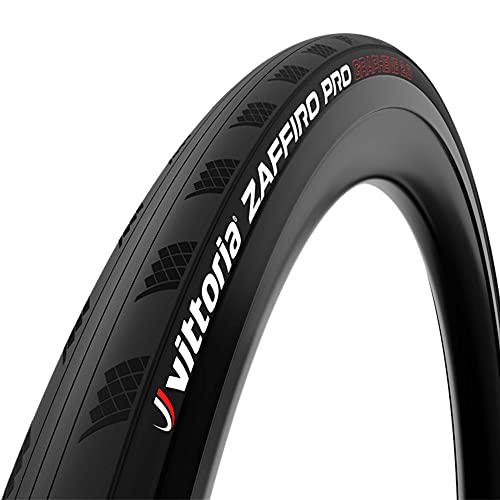
Vittoria Zaffiro Pro V
A 150 tpi casing and a nylon puncture layer make this a sensible winter set for a road bike. Grip and rolling speed trail the premium options by a noticeable margin. Mileage before the tread squares off is where the tire earns its place.
Pros
- Long service life for the money
- Handles winter grit without constant flats
- Mounts easily with tire levers
Cons
- Slower than performance road rubber
- Less confident in cold wet corners

Kenda Kwick Journey KS
Built for bike paths and city streets, this hybrid tire pairs a K-Shield layer with a full reflective sidewall. Widths from 35 mm to 50 mm let you swap narrow, harsh stock tires for something far more comfortable. It is the cheapest meaningful upgrade a hybrid bike can get.
Pros
- Cheapest real comfort upgrade for a hybrid
- Reflective stripe aids side visibility
- Comfortable at moderate pressures
Cons
- Heavier than performance hybrid tires
- Tread wears faster on coarse surfaces
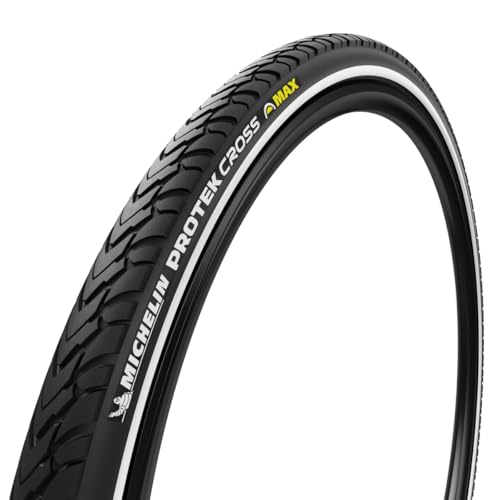
Michelin Protek Max
Reinforced sidewalls and a thick anti-puncture layer suit the extra mass and motor torque of an electric commuter. Widths span 32 mm to 47 mm, covering most hybrid and e-bike rims. Rolling speed is unremarkable, which matters little when the alternative is a roadside repair with panniers attached.
Pros
- Carries heavy loads without squirm
- Strong puncture protection for daily riding
- Sidewalls resist curb strikes
Cons
- Noticeably heavy on the wheel
- Dull on faster unloaded rides
What matters most
How do you match a bike tire to your surface? Road tires chase low rolling resistance and predictable wet grip. Commuting tires trade weight for a puncture belt you never think about. Gravel tires balance small knobs against pavement drone, and mountain tires are bought as a front and rear pair with different jobs. Fitting a race tire to a glass-strewn commute disappoints exactly as much as bolting a touring tire to a light road bike. Decide the surface split first, then rank tires only inside that category.
What tire width and pressure should you run? Wider casings at lower pressure roll as fast or faster on real pavement, which is why 28 mm and 32 mm have displaced 23 mm on road bikes. Frame and fork clearance sets the ceiling, so leave a few millimeters for grit and flex. Rim internal width shapes the tire too: a 21 mm internal rim makes a 30 mm tire measure wider than its label. Owners consistently report that dropping pressure sensibly changes ride quality more than swapping brands.
Is puncture protection worth the extra weight? Every protection belt is a layer of rubber, aramid or nylon under the tread, and each one stiffens the casing. Marathon Plus sits at one extreme with 5 mm of rubber and a dead feel. A 180 tpi race casing sits at the other, quick and vulnerable. Route conditions should set the level: bike paths littered with thorns justify weight that a clean country loop does not. Nobody is fast standing on a shoulder with a tube in their hands.
Should you go tubeless, or stay with inner tubes? Tubeless seals thorn holes automatically and lets you run pressures too low for tubes without pinch flats, which pays off most on gravel and trails. Setup needs tubeless-ready rims, sealant every few months and patience with a compressor. Tubes remain perfectly good for road and commuting, where punctures come from cuts sealant would not fix anyway. Carry a tube regardless, since it is still the roadside repair when a gash is too big to seal.
Compared at a glance
| # | Model | Type | Best for | Score | Price |
|---|---|---|---|---|---|
| 1 | Continental Grand Prix 5000 | Road clincher and tubeless | Best overall | 9.4 | Check price |
| 2 | Schwalbe Marathon Plus | Wired clincher | Best for commuting | 9.2 | Check price |
| 3 | Maxxis Minion DHF | Tubeless ready | Best for mountain biking | 9.0 | Check price |
| 4 | Panaracer GravelKing SK | Tubeless compatible | Best for gravel | 8.8 | Check price |
| 5 | Vittoria Zaffiro Pro V | Road clincher | Best value | 8.6 | Check price |
| 6 | Kenda Kwick Journey KS | Wired clincher | Best budget | 8.3 | Check price |
| 7 | Michelin Protek Max | Wired clincher | Best for e-bikes and loaded commuters | 8.0 | Check price |
Frequently asked questions
How do you find what size tire fits your bike?
Read the sidewall of your current tire for a marking such as 700 by 32c or 29 by 2.4. Compare that with your frame and fork clearance, leaving a few millimeters for mud. Manufacturer clearance figures are published for most modern frames.
Are wider bike tires slower than narrow ones?
Not on real roads. At a given pressure a wider casing deforms less over surface texture, so rolling resistance matches or beats a narrow tire while comfort and grip improve. Aerodynamic drag is the only real penalty, and it only shows above about 20 mph.
How often should bike tires be replaced?
Replace when the tread profile squares off, casing threads show through, or cuts start appearing weekly. Rear tires wear roughly twice as fast as fronts. Many riders rotate a part-worn front to the rear and fit fresh rubber up front.
Do you need different front and rear tires?
On mountain bikes, yes: a grippier front and a faster-rolling rear is the standard setup. Road and commuting bikes normally run a matched pair. Some tourers fit a tougher rear because it carries most of the load.
Is tubeless worth it for road bikes?
Less than for gravel or trail riding. Road punctures often come from cuts that sealant cannot close, and pressures stay high enough that pinch flats are rare anyway. Gravel and mountain riders get far more from the switch.
What tire pressure should you run?
Start in the lower half of the range printed on the sidewall, then adjust for rider weight and surface. Overinflation is the most common setup mistake, and it makes a bike harsher and less grippy at once. Tire pressure calculators from Silca and SRAM give a useful starting number.
Why do punctures keep happening in the same wheel?
Check the tread for a shard of glass or a thorn still embedded and working through. Then inspect the rim tape, because worn or shifted tape lets the tube push into spoke holes. Repeated flats near the valve almost always point at the tape.
Continental Grand Prix 5000 vs Schwalbe Marathon Plus: which should you buy?
Choose the Grand Prix 5000 for weekend road riding where speed and cornering matter. Pick the Marathon Plus for a daily commute through debris, where a flat costs you a meeting. Riders who do both often keep two wheelsets.
Do reflective sidewalls actually make you safer?
They light up a rotating circle at junctions, where drivers approach from the side and headlights miss a rear light entirely. Motion plus reflection reads as a cyclist faster than a static strip. On a commuting tire it is a genuine safety feature.
Our take
Road riders get the most from Continental’s Grand Prix 5000, which holds speed, wet grip and wear in better balance than anything else here. Commuters should fit Schwalbe’s Marathon Plus and accept the weight in exchange for seasons without a roadside repair. Trail riders can still build a front end around the Maxxis Minion DHF, but check frame clearance and rim width before ordering any of them.