Feeding Small Pet Birds: Seed and Pellet Blends Ranked
Kaytee Forti-Diet Pro Health Parakeet is the balanced everyday choice, ZuPreem FruitBlend Pellets suit owners moving a bird off an all-seed diet, and Lafeber Classic Nutri-Berries bridge the two with foraging appeal. Together they cover budgies, cockatiels, finches and canaries at different stages of a diet transition.
If you keep budgies, cockatiels, finches or canaries and want one dependable staple, Kaytee Forti-Diet Pro Health Parakeet is the sensible starting point, with ZuPreem FruitBlend Pellets the better pick if your vet has recommended moving away from seed, and Lafeber Classic Nutri-Berries the easiest bridge between the two.
Choosing bird food is harder than it looks because most of a seed mix ends up on the cage floor. Birds pick out the sunflower and millet and leave the rest, which turns a nutritionally balanced bag into a high fat diet in practice. We compared guaranteed analysis panels, ingredient order, seed and pellet sizing against species, added vitamins and probiotics, and what owners report about waste and acceptance. Any diet change should be discussed with an avian vet, especially for an older or unwell bird.
Before you buy
Seed, pellets or a mix of both An all-seed diet is the most common cause of nutritional problems in pet birds, because birds eat what they like rather than what is balanced. Formulated pellets solve that by putting the same nutrition in every bite, which is why avian vets usually recommend them as the base of the diet. Seed still has a place as a portion of daily food and as a training reward. In practice most owners land on a pellet base with a measured seed portion and fresh vegetables, and that combination is easier to sustain than a sudden all-or-nothing switch.
Match the food to the species and beak size Small bird foods are not interchangeable. Finches and canaries need fine seed such as canary grass and millet and cannot manage large parakeet pellets. Budgies handle standard parakeet mixes and small pellets. Cockatiels take a larger seed and pellet size and eat considerably more by weight. Buying a bag sized for a bigger species leads to waste and a bird that eats only the smallest pieces, which undoes the point of a balanced mix.
Reading the label past the marketing Look at ingredient order first, since the first three items make up most of the bag. Check the guaranteed analysis for crude protein and crude fat, remembering that a high fat figure usually means a heavy sunflower or safflower share. Terms like natural and premium carry no defined meaning, while a stated complete diet claim means the manufacturer intends it as the sole food. Fortification sprayed onto seed hulls is largely discarded when the bird shells the seed, which is why a fortified seed mix is not equal to a pellet.
Transitioning a fussy bird safely Birds recognise food by sight, so a sudden swap can leave one refusing to eat, and small birds cannot go long without food. Owners report the reliable approach is gradual: mix a small proportion of the new food into the familiar one and increase it over a week or two, offer the new food first thing in the morning when appetite is highest, and monitor weight and droppings throughout. Never starve a bird into converting. If weight drops or a bird stops eating, revert and talk to an avian vet before trying again.
Our top picks

Kaytee Forti-Diet Pro Health Parakeet Food
This is the fortified seed blend most budgie and small parrot owners land on. Kaytee coats the mix with added vitamins, omega-3 and probiotics, and includes a pellet component so birds get some nutrition even when they selectively feed. The seed sizing suits parakeets and small conures rather than finches.
Pros
- Widely accepted by fussy seed-raised birds
- Fortification survives selective feeding better than plain seed
- Easy to find and restock
Cons
- Birds still pick out favourites and waste some
- Seed size is too large for finches and canaries
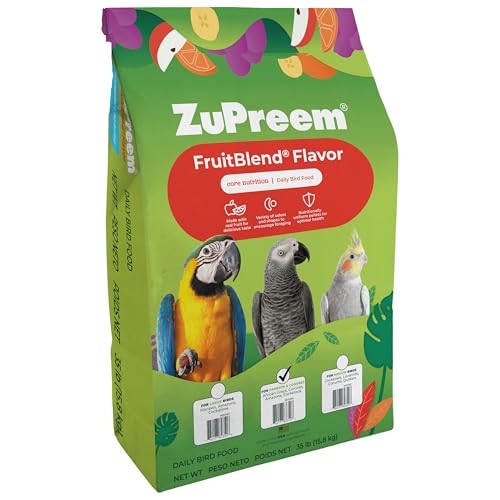
ZuPreem FruitBlend Flavor Pellets for Small Birds
FruitBlend is the pellet many avian vets suggest when a bird needs a complete formulated diet rather than a seed mix. The fruit flavouring and colour are there to make the switch palatable, and the small bird size is shaped for budgies and cockatiels. Owners report conversion takes patience over days or weeks rather than happening overnight.
Pros
- Every bite carries the same nutrition, so no selective feeding
- Small pellet size suits budgies and cockatiels
- Far less cage floor waste than seed
Cons
- Seed-raised birds often resist at first
- Added colours are not to every owner’s taste

Lafeber Classic Nutri-Berries for Cockatiels
Nutri-Berries bind whole seeds and grains into a ball with a balanced base, so a bird has to work at it while still getting the full formula. That combination of foraging behaviour and complete nutrition is why they are often used as a bridge between seed and pellets. Owners report they hold attention far longer than a seed dish.
Pros
- Real enrichment value for caged birds
- Complete nutrition in a seed-like format
- Useful step when converting to pellets
Cons
- Crumbs build up under the perch
- Fat content is higher than a plain pellet

Higgins Vita Seed Parakeet Food
Higgins builds Vita Seed around whole seeds, grains and dried fruits and vegetables with no artificial colours or preservatives. The mix reads more like a natural forage blend than a typical supermarket bag. Based on specifications the vitamin coating is lighter than Kaytee’s, which suits owners already offering fresh food alongside.
Pros
- Clean ingredient list without artificial dyes
- Varied textures keep birds interested
- Good option alongside fresh vegetables
Cons
- Still allows selective feeding
- Dried fruit pieces are often left uneaten
Volkman Avian Science Super Parakeet Seed Mix
Volkman’s Avian Science line is aimed at breeders and aviary keepers who go through food quickly and care about seed quality over coatings. The parakeet mix is heavy on cleaned millet and canary grass seed with a modest sunflower share. Owners report noticeably less dust and hull debris than budget supermarket mixes.
Pros
- Clean, low-dust seed with good hull ratio
- Sensible sunflower proportion for small birds
- Bag sizes suit several birds
Cons
- Not fortified enough to be a sole diet
- Harder to find than mainstream brands

RoudyBush Daily Maintenance Nibles Bird Food
RoudyBush makes a formulated maintenance pellet with no artificial colours or flavours, which appeals to owners who want the nutrition of a pellet without the dyes. Nibles is the small size intended for budgies, cockatiels and similar birds. Based on specifications it is a straightforward daily diet rather than a treat food.
Pros
- Uniform nutrition with no selective feeding
- Plain formula avoids added dyes
- Long-standing choice among avian keepers
Cons
- Plain appearance makes conversion slower
- Less enrichment value than seed or Nutri-Berries

Wild Harvest Advanced Nutrition Parakeet Food
Wild Harvest is the widely stocked bag that keeps a budgie fed without much fuss. The mix blends seeds with fortified pellets and dried fruit and vegetable pieces. Owners report it is best treated as a base to build on with fresh greens rather than a complete diet on its own.
Pros
- Easy to find in most stores
- Includes a pellet component alongside seed
- Accepted readily by most budgies
Cons
- Higher filler share than premium mixes
- Fruit and vegetable pieces are frequently ignored
How they stack up
| # | Model | Suited to | Best for | Score | Price |
|---|---|---|---|---|---|
| 1 | Kaytee Forti-Diet Pro Health Parakeet Food | Budgies, parakeets, small parrots | Best overall | 9.4 | Check price |
| 2 | ZuPreem FruitBlend Flavor Pellets for Small Birds | Budgies, cockatiels, lovebirds | Best for converting off seed | 9.2 | Check price |
| 3 | Lafeber Classic Nutri-Berries for Cockatiels | Cockatiels, conures, similar sized birds | Best for foraging and enrichment | 9.0 | Check price |
| 4 | Higgins Vita Seed Parakeet Food | Parakeets and budgies | Best for natural ingredients | 8.8 | Check price |
| 5 | Volkman Avian Science Super Parakeet Seed Mix | Budgies, parakeets, aviary flocks | Best for multi-bird aviaries | 8.6 | Check price |
| 6 | RoudyBush Daily Maintenance Nibles Bird Food | Budgies, cockatiels, small parrots | Best plain pellet | 8.3 | Check price |
| 7 | Wild Harvest Advanced Nutrition Parakeet Food | Parakeets and budgies | Best budget | 8.0 | Check price |
Good to know
Are pellets really better than seed for small birds?
Formulated pellets prevent selective feeding, which is the main nutritional risk with seed mixes. Most avian vets recommend a pellet base with fresh vegetables and a small seed portion. That said, a bird that refuses pellets and eats well on a fortified mix plus fresh food is better off than one that stops eating altogether.
How much should I feed a budgie each day?
A budgie eats roughly one to two teaspoons of food daily, though this varies with age, activity and whether fresh food is offered. Refilling a dish that still looks full is a common mistake, since the top layer is often just empty hulls. Blow the hulls off before deciding whether more is needed.
Can finches and canaries eat parakeet food?
Not well. Parakeet mixes contain seeds too large for finch beaks, so the bird eats only the fine millet and leaves the rest. Buy a finch or canary specific mix with the appropriate seed sizes, or a small pellet formulated for those species.
Why does my bird throw food everywhere?
Some of it is natural foraging behaviour and some is selective feeding. A deeper dish, a seed guard around the cage, or a foraging format such as bound seed clusters all reduce the mess. It is also worth checking whether the discarded material is actually empty hulls rather than wasted food.
Is sunflower seed bad for small birds?
It is not harmful in small amounts, but it is high in fat and birds tend to eat it first and ignore the rest. Mixes with a modest sunflower share encourage more balanced eating, and sunflower works better as an occasional reward than as a bulk ingredient.
Do birds need grit?
Parrot type birds including budgies and cockatiels shell their seeds and do not need grit, and excess grit can cause problems. Finches, canaries and doves that swallow seed whole may benefit from a small amount. Ask an avian vet about your particular species rather than offering it by default.
How should I store bird food?
Keep it in an airtight container in a cool, dark place and buy bag sizes you will finish within a couple of months. Seed loses nutritional value over time and can develop mould or attract pantry moths in a warm cupboard. Discard any food that smells musty.
What fresh foods can I add?
Leafy greens, carrot, broccoli, capsicum and small amounts of fruit are commonly offered alongside a base diet. Avocado, chocolate, caffeine, alcohol and salty foods are dangerous to birds. Introduce anything new gradually, remove uneaten fresh food within a few hours, and check with an avian vet if your bird has a health condition.
Our pick
Kaytee Forti-Diet Pro Health Parakeet is the practical everyday staple for most budgie and small parrot owners, combining fortification with a pellet component that survives selective feeding. If your vet has recommended a formulated diet, ZuPreem FruitBlend Pellets are the most widely accepted route there, and Lafeber Classic Nutri-Berries make the transition easier by keeping the foraging behaviour birds actually enjoy.