How to Choose a Birdhouse Birds Will Actually Use
Woodlink’s Audubon Cedar Bluebird House ranks first here. It matches published nest box dimensions and opens from the side for cleaning. Yards holding wrens and chickadees suit the Nature’s Way Bird Products Cedar Wren House better. Heath Outdoor Products Wren House covers the fundamentals cheaply.
Put up one box and Woodlink’s Audubon Cedar Bluebird House is the safest choice for most yards. Gardens dominated by wrens or chickadees do better with the smaller Nature’s Way cedar house. On a tight budget, the Heath Outdoor Products Wren House still gets hole size and drainage right.
Listings rarely lead with the one number that decides occupancy: entrance hole diameter. We compared hole sizes against the nesting requirements of common backyard species. Wall thickness, roof overhang, floor drainage and ventilation gaps came next. Owner reports about split panels, leaking roofs and boxes that will not open settled the order.
What to look for
What to look for in a birdhouse Four features decide whether a nest box gets used: hole diameter, wall thickness, drainage and cleaning access. Hole diameter selects the species, so it comes first. Walls around twenty millimetres of cedar, or thick recycled poly, hold the cavity temperature steadier than thin plywood. Drainage holes in the floor and vent gaps under the roof stop damp and heat building up. Skip any box with a perch below the entrance, since it gives sparrows and climbing predators a foothold.
Which hole size suits the birds in your yard Hole diameter works as a filter, not a detail. About 28mm suits house wrens and chickadees. Near 32mm gives chickadees, titmice and nuthatches more room. Bluebirds and tree swallows need close to 38mm. Buy for the birds you already see, because an oversized hole in a wren garden usually ends with house sparrows in residence.
Where to mount a birdhouse and how to stop predators A smooth metal pole beats a tree trunk or a wooden fence post. Raccoons, cats and rat snakes climb bark and timber with ease. Fit a conical or stovepipe baffle below the box, then set it roughly one to three metres up. Face the entrance away from prevailing wind and driving rain. Leave open flight space in front, since birds avoid a hole buried in foliage.
How to clean a nest box and keep it in use Old nest material holds mites and takes up room the next pair needs. Wait until the last brood has fledged, then open the panel and scrape the cavity out. Plain water does the job; detergents and disinfectants are not wanted. Gloves and a dust mask are sensible, because dried nest debris is unpleasant to breathe. Check the hinge and drainage holes at the same time, and tighten any screws that have worked loose.
What we recommend

Woodlink Audubon Cedar Bluebird House
Interior depth, floor area and hole diameter here match the figures the North American Bluebird Society publishes. Cedar walls buffer afternoon heat, and the roof overhangs far enough to keep rain off the entrance. One side panel pivots open, so the annual clean out takes a minute and no tools.
Pros
- Dimensions match published nest box standards
- Untreated cedar survives several winters
- Side panel opens without tools
Cons
- No predator baffle or guard included
- A 38mm hole also admits house sparrows

Nature’s Way Bird Products Cedar Wren House
A 28mm entrance and a tight cavity point this box at house wrens and chickadees. Starlings and house sparrows cannot squeeze through an opening that small. Vent gaps, floor drainage and a hinged front match the build used on Nature’s Way bluebird boxes.
Pros
- Small hole shuts out starlings and sparrows
- Wrens often prospect it in the first season
- Hinged front makes the yearly clean quick
Cons
- Too small for bluebirds or tree swallows
- Compact cavity limits brood size
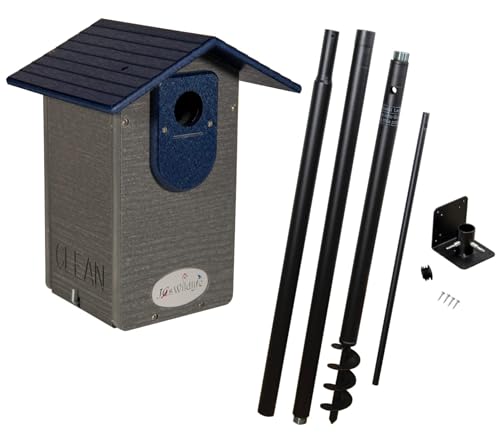
JCs Wildlife Ultimate Bluebird House
Recycled poly panels replace most of the timber, so wet winters and strong sun cannot warp or rot the shell. Vented upper walls and a wide roof hold the cavity nearer a stable temperature than thin plywood manages. Weight is the trade: fix it to a post rather than hanging it from a branch.
Pros
- Never rots, warps or needs treating
- Upper vents steady the cavity temperature
- Wide roof shields the entrance from rain
Cons
- Heavy enough to need a solid post
- Costs more than plain cedar boxes

Kettle Moraine Cedar Bluebird House with Predator Guard
An extended entrance tunnel puts the nest beyond the reach of a raccoon paw or a cat’s leg. Reaching predators account for most failed suburban broods, so that tunnel earns its place. Thick cut cedar and screwed joints mean a damaged panel gets replaced instead of the whole box.
Pros
- Entrance depth blocks reaching predators
- Screwed joints allow repairs rather than replacement
- Thick walls slow temperature swings
Cons
- Rustic look suits informal gardens only
- Heavier than a standard cedar box
Heath Outdoor Products Wren House
Heath keeps the design to four things that matter: cedar, a wren sized hole, floor drainage and a removable panel. No perch is fitted, which is correct, since a perch helps predators more than nesting birds. Walls run thinner than premium cedar boxes, so plan on a shorter life outdoors.
Pros
- Correct hole size for the least spend here
- Perch left off, matching conservation advice
- Mounts to a post or fence in minutes
Cons
- Thin walls weather faster than thick cedar
- Minimal roof overhang above the entrance

Coveside Conservation Chickadee House
Chickadees want more cavity depth than wrens and a hole nearer 32mm, and Coveside builds to those figures. Its swing out side panel lets you check a nest without dismantling anything, which suits anyone keeping records for a nest watch scheme. Tuning to one species does cost flexibility if you are unsure what nests nearby.
Pros
- Cavity depth and hole sized for chickadees
- Side panel opens for nest monitoring
- Solid timber holds its shape over seasons
Cons
- Narrow species fit, not a general purpose box
- Pine versions need replacing sooner than cedar

Esschert Design Wooden Bird House
Esschert builds boxes that read as garden objects while still working as nest sites, with sensible hole sizes and no perch on most designs. Timber is FSC certified and cut lighter than the conservation brands use, so expect the finish to grey outdoors. Hole diameter changes across the range, so check the figure on the exact model before ordering.
Pros
- Looks right in a visible garden spot
- Certified timber sourcing
- Most models leave the perch off
Cons
- Lighter build than conservation boxes
- Hole diameter differs between models
Compared at a glance
| # | Model | Material | Best for | Score | Price |
|---|---|---|---|---|---|
| 1 | Woodlink Audubon Cedar Bluebird House | Solid cedar | Best overall | 9.4 | Check price |
| 2 | Nature’s Way Bird Products Cedar Wren House | Inland cedar | Best for small birds | 9.2 | Check price |
| 3 | JCs Wildlife Ultimate Bluebird House | Recycled poly with cedar elements | Best for harsh weather | 9.0 | Check price |
| 4 | Kettle Moraine Cedar Bluebird House with Predator Guard | Thick cut cedar | Best predator protection | 8.8 | Check price |
| 5 | Heath Outdoor Products Wren House | Cedar | Best budget | 8.6 | Check price |
| 6 | Coveside Conservation Chickadee House | Solid pine or cedar | Best for chickadees | 8.3 | Check price |
| 7 | Esschert Design Wooden Bird House | FSC certified wood | Best looking | 8.0 | Check price |
Good to know
What hole size is best for a birdhouse?
It depends entirely on the species you want. Roughly 28mm suits house wrens and chickadees, near 32mm fits titmice and nuthatches, and about 38mm serves bluebirds and tree swallows. Anything wider invites starlings and house sparrows, which evict smaller nesters.
Which way should a birdhouse face?
Turn the entrance away from prevailing wind and driving rain, and out of full afternoon sun. In many yards that means an easterly or northerly aspect. Facing open ground rather than dense shrubs also gives adult birds a clean approach.
How high should you mount a birdhouse?
Most small cavity nesters accept anything between about one and three metres. Predator protection matters far more than height, so a baffled metal pole at head height beats an unprotected box high in a tree.
Do birdhouses need cleaning every year?
Yes. Mites, old feathers and packed nest material make a box less attractive and less healthy for the next brood. Clear it once the final brood has fledged, using water and a scraper rather than chemicals.
Can you paint a birdhouse?
Light coloured water based paint on the outside reflects heat and does no harm. Leave the interior, the entrance edges and the underside of the roof bare. Cedar and recycled poly need no finish at all.
Why do house sparrows keep taking over my nest box?
Almost always the hole is wider than the species you wanted requires. Dropping to 28mm excludes sparrows completely, though it excludes bluebirds too. Slot entrances and cylinder shaped boxes are also reported to discourage them.
How many birdhouses can one garden hold?
Same species boxes need real separation, often thirty metres or more, because cavity nesters defend territory. Boxes aimed at different species can sit closer. Crowding usually lowers occupancy rather than raising it.
When is the best time to put up a birdhouse?
Late winter, ahead of the prospecting season, gives the best odds of a first year nest. Boxes hung later still get used for second broods or as winter roosts, so nothing is wasted.
Cedar vs recycled poly: which lasts longer?
Recycled poly outlasts cedar and never needs treating, warps or rots. Cedar breathes better, weighs less and costs less, but thin cedar splits after a few seasons. Thick cedar sits close to poly on lifespan and looks more at home in a garden.
Should a birdhouse have a perch?
No. Cavity nesting birds cling to the entrance without help, while a perch gives sparrows a place to harass occupants and gives predators leverage. Boxes sold with a dowel perch can simply have it sawn off.
Final word
One box in an average yard is best served by the Woodlink Audubon Cedar Bluebird House, which follows the published dimensions that drive occupancy and opens easily each autumn. Where wrens and chickadees dominate, the smaller Nature’s Way cedar house is the better fit. Heath Outdoor Products covers hole size, drainage and access correctly for the least spend.