Seven Board Games Worth Starting A Collection With
Catan leads this lineup for trading depth and expansion support, ideal for family night. Ticket to Ride wraps up in 30 to 60 minutes for a faster family option. Codenames handles large parties in about 15 minutes per round, and Pandemic suits groups who prefer cooperative play over competition.
Catan tops this board game starter kit lineup for families who want trading and light strategy in one box. Rounds run 60 to 90 minutes, longer than the quick party card games covered further down.
Family night, a two player evening, and a party of eight all call for different mechanics, so no single game covers every occasion. We compared player counts, average playtimes, and component counts, then checked owner feedback on setup time and replay value for each title.
What to look for
What to check before building a starter kit Player count sets the floor, since a kit built around two player games leaves a party of six without an option. Recommended age should match the youngest regular player, not the group average. Average playtime decides how many rounds fit into one evening, from Codenames at 15 minutes to Catan near 90. Component count and expansion support signal how long a single box stays interesting before players want a second game.
Which games fit family game night Ticket to Ride and Catan both scale from 3 to 5 players, covering most family table sizes without extra purchases. Ticket to Ride wraps up in under an hour, fitting a weeknight schedule better than Catan’s longer sessions. Families who prefer teamwork over head to head competition get a cooperative option in Pandemic. Mixed age groups often do better with Ticket to Ride’s route building than Catan’s trading negotiations.
Party games versus strategy gateway games Codenames scales to large groups and wraps rounds in about 15 minutes, built for guests rotating in and out. Catan and Pandemic run longer and reward players who stay at the table for a full session. Resource management and negotiation skills from a gateway game like Catan carry over to heavier hobby games later. Party games trade that depth for speed, leaning on word association and quick reads instead of long term planning.
Best picks for two players and younger kids Sequence plays identically at two players or with teams, since the board and chip system needs no rebalancing for smaller groups. Sushi Go! and Uno both fit players as young as 7 or 8, using pick and pass or match based rules that need little reading. Catan and Pandemic list a two player minimum but were designed around three to four, so head to head sessions can feel underpopulated. Uno’s matching rules teach turn taking with the least setup for a first game with a child under 8.
The best picks, ranked

Catan (Catan Studio)
Catan splits an island into 19 hex tiles, and 3 or 4 players trade resources to build roads and settlements. A full game runs 60 to 90 minutes once everyone understands trading. Seafarers and Cities and Knights expansions extend the same board system into new scenarios.
Pros
- Trading forces negotiation instead of direct conflict between players
- Board layout resets every session, so replay value stays high
- Expansion library covers Seafarers, Cities and Knights, and more
Cons
- New groups often need extra time to learn trading rules on the first play
- A weak starting placement can put one player behind early

Ticket to Ride (Days of Wonder)
Two to five players claim colored train routes across a map of North America in Ticket to Ride. Rounds wrap up in 30 to 60 minutes, short enough to fit a second game the same night. Days of Wonder sells separate map expansions covering Europe, Asia, and other regions.
Pros
- New players learn the rules in under 10 minutes
- Destination tickets add light strategy without heavy math
- Map expansions extend the same base set for years
Cons
- Two players fighting over the same route can slow the middle game
- Experienced players who claim long routes early gain an edge on the base map

Codenames (Czech Games Edition)
Two teams guess 25 word cards from one word clues given by a spymaster in Codenames. A round usually wraps in about 15 minutes, so several rounds fit into one night. Word cards support anywhere from 2 to 8 or more players once teams start sharing turns.
Pros
- Setup takes under a minute with no board to assemble
- Scales from a small table to a large party without changing rules
- Word combinations rarely repeat, keeping replay value high
Cons
- Non native speakers may need extra time with the shared vocabulary
- A confident spymaster keeps the pace; a hesitant one slows it down
Pandemic (Z-Man Games)
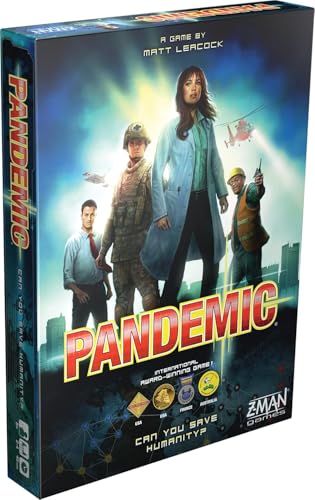
Two to four players work as a team in Pandemic, curing four diseases before outbreaks spread across a world map. Sessions run about 45 minutes once players settle into their roles. On the Brink and In the Lab expansions add new roles and a bioterrorist twist.
Pros
- Cooperative format removes head to head competition
- Role cards give each player a distinct set of abilities
- Expansions add mechanics without replacing the base board
Cons
- One vocal player can end up directing everyone else’s turn
- A loss near the end can feel abrupt after a long session

Sushi Go! (Gamewright)
Sushi Go! deals sushi themed cards that players pick and pass around the table each round. A full game finishes in about 15 minutes, and the rules fit on a single card. Scoring rewards matching sets, something younger players pick up after one practice round.
Pros
- Pick and pass mechanic needs no reading for repeat plays
- Compact box travels easily for trips or restaurants
- Short rounds hold younger attention spans
Cons
- Strategic depth stays limited compared to longer games
- Card art icons can be hard for very young kids to tell apart

Sequence (Jax Ltd)
Sequence pairs a card deck with a 10 by 10 board, and players place chips to build a row of five. The same rules work for two players or two teams without adjusting setup. A full game usually takes about 30 minutes from deal to a completed sequence.
Pros
- Identical rules work for 2 players or larger team play
- Combining cards with a board lowers luck compared to pure card games
- Chips and cards store flat, so the box takes little shelf space
Cons
- Corner squares give a slight first move advantage
- An unchanging board can make repeated plays feel similar

Uno (Mattel)
Uno deals seven cards per player, and turns move around matching color or number until one hand empties. A round rarely runs past 15 minutes, so a kit can fit several back to back. The core deck supports 2 to 10 players with no extra components needed.
Pros
- Works across age ranges from young kids to adults
- Portable box fits in a bag alongside other games
- Wild and action cards teach basic strategy without complex rules
Cons
- Repeated rounds can feel similar without house rule variants
- Card draws add a luck factor to match outcomes
How they compare
| # | Model | Players | Best for | Score | Price |
|---|---|---|---|---|---|
| 1 | Catan (Catan Studio) | 3 to 4 (up to 6 with expansion) | Best overall | 9.4 | Check price |
| 2 | Ticket to Ride (Days of Wonder) | 2 to 5 | Best for family game night | 9.1 | Check price |
| 3 | Codenames (Czech Games Edition) | 2 to 8 plus (best with larger groups) | Best party game | 8.9 | Check price |
| 4 | Pandemic (Z-Man Games) | 2 to 4 | Best cooperative game | 8.6 | Check price |
| 5 | Sushi Go! (Gamewright) | 2 to 5 | Best for kids | 8.4 | Check price |
| 6 | Sequence (Jax Ltd) | 2 to 12 (2, 3, or 4 teams) | Best for 2 players | 8.2 | Check price |
| 7 | Uno (Mattel) | 2 to 10 | Best value | 8.0 | Check price |
Questions worth asking
What board games should a beginner starter kit include?
A solid starter kit mixes a family strategy game such as Catan, a fast party game such as Codenames, and a simple card game such as Uno for younger players. That range covers sessions from 15 minutes to 90 minutes.
How many people can play Codenames at once?
Codenames splits into two teams and works from 2 players up through 8 or more once teams share turns. Larger groups tend to enjoy it most since more voices join the guessing debates.
Is Catan good for two players?
Catan lists a 3 to 4 player range on the box, and its trading mechanics lose value with only two people at the table. Sequence or Ticket to Ride handle two player sessions more evenly.
What age is Ticket to Ride appropriate for?
Ticket to Ride carries an age 8 and up rating, with route building simple enough for that age to grasp in one round. Adults still find enough depth in ticket selection to stay engaged.
Can Pandemic be played solo?
Pandemic is built for 2 to 4 players working as a team, so a true solo mode is not part of the base rules. Some owners control two roles at once to approximate solo play.
Sushi Go! vs Uno, which is better for kids?
Sushi Go! uses a pick and pass mechanic that rewards planning ahead, while Uno relies more on card luck and quick matching. Kids around age 7 often start with Uno before moving on to Sushi Go’s light strategy.
How long does an average game of Catan take?
Catan sessions typically run 60 to 90 minutes once players understand trading and building costs. First games with new players can stretch past two hours while rules get explained.
Do these starter kit games work with expansions?
Catan and Pandemic both carry official expansions, Seafarers and Cities and Knights for Catan, On the Brink and In the Lab for Pandemic. Ticket to Ride adds separate map expansions, while Codenames, Sushi Go, Sequence, and Uno mostly stay standalone.
Which board game is best for a large party?
Codenames handles large parties best, since rounds finish in about 15 minutes and the game scales past 8 players without changing rules. Guests can rotate in and out between rounds with no setup delay.
What is the best board game for two players only?
Sequence plays the same at two players as it does with teams, so the rules do not need adjusting for a smaller group. Ticket to Ride also holds up well at two, though its map favors longer routes when there is less competition for space.
Final word
Catan earns the top recommendation here since trading and building hold up across dozens of replays, and its expansion library keeps the same box relevant for years. Families wanting shorter, lighter sessions should start with Ticket to Ride instead, since 30 to 60 minute rounds fit a weeknight better. Anyone hosting a larger party should skip both and lead with Codenames, which scales past 8 players without changing a single rule.