Which Boat Anchor Actually Holds in Your Seabed?
The Extreme Max BoatTector river anchor handles mixed bottoms best for small boats. Slide Anchor Box Anchor holds hardest in soft mud and grass. MarineNow’s fluke kit offers the best value complete setup for sand.
For most small boats the Extreme Max BoatTector river anchor is the most forgiving pick across mixed bottoms. Slide Anchor’s box design wins for soft mud and weed, and the MarineNow fluke kit delivers the best value setup for sand.
Choosing an anchor really means choosing for your seabed, since a fluke that buries beautifully in sand will skate across rock with almost no grip. We compared anchor geometry, weight ranges, coatings and stowed size across currently sold listings, then weighed those specs against what owners report about first attempt setting and clean breakout when it is time to leave.
The shortlist, ranked
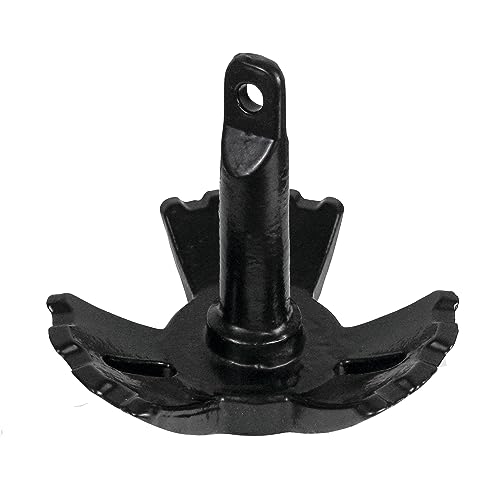
Extreme Max BoatTector Vinyl Coated River Anchor
This river style shape holds reliably in mud, silt and mixed bottoms where fluke designs struggle to bite. Vinyl coating stops the anchor marking a deck or hull when it comes aboard wet. Owners report it sets fast without needing a long drift to bury.
Pros
- Coating protects deck and hull gelcoat
- Sets quickly without a long drift
- Wide weight range for different boat sizes
Cons
- Heavy for its holding power in sand
- Bulky to stow compared with folding types

Slide Anchor Box Anchor
A folding box shape digs into soft mud, silt and weed rather than skating over it, exactly where conventional anchors give up. Short scope is enough to hold, which suits crowded anchorages with little room to pay out rode. Owners report clean breakout with a straight vertical pull.
Pros
- Outstanding holding in soft and weedy bottoms
- Works on short scope in tight anchorages
- Folds flat despite its size
Cons
- Awkward shape to handle on a small deck
- Less effective on hard rocky bottoms

MarineNow Deluxe Portable Fluke Style Anchor Kit
A Danforth style fluke anchor ships with chain, rode and shackles, removing the guesswork of assembling ground tackle piece by piece. Deep burial in sand and firm mud gives exceptional holding for the weight. Galvanizing holds up reasonably well, though heavy salt exposure eventually wears it.
Pros
- Complete setup with no extras to buy
- Excellent holding for its weight in sand
- Folds reasonably flat for stowage
Cons
- Skates on rock and heavy weed
- Galvanizing wears with heavy salt exposure

Lewmar Claw Anchor
Familiar from commercial use, the claw shape resets rather than pulling free when overnight wind direction changes. A wider range of bottoms works here than with a fluke, including some rock and weed, at slightly lower holding per kilogram. Lewmar’s galvanizing quality and shape suit a bow roller.
Pros
- Resets reliably when the wind swings
- Works across the widest range of bottoms
- Stows neatly on a bow roller
Cons
- Lower holding per kilogram than a fluke
- Heavier for the same holding power
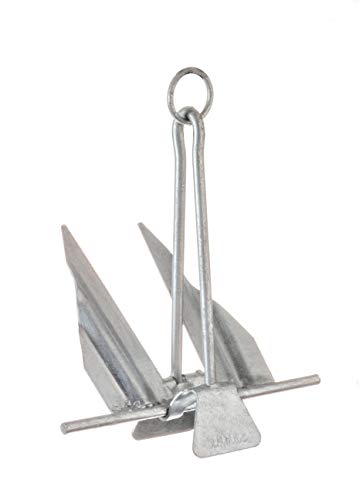
Seachoice Utility Anchor
A straightforward vinyl coated design that works well as a lunch hook, holding a small boat steady for a swim stop or short fishing break rather than overnight. Low cost makes it easy to carry as a spare. Anything larger than a dinghy or small runabout needs a dedicated primary anchor instead.
Pros
- Very low cost for a coated anchor
- Ideal as a second or stern anchor
- Coating protects the boat when stowed
Cons
- Not enough holding for overnight use
- Limited to small boats and calm conditions

Airhead Complete Grapnel Anchor System
Folding arms let this grapnel disappear into a kayak hatch, then hook reliably into rock, coral rubble and roots where other types fail entirely. Airhead includes rode, a float and a storage bag as a complete package. Soft bottom holding stays minimal, marking this as a specialist rather than general purpose choice.
Pros
- Folds small enough for a kayak hatch
- Hooks rock and structure reliably
- Complete kit with rode and bag
Cons
- Very little holding in mud or sand
- Can snag badly on rocky bottoms

Gradient Fitness Marine Grapnel Anchor Kit
Built for paddleboards, kayaks and small inflatables, this folding grapnel bundles rode, a buoy and a carry bag in a package too light to affect trim. Gentle current holds no problem for a small craft, which covers most paddler needs. Treat the stated weight rating as a limit, and size up if fishing in moving water.
Pros
- Light enough not to upset small craft trim
- Complete kit at a low cost
- Compact folded size
Cons
- Underpowered for anything larger than a small craft
- Limited holding in current or wind
What to look for
How do you match an anchor type to your seabed? Fluke anchors bury deeply in sand and firm mud, offering the best holding for their weight, but they slide across rock and cannot penetrate heavy weed. Claw anchors cover a wider mix of bottoms and reset well when wind shifts overnight. Box anchors excel where flukes fail, in soft mud and grass. Grapnels hook rock and structure and little else, which is why many boaters carry two different types.
Does anchor weight matter more than rode scope? The angle of pull decides whether an anchor digs in or drags, and that angle comes from how much rode is paid out. A common guideline is seven times the water depth from the bow for overnight anchoring, dropping to around five in calm daylight. A heavier anchor on too little scope holds worse than a lighter anchor set correctly.
Why does chain matter between the anchor and the rope rode? Chain keeps the pull horizontal at the seabed, which lets an anchor set rather than trip prematurely. It also resists chafe against rock and shell far better than rope alone. A rough minimum is one boat length of chain, more in exposed anchorages. Skipping chain is a common reason a good anchor still won’t hold.
What should you know about corrosion protection and stowage? Hot dipped galvanizing is the standard protection and lasts years in fresh water, less in salt. Vinyl coating protects the boat rather than the anchor itself, which matters most on small craft where it comes aboard onto the deck. Stowed shape counts too, since a folding box or grapnel disappears into a locker while a claw wants a bow roller.
How they compare
| # | Model | Type | Best for | Score | Price |
|---|---|---|---|---|---|
| 1 | Extreme Max BoatTector Vinyl Coated River Anchor | River style with vinyl coating | Best overall | 9.4 | Check price |
| 2 | Slide Anchor Box Anchor | Folding box anchor | Best holding power | 9.2 | Check price |
| 3 | MarineNow Deluxe Portable Fluke Style Anchor Kit | Fluke, Danforth style | Best value | 9.0 | Check price |
| 4 | Lewmar Claw Anchor | Claw | Best all round for larger boats | 8.8 | Check price |
| 5 | Seachoice Utility Anchor | Utility, vinyl coated | Best budget | 8.6 | Check price |
| 6 | Airhead Complete Grapnel Anchor System | Folding grapnel | Best for kayaks | 8.3 | Check price |
| 7 | Gradient Fitness Marine Grapnel Anchor Kit | Folding grapnel | Best for small craft | 8.0 | Check price |
Common questions
What size anchor do I need for my boat?
Anchor manufacturers publish sizing charts based on boat length and displacement, and those figures are the ones to follow. Size up rather than down for overnight or exposed water anchoring. Scope and chain affect holding as much as anchor weight does.
How much anchor rode should I let out?
A common guideline is seven times water depth measured from the bow for overnight anchoring, around five times in calm daytime conditions. Less scope raises the pull angle and is the leading cause of dragging anchors.
Do I really need chain between the anchor and the rope?
Yes. Chain keeps the pull horizontal at the seabed so the anchor digs in rather than tipping out, and it resists chafe on rock and shell. One boat length is a reasonable minimum for small craft.
Which anchor works best on a rocky bottom?
A grapnel hooks into rock and structure better than any other type, though it offers little holding elsewhere. Claw anchors also handle rock reasonably well. Fluke anchors are the wrong pick here, since they need to bury and cannot on hard bottoms.
Why does my anchor keep dragging?
Usually the cause is insufficient scope, missing chain, or the wrong anchor type for the bottom. Setting technique matters too, since an anchor should be lowered then drawn back slowly under gentle reverse power rather than dropped in a heap.
How do I free an anchor that’s stuck on the bottom?
Motor slowly over the top of it and pull vertically, which trips most designs. A trip line attached to the crown and buoyed at the surface is the reliable fix in rocky ground, pulling the anchor out backwards from where it went in.
Should I carry more than one boat anchor?
Many boaters do, typically a main anchor matched to the local bottom plus a second of a different type for other conditions or as a stern anchor. A light utility anchor also works as a lunch hook for short stops.
Fluke vs claw anchor, which should I buy?
Fluke anchors give the best holding per pound in sand and firm mud. Claw anchors trade some of that holding for versatility across rock, weed and shifting wind, plus easier resetting overnight.
Galvanized or vinyl coated anchor, which is better?
Galvanizing protects the anchor from corrosion and is standard on serious ground tackle. Vinyl coating protects the boat from the anchor instead, which matters most on small craft where it comes aboard onto the deck. Some smaller anchors offer both.
The verdict
Most small boat owners are well served by the Extreme Max BoatTector river anchor, since it sets easily across the mixed bottoms found on lakes and rivers and its coating spares the gelcoat. Anyone anchoring over soft mud or weed should look at the Slide Anchor Box Anchor, which holds where conventional designs give up. Whatever the choice, spend extra on proper chain length, since scope and chain decide holding far more than anchor weight.