Top Brushless Circular Saws for Serious Cuts
The Makita XSR01Z leads the pack with its combination of power, runtime, and build quality, making it ideal for pros who need reliable performance all day. Its main advantage is the efficient brushless motor that delivers extended battery life, but its main limitation is the lack of an included blade or case.
Brushless motors have changed the game for circular saws, offering more power, longer runtime, and greater durability than their brushed counterparts. Whether you are a professional contractor or a serious DIYer, a brushless saw can make your cuts faster and cleaner.
Our roundup highlights the best brushless circular saws across different categories, from the most powerful to the most portable. We considered factors like motor efficiency, blade size, cutting capacity, and user feedback to help you choose the right tool for your workshop.
What we recommend

Makita XSR01Z 6-1/2-Inch Brushless Cordless Circular Saw
The Makita XSR01Z is a top performer with a brushless motor that delivers up to 3,700 RPM for fast, clean cuts. Its compact design and excellent balance make it a favorite among pros.
Pros
- Powerful and efficient brushless motor
- Lightweight and well-balanced
- Excellent dust extraction
Cons
- No blade or battery included
- Some users report blade guard stiffness

DEWALT 20V MAX XR Brushless Circular Saw, 7-1/4-Inch (DCS570B)
This DEWALT saw packs serious torque with a 7-1/4-inch blade that cuts through thick lumber with ease. Its brushless motor and high-capacity battery compatibility make it a workhorse.
Pros
- High speed for fast cuts
- Durable construction
- Comfortable handle
Cons
- Heavier than some competitors
- Battery sold separately
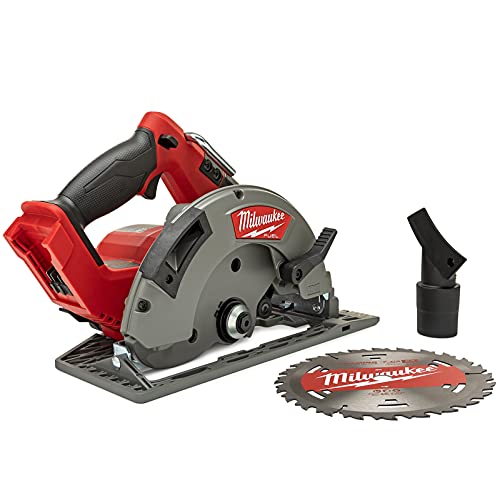
Milwaukee 2732-20 M18 FUEL 7-1/4-Inch Circular Saw
Milwaukee’s M18 FUEL saw is built for heavy use, featuring a POWERSTATE brushless motor and REDLINK PLUS intelligence for optimal performance. It delivers up to 5,300 RPM and has a built-in rafter hook.
Pros
- Rugged and reliable
- Powerful motor
- Integrated rafter hook
Cons
- Premium price point
- Noisy operation

Bosch CCS180B 18V Brushless 6-1/2-Inch Circular Saw
Bosch’s CCS180B offers a 6-1/2-inch blade with a thin kerf for smooth, precise cuts. Its ergonomic design and low vibration make it ideal for detailed work.
Pros
- Thin kerf blade for clean cuts
- Compact and lightweight
- Easy to adjust bevel
Cons
- Less power than 7-1/4-inch models
- Dust port could be better

RYOBI 18V ONE+ HP Brushless 7-1/4-Inch Circular Saw (PBLCS01B)
The RYOBI HP saw offers a balance of performance and affordability. It features a brushless motor that delivers up to 5,500 RPM and is compatible with the extensive ONE+ battery system.
Pros
- Affordable price
- Good power for the cost
- Wide battery compatibility
Cons
- Build quality feels less premium
- No electric brake

SKIL 20V 6-1/2-Inch Brushless Circular Saw (CR5416-10)
Weighing only 5.1 pounds, the SKIL saw is one of the lightest brushless models available. It still manages to deliver 3,600 RPM for decent cutting performance, making it great for overhead work.
Pros
- Very lightweight
- Compact design
- LED light for visibility
Cons
- Lower power output
- Limited cutting depth

Greenworks 24V 6-1/2-Inch Brushless Circular Saw (G24CS10)
The Greenworks saw is a user-friendly option with a tool-free blade change and a comfortable grip. It offers enough power for basic cuts and is part of a growing battery platform.
Pros
- Easy to use
- Tool-free blade change
- Good for beginners
Cons
- Battery system not as widespread
- Less powerful than 18V models
How to choose
Compared at a glance
| # | Model | Blade Size | Best for | Score | Price |
|---|---|---|---|---|---|
| 1 | Makita XSR01Z 6-1/2-Inch Brushless Cordless Circular Saw | 6-1/2 inches | Best Overall | 9.4 | Check price |
| 2 | DEWALT 20V MAX XR Brushless Circular Saw, 7-1/4-Inch (DCS570B) | 7-1/4 inches | Best Power | 9.2 | Check price |
| 3 | Milwaukee 2732-20 M18 FUEL 7-1/4-Inch Circular Saw | 7-1/4 inches | Best for Professionals | 9.0 | Check price |
| 4 | Bosch CCS180B 18V Brushless 6-1/2-Inch Circular Saw | 6-1/2 inches | Best for Precision | 8.8 | Check price |
| 5 | RYOBI 18V ONE+ HP Brushless 7-1/4-Inch Circular Saw (PBLCS01B) | 7-1/4 inches | Best Value | 8.6 | Check price |
| 6 | SKIL 20V 6-1/2-Inch Brushless Circular Saw (CR5416-10) | 6-1/2 inches | Best Lightweight | 8.4 | Check price |
| 7 | Greenworks 24V 6-1/2-Inch Brushless Circular Saw (G24CS10) | 6-1/2 inches | Best for Beginners | 8.2 | Check price |
Frequently asked questions
What is the advantage of a brushless circular saw?
Brushless motors are more efficient, producing more power and longer runtime per battery charge. They also have fewer moving parts, which translates to less wear and tear and a longer lifespan.
Can I use any battery with a brushless saw?
No, you must use batteries that are compatible with the saw’s voltage and brand. For example, a DEWALT 20V saw requires DEWALT 20V batteries. Some brands have adapters, but using mismatched batteries can damage the tool or reduce performance.
What size blade should I choose?
Choose a 7-1/4-inch blade for maximum cutting depth and versatility, especially for framing and cutting thick lumber. A 6-1/2-inch blade is lighter and easier to handle, making it suitable for trim work and smaller projects.
How important is the no-load speed?
No-load speed indicates how fast the blade spins without a load. Higher speeds allow for faster cuts, especially in softer materials. However, the torque and blade quality also affect cutting performance.
Are brushless circular saws worth the extra cost?
For frequent use, yes. The increased efficiency and durability can save money over time through fewer battery replacements and longer tool life. For occasional DIYers, a brushed model might be sufficient.
Do I need a special blade for cutting metal?
Yes, you need a blade designed for metal cutting, such as an abrasive or carbide-tipped blade. Using a wood blade on metal is dangerous and can cause kickback or blade damage.
Can I cut through concrete with a circular saw?
You can use a diamond blade designed for concrete, but the saw must have sufficient power and the correct RPM. It is a dusty operation, so use a dust collection system and wear respiratory protection.
What safety gear should I use?
Always wear safety glasses to protect your eyes from debris. Ear protection is recommended due to the noise. Wear gloves for better grip and to protect your hands. Avoid loose clothing that could get caught in the saw.
How do I adjust the cutting depth?
Most saws have a lever or knob to release the base plate. Set the blade so that it extends just a little below the material thickness, typically 1/4 inch. This reduces the chance of kickback and makes the cut smoother.
What is a rafter hook and why is it useful?
A rafter hook is a metal hook attached to the saw that allows you to hang it from a rafter or board when not in use. This keeps the saw within reach and prevents it from being placed on the ground where it could be damaged or cause a trip hazard.
Our take
If you need a reliable, high-performance saw for professional or serious DIY use, the Makita XSR01Z is the best choice. Its combination of power, runtime, and ergonomics makes it a standout. For those on a tighter budget, the RYOBI PBLCS01B offers great value without sacrificing too much performance. Avoid settling for less, and choose the saw that matches the scale and frequency of your projects.