Rope vs Cotton Horse Leads: Which Lasts Longer
The Weaver Leather Poly Lead Rope is the best low cost all rounder, with a solid bull snap and a hand friendly braid. Tough 1’s poly lead undercuts it for spare ropes, and Derby Originals cotton suits anyone leading a lot by hand.
Everyday barn use on a budget points to the Weaver Leather Poly Lead Rope: durable, easy on the hands and fitted with a proper bull snap. Tough 1 works as the cheaper spare, and Derby Originals cotton suits anyone who wants softer rope for long handling sessions.
Ropes get lost, chewed, frayed and left in the rain, which is why most owners buy them in multiples rather than agonising over one. What matters is snap type, rope diameter and material, and how the hardware attaches. We compared published lengths and diameters, snap styles, materials and splice or clamp construction, then ranked by how each rope holds up in daily barn use rather than by appearance.
The top picks, ranked

Weaver Leather Poly Lead Rope with Bull Snap
Firm enough to have body in your hand yet soft enough not to burn if a horse pulls, this poly lead pairs with a heavy bull snap rather than a flimsy bolt clip. Colours stay bright longer than cheaper polypropylene ropes manage. At around 10 feet it suits general leading and tying, though not groundwork.
Pros
- Solid bull snap rather than a light clip
- Good body and hand feel for the price
- Colours resist fading in sun
Cons
- Too short for serious groundwork
- Poly gets slippery when soaking wet

Tough 1 Poly Lead Rope
This is the rope owners buy three of and keep in the trailer, the tack room and the truck. It covers the basics well, with a bolt or bull snap depending on the listing and a standard poly braid. Lighter hardware than Weaver’s is exactly where the savings show if a horse tests it.
Pros
- Lowest cost per rope here
- Wide colour range for sorting horses
- Perfectly adequate for routine leading
Cons
- Lighter hardware than premium leads
- Braid can stiffen after repeated soaking

Derby Originals Cotton Lead Rope
Cotton is noticeably kinder on bare hands than poly, which matters when leading several horses a day or working without gloves. Grip actually improves when wet, where poly turns slick. The trade is water absorption, since cotton dries slower and mildews if left in a damp corner.
Pros
- Comfortable on bare hands
- Better grip when wet than poly
- Softens further with use
Cons
- Absorbs water and dries slowly
- Frays faster if dragged on gravel

Southwestern Equine Yacht Rope Lead
Length runs longer here, commonly 12 feet or more, with heavier weight that transmits signals down the rope for groundwork. Trainers prefer that extra mass and length over standard barn leads for exactly this reason. Walking a horse from stall to paddock does not need this much rope.
Pros
- Length and weight suit groundwork
- Durable braid resists abrasion
- Signals travel well down the rope
Cons
- Excess length underfoot for routine leading
- Costs more than plain poly leads

Weaver Leather Poly Lead with Chain
A short length of chain at the snap end goes over the noseband or through the halter when leading a horse that pulls, or a stallion in hand. Used correctly it is a control aid, and used carelessly it is a blunt instrument, so experienced handlers get the most from it. The rope portion matches Weaver’s standard poly quality.
Pros
- Extra control for strong horses in hand
- Same durable poly rope as the standard lead
- Chain plates resist rust reasonably
Cons
- Easy to misuse without instruction
- Chain adds noise and weight some horses dislike

Hamilton Flat Nylon Lead
Flat nylon webbing dries far faster than rope and rinses clean, making it the practical choice around a wash rack. It stores flat, taking up little room in a trailer tack compartment. Less grip than a braided rope is the downside if a horse pulls hard.
Pros
- Dries much faster than rope
- Packs flat for storage
- Easy to rinse clean
Cons
- Less grip than braided rope
- Bolt snap is lighter duty
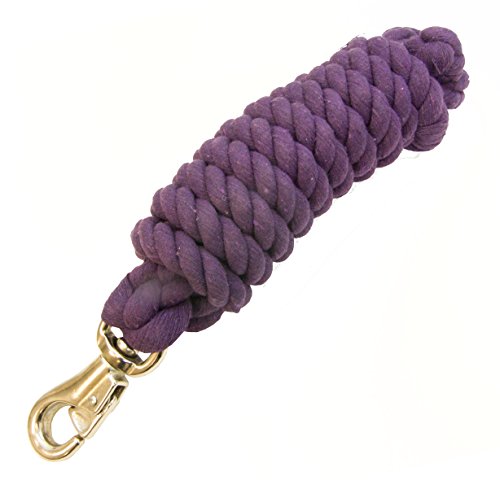
Intrepid International Cotton Lead Rope
Intrepid’s cotton lead covers the same soft rope brief as Derby Originals at a lower cost, useful for keeping spares on every hook. Construction runs simpler and the snap is lighter, which suits calm horses and routine handling. Owners report the splice loosens sooner than on higher priced ropes.
Pros
- Very low cost for a cotton lead
- Soft on hands from the first use
- Fine for calm, routine handling
Cons
- Splice works loose over time
- Lighter snap than premium leads
How to choose
Poly, cotton or yacht braid: which lead rope material is best? Polypropylene is the barn standard because it is cheap, resists rot and dries quickly, but it turns slick when soaked and can burn bare hands if a rope runs through them. Cotton is gentler on hands and grips better damp, at the cost of absorbing water and mildewing if stored wet. Yacht braid sits at the top, heavier and pricier, and functions more as a groundwork tool than a barn lead. Most owners settle on poly for daily use plus one nicer rope for training.
Which part of a lead rope fails first? Bolt snaps are light and one handed, but the spring wears and the barrel can jam with grit. Bull snaps are heavier and stronger, the usual choice for horses that pull. Panic snaps release under load and get used where a quick release matters, such as tying in a trailer. Check whether the snap is cast or solid construction, since cast hardware is where cheap leads break. Inspect the snap each time you clip up, and retire anything that sticks.
What length lead rope is right for the job? Around 8 to 10 feet covers leading, tying and everyday barn work, and it is what most budget leads offer. Groundwork and lungeing want 12 to 15 feet so the horse has room to move while contact stays maintained. Too much rope in a stall aisle becomes a trip hazard for both horse and handler, which is why many owners keep both lengths rather than compromising on one. Never wrap any lead around a hand or arm, regardless of length.
How do you make a cheap lead rope last longer? Most budget leads fail at the splice or the snap, not in the middle of the rope. Rinse mud and grit out rather than leaving it to grind at the fibres, and hang leads to dry rather than coiling them wet in a tack box. Check the splice and any clamp for movement every few weeks. Once a rope starts to fray near the hardware, retire it to a non horse job, since that is exactly where it will part under load.
The lineup, side by side
| # | Model | Material | Best for | Score | Price |
|---|---|---|---|---|---|
| 1 | Weaver Leather Poly Lead Rope with Bull Snap | Polypropylene rope | Best overall | 9.4 | Check price |
| 2 | Tough 1 Poly Lead Rope | Polypropylene rope | Best value | 9.2 | Check price |
| 3 | Derby Originals Cotton Lead Rope | Cotton rope | Best hand feel | 9.0 | Check price |
| 4 | Southwestern Equine Yacht Rope Lead | Yacht braid rope | Best for groundwork | 8.8 | Check price |
| 5 | Weaver Leather Poly Lead with Chain | Poly rope with steel chain | Best for handling stronger horses | 8.6 | Check price |
| 6 | Hamilton Flat Nylon Lead | Flat nylon webbing | Best for wash rack and turnout | 8.3 | Check price |
| 7 | Intrepid International Cotton Lead Rope | Cotton rope | Best budget spare | 8.0 | Check price |
Good to know
How long should a horse lead rope be?
Eight to ten feet covers everyday leading and tying. Groundwork and lungeing want twelve feet or more so the horse can move while contact stays maintained. Keeping one of each length is more practical than making a single rope do both jobs.
Cotton vs poly lead rope, which is better?
Cotton is softer on bare hands and grips well when damp, but it holds water and can mildew. Poly is cheaper, dries fast and resists rot, though it turns slippery when soaked. Poly for daily barn use and cotton for long handling sessions is a common split.
What is the strongest snap for a lead rope?
A solid bull snap is generally the strongest common option, the usual choice for horses that pull. Bolt snaps are lighter and more convenient but wear faster. Panic snaps trade some strength for the ability to release under load, which matters for trailer tying.
Is a chain lead rope safe to use?
Only with proper instruction. Chains work as a control aid for strong horses and stallions in hand, and misapplied they cause pain and panic rather than control. Work with an experienced handler or trainer before trying one.
How often should a lead rope be replaced?
Replace on condition rather than schedule. Retire any rope with fraying near the hardware, a splice that has worked loose, or a snap that sticks or fails to close fully. Those failure points give warning before they break.
Can horse lead ropes be washed?
Yes. Rinse mud out with a hose, or wash cotton and poly ropes in a mesh bag on a gentle cycle if the hardware is secured. Hang to dry fully before storing, since coiling a wet rope in a closed box causes mildew and stiffening.
Are cheap lead ropes safe for daily use?
The rope itself usually is fine. Hardware is where cost cutting shows, so inspect the snap and splice before use and after anything that put load on the rope. Never tie a horse solid to an immovable object with any lead, cheap or otherwise, without a quick release arrangement.
How many lead ropes should a horse owner keep?
Most owners keep at least one per horse plus spares in the trailer and wash rack, since leads disappear and get chewed. Buying inexpensive poly leads in multiples works out more practical than owning one expensive rope that cannot be found.
What is a yacht rope lead used for?
Yacht braid leads suit groundwork and lungeing, where extra weight and length help signals travel down the rope to the horse. They run longer than a standard barn lead and cost more, so most owners keep one alongside a shorter everyday rope.
Our pick
Weaver’s poly lead is the one to buy first, since the bull snap and rope quality are a real step up for very little extra money. Keep a couple of Tough 1 leads as spares in the trailer, and add a cotton rope for handling a lot by hand. Whatever gets chosen, inspect the snap and splice regularly, since that is always where a budget lead gives out.

