How to Choose a Burr Coffee Grinder for Consistent Grounds
The Baratza Encore is the grinder most home brewers should start with, delivering steady drip and pour over results plus repairable parts. Breville’s Smart Grinder Pro adds dosing control and reaches espresso fineness. OXO’s Brew Conical Burr Grinder keeps daily use simple with a one touch timer.
Drip and pour over brewers do best starting with the Baratza Encore. Anyone edging toward espresso should look at the Breville Smart Grinder Pro instead. Simple daily use favors the OXO Brew Conical Burr Grinder, while manual options like the 1Zpresso JX-Pro deliver excellent grind quality without a motor.
Burr size, motor speed and adjustment type matter far more than the numbers printed on the box, which is what makes this category tricky. A grinder built for drip can struggle badly at espresso fineness, and vice versa. We compared burr construction, grind range, retention behavior and adjustment steps across seven current models, then checked those specs against what owners report about static and repairability.
Our top picks

Baratza Encore Conical Burr Grinder
This grinder has been the standard recommendation for years, holding consistency across drip, pour over and French press. Every part is replaceable, and Baratza’s parts support turns this into a grinder you repair rather than replace. Forty grind settings cover most brew styles, though the steps run too coarse for fine espresso work.
Pros
- Consistent grind across brew methods
- Repairable rather than disposable
- Simple front pulse button
Cons
- Steps too coarse for espresso dialling
- No built in dosing by weight
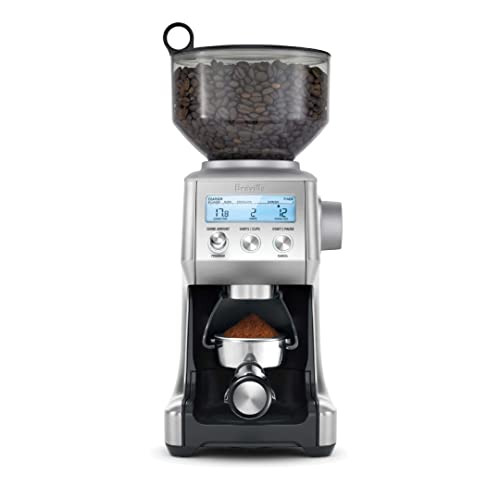
Breville Smart Grinder Pro BCG820BSS
Sixty grind settings plus a micro adjustment on the upper burr reach espresso fineness, a range the Encore cannot match. Timed dosing sets shot or cup amounts to a tenth of a second and grinds straight into a portafilter. Owners’ main complaint centers on grounds retention building up in the chute.
Pros
- Reaches genuine espresso fine settings
- Precise timed dosing
- Grinds direct to portafilter
Cons
- Noticeable grounds retention in the chute
- Static clumping with light roasts
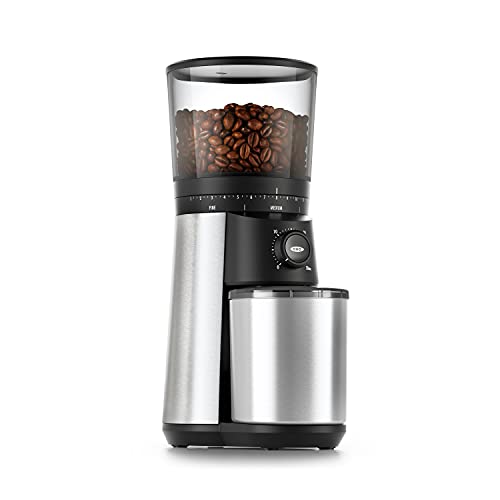
OXO Brew Conical Burr Coffee Grinder
OXO built this specifically for daily drip brewing, pairing a stainless steel conical burr set with a one touch timer that remembers the last setting used. Filter grind quality punches above the price bracket. A small hopper needs frequent refilling, and the finest settings never reach espresso, though neither limitation matters for its intended job.
Pros
- Excellent filter grind for the price bracket
- Timer memory simplifies mornings
- Easy to clean and empty
Cons
- Not fine enough for espresso
- Small hopper needs frequent refilling

Fellow Ode Brew Grinder Gen 2
64mm flat burrs produce a narrow particle distribution, which is why pour over drinkers notice more clarity in the cup than with conical designs. Single dosing means weighing beans directly rather than filling a hopper, and retention stays very low between doses. Filter brewing is the sole focus here, so espresso users should look elsewhere.
Pros
- Very consistent particle distribution
- Low retention between doses
- Compact footprint for the burr size
Cons
- Cannot grind for espresso
- Single dosing is slower than hopper feeding

1Zpresso JX-Pro Manual Coffee Grinder
Hand grinders reach burr quality that electric models at the same price cannot match, and the JX-Pro’s stainless burrs cover everything from espresso to French press. An external numbered ring makes switching brew methods quick. Effort is the tradeoff, since a full dose takes roughly thirty seconds of cranking.
Pros
- Grind quality above its price bracket
- Full range including espresso
- No power needed, good for travel
Cons
- Physical effort for every dose
- Small capacity for multiple cups

Timemore Chestnut C2 Manual Coffee Grinder
Stainless steel conical burrs and a stable bearing assembly make this far more consistent than any blade grinder, which is why it is the usual answer for a first manual purchase. Adjustment sits under the burr rather than on an external ring, fiddlier to reach but workable if you stick to one brew method. Light weight makes it an easy travel companion.
Pros
- Real burr consistency at a low outlay
- Light and easy to travel with
- Smooth cranking action
Cons
- Adjustment requires disassembly
- Slow for espresso fine grinds
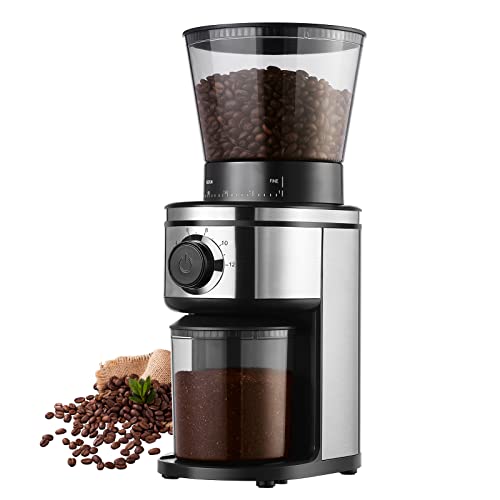
Cuisinart DBM-8 Supreme Grind Automatic Burr Mill
This is the most affordable route into an electric burr grinder, with eighteen settings and a dose selector spanning four to eighteen cups. Consistency falls short of the Encore, especially at coarse settings, but it comfortably beats any blade grinder. Static and grounds sticking inside the chamber draw the most owner complaints.
Pros
- Cheapest genuine burr grinder here
- Simple dose selection
- Large hopper for the size
Cons
- Inconsistent at coarse settings
- Static causes grounds to stick
Side by side
| # | Model | Burrs | Best for | Score | Price |
|---|---|---|---|---|---|
| 1 | Baratza Encore Conical Burr Grinder | 40mm conical steel | Best overall | 9.4 | Check price |
| 2 | Breville Smart Grinder Pro BCG820BSS | Conical stainless steel | Best for espresso and dosing control | 9.2 | Check price |
| 3 | OXO Brew Conical Burr Coffee Grinder | 40mm stainless conical | Best value | 9.0 | Check price |
| 4 | Fellow Ode Brew Grinder Gen 2 | 64mm flat | Best for pour over clarity | 8.8 | Check price |
| 5 | 1Zpresso JX-Pro Manual Coffee Grinder | 48mm stainless conical | Best manual grinder | 8.6 | Check price |
| 6 | Timemore Chestnut C2 Manual Coffee Grinder | 38mm stainless conical | Best budget manual option | 8.3 | Check price |
| 7 | Cuisinart DBM-8 Supreme Grind Automatic Burr Mill | Stainless steel flat | Best budget electric | 8.0 | Check price |
Before you buy
What should you look for in a burr grinder? Burr type, grind range, adjustment style and retention decide how a grinder performs day to day, far more than the brand printed on the box. Conical burrs run cooler and cost less, which is why most home grinders use them. Flat burrs, like those in the Fellow Ode, spread particle sizes more narrowly, and pour over drinkers often notice that as extra clarity in the cup. Either design beats a blade grinder by a wide margin, since blades chop beans into a mix of dust and boulders instead of a uniform size.
Which grinder suits your actual brew method? Espresso needs very fine, closely spaced adjustment steps, which is why the Encore struggles there despite excellent filter results. Drip and pour over sit in the middle of the range, and French press wants coarse, even grounds. Buy for the method brewed every morning, not the one tried occasionally.
Stepped or stepless: how does adjustment change daily use? Stepped grinders click between fixed positions, so returning to a known setting is easy and filter brewing benefits most from that repeatability. Stepless designs allow infinitely small changes, useful for espresso where a fraction of a turn shifts extraction noticeably. Most home brewers get more value from stepped simplicity than stepless precision.
Is grind retention or static the bigger daily annoyance? Grounds left inside a machine go stale and throw off the next dose, while static scatters coffee across the counter. Single dose designs and low retention paths address the first problem directly. A light spritz of water on beans, known as the Ross droplet technique, cuts static in almost any grinder.
Common questions
Is a burr grinder really better than a blade grinder?
Yes, and it is the single biggest equipment upgrade for most home brewers. Burrs crush beans to a set size, while blades chop randomly, producing dust and chunks that extract unevenly and taste muddy.
Can the Baratza Encore grind fine enough for espresso?
Not well. It reaches fine settings, but the steps between them are too coarse to dial in a shot properly. The Breville Smart Grinder Pro or a manual grinder like the 1Zpresso JX-Pro handles espresso better.
Conical or flat burrs, which is the better choice?
Conical burrs cost less, run cooler and suit most home use. Flat burrs produce a narrower particle distribution that pour over drinkers often prefer for clarity. Brew method and budget should decide, not one universal answer.
How often should a burr grinder be cleaned?
Brush out the burrs every couple of weeks with regular use, then do a deeper clean every few months. Coffee oils build up and turn rancid, dulling flavor long before any mechanical problem shows up.
What is grind retention and why does it matter?
Retention is coffee left inside a grinder after a dose finishes. Those leftover grounds go stale and mix into the next brew, which makes weighing doses less accurate. Single dose grinders are built to minimize this.
Are manual coffee grinders worth the extra effort?
For one or two cups a day, yes. A manual grinder delivers burr quality that would cost far more electrically, and it travels well. Larger households often find the thirty seconds of cranking per dose tiresome.
Why does my grinder throw coffee grounds everywhere?
Static is the usual cause, and it gets worse with light roasts and dry air. Adding a single drop of water to beans before grinding, or grinding into a metal container, cuts the scatter noticeably.
How long do steel grinder burrs typically last?
Steel burrs in home grinders usually stay sharp for several hundred pounds of coffee, which spans years for most households. Declining consistency and longer grind times signal it is time to replace them.
Our take
Filter coffee drinkers who want something repairable rather than disposable should buy the Baratza Encore. Espresso drinkers get more from the Breville Smart Grinder Pro, thanks to finer adjustment and timed dosing. For a fuss free daily drip routine, the OXO Brew Conical Burr Grinder asks the least of its owner.