Keep Butter Soft Without a Fridge: Crock vs Dish Picks
Butter Bell’s water-seal crock keeps a stick spreadable for weeks without refrigeration, making it the top pick for daily cooks. Sweese’s porcelain dish offers dishwasher-safe fridge storage at strong value. KooK matches that crock design at a lower cost. All three resist odor absorption and wipe clean fast.
Butter Bell’s water-seal crock suits cooks who spread butter daily and want it soft without a fridge. A water barrier blocks air, so a stick stays workable for one to two weeks at room temperature. One crock holds just a single stick, though, so bakers who go through more should consider a larger covered dish instead.
Two designs compete here: sealed crocks that sit on the counter and covered dishes meant for the fridge, and each behaves differently depending on kitchen temperature. We compared capacity in sticks, construction material such as ceramic, porcelain, or glass, dishwasher safety, and counter footprint using manufacturer listings and owner feedback.
How to pick the right one
Crock or Covered Dish: What to Look for First Two designs dominate this category: water-seal French crocks and simple covered dishes. A crock traps butter under a water barrier, keeping it spreadable on the counter for one to two weeks. Covered dishes skip the seal and work best chilled, relying on a lid alone to block air and odors. Counter use versus fridge use usually decides which design fits a kitchen.
Ceramic, Porcelain, or Glass: Material Tradeoffs Ceramic and porcelain hold a steady temperature and come in far more colors and glazes than glass. Glass shows the butter level at a glance and resists staining longer, though it weighs more and can chip. Stoneware picks like the Now Designs Butter Boat lean decorative, often at a premium over plain ceramic. Material choice does not change freshness; a water seal versus no seal handles that.
How Much Butter Should a Keeper Hold? Single-stick keepers such as the Butter Bell or Sweese dish suit one or two people who use butter daily. Households that bake often benefit from a double-stick design like the DOWAN dish, cutting refill trips in half. Buying a one-stick crock when two would fit just means refilling more often, not a functional downgrade. Family size, not cooking skill, drives this decision.
Is a Water-Seal Crock Worth the Extra Upkeep? Water-seal crocks need fresh water every five to seven days, or the seal can turn cloudy and taint flavor. Covered dishes need no such routine, and most, including the Sweese, DOWAN, Anchor Hocking, and Cinf models, go straight into a dishwasher. Anyone prone to forgetting small chores may find a plain covered dish more reliable long term. Cooks who want counter-soft butter on demand still tend to prefer the crock despite that extra step.
The top picks, ranked

Butter Bell by L. Tremain Original Crock
This crock uses a water seal to block air, keeping butter spreadable for weeks without a fridge. Glazed ceramic construction comes in dozens of colors and patterns, doubling as a counter accent. Owners report the seal needs fresh water every five to seven days to stay effective.
Pros
- Keeps butter spreadable without a fridge
- Wide range of color and pattern options
- Simple two-piece design with no gaskets
Cons
- Holds only one stick at a time
- Needs regular water changes to stay fresh

Sweese Porcelain Butter Dish with Lid
A classic covered shape holds one standard stick and fits neatly on a fridge shelf. Porcelain construction resists staining, and the domed lid clears taller butter brands. Sweese lists this dish as dishwasher safe, cutting down on hand-washing time.
Pros
- Dishwasher safe for easy cleanup
- Domed lid fits taller butter sticks
- Priced below most crock-style keepers
Cons
- No water seal, so butter is best kept refrigerated
- Single-stick capacity limits use for large families

KooK French Butter Crock
KooK’s crock follows the same water-seal principle as pricier French crocks at a lower cost. Its ceramic body holds one stick and comes in solid glaze colors. The lid seats a bit looser than name-brand crocks, so placing it back on calls for a light touch.
Pros
- Lower cost than most crock-style keepers
- Keeps butter soft at room temperature
- Compact footprint for small counters
Cons
- Lid fit is looser than premium crocks
- Limited color and pattern selection

DOWAN Butter Dish with Lid
DOWAN sizes this dish to hold two sticks side by side, suiting households that go through butter quickly. Ceramic body and lid are both dishwasher safe. Rounded edges and a nonslip base keep it steady when the lid comes off one-handed.
Pros
- Holds two sticks for less frequent refills
- Dishwasher safe body and lid
- Nonslip base resists tipping
Cons
- Larger footprint takes more shelf space
- No water seal for countertop storage
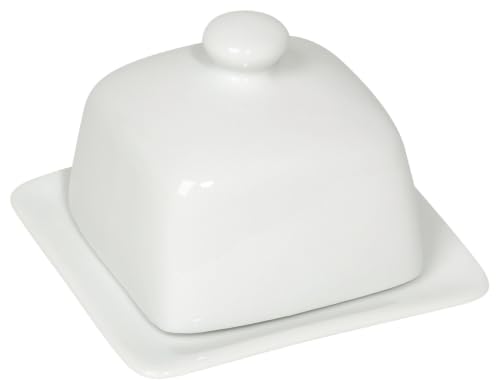
Now Designs Butter Boat Dish
Shaped like a small boat with a fitted lid, this dish leans decorative as much as functional. Stoneware construction comes in patterned finishes that match coordinating Now Designs kitchen sets. Capacity fits one stick, suiting everyday single-person use.
Pros
- Distinctive shape works well as a gift
- Matches coordinating Now Designs dinnerware
- Lightweight and easy to lift one-handed
Cons
- Pattern finishes cost more than plain designs
- Single-stick capacity for larger households

Anchor Hocking Glass Butter Dish
Clear glass construction lets cooks check butter levels at a glance without lifting the lid. Anchor Hocking’s dish is fully dishwasher safe and resists absorbing odors or stains over time, unlike some ceramics. Glass weighs more than ceramic, which keeps it stable on a crowded fridge shelf.
Pros
- Clear glass shows butter level without opening
- Resists stains and odor absorption
- Fully dishwasher safe
Cons
- Heavier and more breakable than ceramic
- No water seal for countertop storage
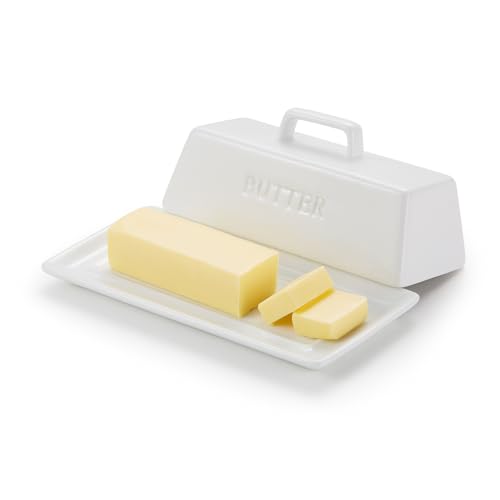
Cinf Ceramic Butter Dish with Lid
Cinf’s dish uses a smooth glaze with no ridges or seams where butter residue can collect. This covered-dish design skips seals or gaskets, so cleanup is a quick dishwasher cycle. Capacity covers one stick, matching most single households’ daily use.
Pros
- Smooth glaze wipes clean quickly
- Simple design with no parts to maintain
- Dishwasher safe for daily use
Cons
- No water seal for countertop spreadability
- Single-stick size limits larger households
How they stack up
| # | Model | Style | Best for | Score | Price |
|---|---|---|---|---|---|
| 1 | Butter Bell by L. Tremain Original Crock | Water-seal French crock | Best overall | 9.4 | Check price |
| 2 | Sweese Porcelain Butter Dish with Lid | Covered butter dish | Best value | 9.1 | Check price |
| 3 | KooK French Butter Crock | Water-seal French crock | Best budget | 8.8 | Check price |
| 4 | DOWAN Butter Dish with Lid | Covered butter dish | Best for large households | 8.5 | Check price |
| 5 | Now Designs Butter Boat Dish | Covered butter dish | Best for gifting or aesthetics | 8.3 | Check price |
| 6 | Anchor Hocking Glass Butter Dish | Covered butter dish | Best for fridge storage | 8.1 | Check price |
| 7 | Cinf Ceramic Butter Dish with Lid | Covered butter dish | Best for easy cleaning | 8.0 | Check price |
Common questions
What is a French butter crock?
A French butter crock holds a stick of butter upside down in a water-filled base. Water blocks airflow, keeping butter spreadable at room temperature for one to two weeks.
Is a butter crock better than a butter dish?
Neither wins outright; they solve different problems. Crocks keep butter soft on the counter, while covered dishes suit fridge storage and skip water changes entirely.
How often should you change the water in a butter crock?
Most listings, including Butter Bell’s, recommend changing the water every five to seven days. Warmer kitchens may need more frequent changes to stop the seal turning cloudy.
Can butter dishes go in the dishwasher?
Many covered dishes, including the Sweese, DOWAN, Anchor Hocking, and Cinf models, list as dishwasher safe. Crocks fare better hand washed, since repeated submersion wears down the glaze.
Does a butter crock keep butter fresh without a fridge?
Yes, within limits. The water seal blocks the airflow that causes rancidity, but crocks suit butter used within one to two weeks, not long-term storage.
What size butter dish works for a large family?
A single-stick dish covers one or two people, but bigger households often prefer a double-stick design like the DOWAN dish to cut down on refills.
Is glass or ceramic better for a butter dish?
Glass shows the butter level at a glance and resists stains, while ceramic and porcelain offer more color and glaze choices. Neither material changes how well butter stays fresh.
Are butter bells sanitary to use daily?
Water-seal crocks stay sanitary when the water is refreshed on schedule, since that habit prevents bacterial buildup. Skipping changes for weeks risks a stale-tasting seal.
Do butter crocks work with salted or unsalted butter?
Both work fine, since the water seal only blocks air rather than reacting with the butter itself. Salted butter tends to keep slightly longer at room temperature either way.
Our pick
Butter Bell by L. Tremain remains the strongest pick for anyone who spreads butter daily and wants it soft without a fridge, backed by its proven water-seal design and wide color range. Households that bake often or want a no-maintenance option should choose the DOWAN double-stick dish instead, since its dishwasher-safe design skips water changes entirely. Buyers on a tighter budget who still want the crock experience can start with the KooK French butter crock.


