Camera Flashes That Make Every Shot Pop
For most photographers, the Godox TT685II Speedlight is the top pick because it balances powerful output, wireless TTL support, and a reasonable price. Its main advantage is compatibility with Canon, Nikon, Sony, Fuji, and Olympus systems through interchangeable feet. The main limitation is the lack of weather sealing, so it is not ideal for heavy outdoor use in rain or dust.
A good flash can transform your photography, whether you are shooting events, portraits, or macro subjects. The right one freezes motion, adds catchlights, and balances ambient light.
We compared seven popular models to help you choose. From compact speedlights to powerful strobes, these flashes cover a range of needs and budgets.
What to look for
Our top picks

Godox TT685II Speedlight
The Godox TT685II is a powerful TTL speedlight with a guide number of 60 (at 200mm). It offers wireless triggering built-in, a rechargeable battery option, and a clear LCD screen. Owners report reliable performance and good build quality for the price.
Pros
- Excellent value for features
- Wireless master/slave support
- Rechargeable battery option
Cons
- Bulky compared to smaller speedlights
- Not weather sealed

Canon Speedlite EL-100
The Canon EL-100 is a small, lightweight speedlight designed for Canon EOS cameras. It offers basic TTL and manual control, plus a simple bounce head. It is ideal for casual use and travel, but lacks the power of larger units.
Pros
- Very compact and light
- Simple to use
- Good for on-camera bounce
Cons
- Low power output
- Limited wireless capabilities
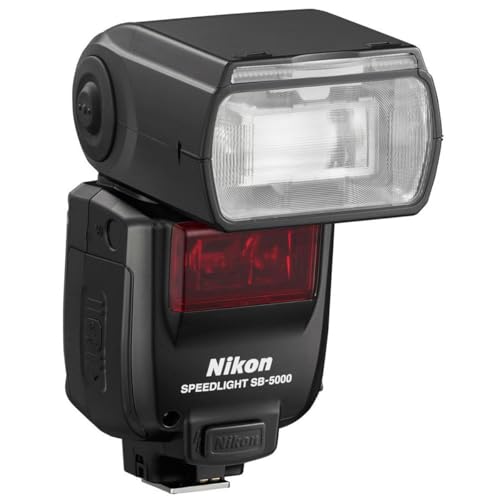
Nikon SB-5000 AF Speedlight
The Nikon SB-5000 is a flagship speedlight with radio wireless control (via optional WR-R10), fast recycle, and a built-in cooling system to prevent overheating. It delivers powerful output and robust build quality, but at a higher price.
Pros
- Advanced radio wireless with WR-R10
- Fast recycle with cooling system
- Durable construction
Cons
- Expensive
- Requires optional accessory for radio

Sony HVL-F60RM2
The Sony HVL-F60RM2 is a powerful flash with a guide number of 60, radio wireless control, and dust and moisture resistance. It features a quick shift bounce head and a bright LCD. Owners praise its reliability and integration with Sony cameras.
Pros
- High power output
- Weather resistant
- Seamless Sony integration
Cons
- High price
- Large and heavy

Profoto A10
The Profoto A10 is a high-end flash that combines speedlight convenience with studio strobe quality. It offers a powerful 76 Ws output, air wireless control, and a fast recycle time. It is expensive but delivers exceptional color consistency and build quality.
Pros
- Superb color consistency
- Fast and quiet recycle
- Solid, premium feel
Cons
- Very expensive
- Proprietary accessories
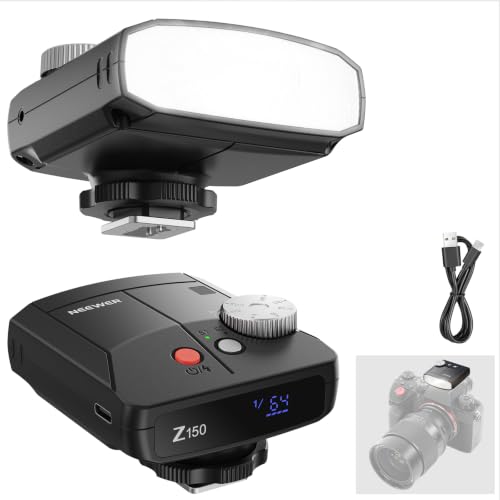
Neewer TT560 Flash Speedlite
The Neewer TT560 is an inexpensive manual flash with a guide number of 38 (at 105mm). It offers simple controls, a bounce head, and is compatible with most cameras via a standard hot shoe. Owners find it a great entry-level option for learning off-camera flash.
Pros
- Very affordable
- Easy to use
- Works with many cameras
Cons
- Manual only, no TTL
- Basic build quality

Yongnuo YN560 IV
The Yongnuo YN560 IV is a manual flash with a built-in radio receiver and transmitter, allowing wireless off-camera control without extra triggers. It has a guide number of 58 and supports high-speed sync. Owners appreciate its low cost and wireless flexibility.
Pros
- Built-in radio receiver
- Powerful output
- Good value
Cons
- Manual only
- Radio system not compatible with other brands
The lineup, side by side
| # | Model | Guide Number | Best for | Score | Price |
|---|---|---|---|---|---|
| 1 | Godox TT685II Speedlight | 60 (ISO 100, 200mm) | Best overall for most photographers | 9.4 | Check price |
| 2 | Canon Speedlite EL-100 | 26 (ISO 100, 105mm) | Best for Canon shooters who want a compact flash | 8.2 | Check price |
| 3 | Nikon SB-5000 AF Speedlight | 34.5 (ISO 100, 35mm) | Best for Nikon shooters needing advanced wireless | 9.0 | Check price |
| 4 | Sony HVL-F60RM2 | 60 (ISO 100, 200mm) | Best for Sony shooters who need pro-grade features | 9.1 | Check price |
| 5 | Profoto A10 | 76 Ws | Best for professionals seeking premium quality | 8.8 | Check price |
| 6 | Neewer TT560 Flash Speedlite | 38 (ISO 100, 105mm) | Best budget manual flash for beginners | 8.0 | Check price |
| 7 | Yongnuo YN560 IV | 58 (ISO 100, 200mm) | Best budget flash with built-in radio trigger | 8.3 | Check price |
Frequently asked questions
What is the best camera flash for beginners?
The Neewer TT560 is a great budget option for beginners because it is simple and inexpensive. For those who want TTL and more features, the Godox TT685II is a better choice.
Can I use a third-party flash on my camera?
Yes, many third-party flashes like Godox and Yongnuo offer models for various camera mounts. They may have limitations in TTL or wireless features, but they generally work well in manual mode.
What is TTL flash?
TTL stands for Through The Lens. It is a metering mode where the camera and flash communicate to set the flash output automatically for proper exposure, making shooting easier.
What does guide number mean?
Guide number is a measure of a flash’s power. It is used to calculate the maximum distance the flash can effectively illuminate at a given aperture and ISO. Higher guide numbers mean more power.
Do I need a flash if I have a good camera?
A dedicated flash can greatly improve photos in low light, fill in shadows, and freeze motion. Even with a good camera, an external flash provides more control than the built-in pop-up flash.
What is high-speed sync (HSS)?
HSS allows you to use a flash at shutter speeds faster than the camera’s normal sync speed (usually around 1/200 sec). This is useful for fill flash in bright daylight to reduce harsh shadows.
Are built-in lithium battery flashes better?
They offer faster recycle times and longer life, but they are often more expensive. AA-powered flashes are convenient because batteries are easy to replace on the go.
How many camera flashes do I need?
For most beginners, one flash is enough. For studio or off-camera work, two or three allow for more creative lighting setups. Start with one and expand as needed.
The bottom line
For the best balance of features, price, and performance, choose the Godox TT685II Speedlight. It works with multiple camera systems, offers TTL and wireless capabilities, and has received strong owner feedback. If you shoot with a specific brand and want seamless integration, consider the Canon EL-100 for compactness, the Nikon SB-5000 for advanced wireless, or the Sony HVL-F60RM2 for pro features. Budget-conscious photographers will appreciate the Yongnuo YN560 IV for its built-in radio trigger, while the Profoto A10 is for those who demand the best and are willing to pay for it.