Camp Pillows That Pack Small Without Wrecking Your Neck
Sea to Summit’s Aeros Premium balances packed size and side-sleeper support best among backpacking pillows. NEMO’s Fillo Elite layers memory foam over an air chamber for side sleepers wanting extra cushion. Therm-a-Rest’s Compressible Travel Pillow uses recycled foam for car campers who don’t need to shrink pack volume.
Sea to Summit’s Aeros Premium is the top pick for most backpackers: it compresses into one hand while still supporting a side sleeper’s neck, though the air chamber feels firmer than foam. NEMO’s Fillo Elite layers memory foam over its air chamber for softer contact against the cheek. Therm-a-Rest’s Compressible Travel Pillow skips inflation entirely, trading pack space for a familiar, home-pillow feel.
Inflatable designs pack smallest but can feel slick and firm, while foam-filled options add cushion at the cost of extra ounces. We compared packed dimensions, fill material and owner reports on how each pillow performs through a full night of side and back sleeping.
How to choose
What to look for in a camp pillow Fill type decides most of the feel. Air chambers pack smallest but can feel firm, while foam or hybrid fills cushion more at the cost of extra ounces. Packed size matters most to backpackers tracking pack volume; car campers with trunk space can ignore it. Sleep position also changes which design works best, since side sleepers typically need more loft than back sleepers. Weigh each ounce against the comfort tradeoff honestly before buying.
Best pillow type for backpacking and thru-hiking Every ounce and cubic inch counts on multi-day trips. Air-only designs like the Sea to Summit Aeros Premium, Klymit Pillow X and Cocoon Air Core Ultralight pack to fist size or smaller. NEMO’s Fillo Elite adds a bit of weight over pure air pillows but returns meaningfully better comfort for side sleepers willing to trade an ounce or two.
Best pillow type for car camping and base camp trips Pack volume stops mattering once gear rides in a trunk instead of a backpack. That opens the door to foam-filled options like the Therm-a-Rest Compressible Travel Pillow or Exped REM, both closer to a pillow from home. Skipping inflation also means one less step at bedtime. Foam pillows do take up more shared tent space than inflatables, so plan storage accordingly.
Matching pillow support to sleeping position Side sleepers need enough loft to keep the neck aligned with the spine, favoring foam-topped designs like the NEMO Fillo Elite over flat air chambers. Back sleepers do well with lower-profile support, making the contoured Exped REM or a standard air pillow sufficient. Stomach sleepers generally want the thinnest, softest option available, since a tall pillow twists the neck in that position.
The best picks, ranked

Sea to Summit Aeros Premium Pillow
Multiple air chambers contour to the head more closely than a single-bladder design. That reduces the slick, ball-like roll common in basic inflatables. A brushed polyester shell adds a soft touch against bare skin, and backpackers favor it for fitting into a spare pack corner without losing real neck support.
Pros
- Multi-chamber design cuts down the slippery roll of single-bladder pillows
- Compresses small enough for any backpack corner
- Brushed polyester shell feels soft against bare skin
Cons
- Air chambers can feel firm for some side sleepers
- Valve needs care to avoid overinflating
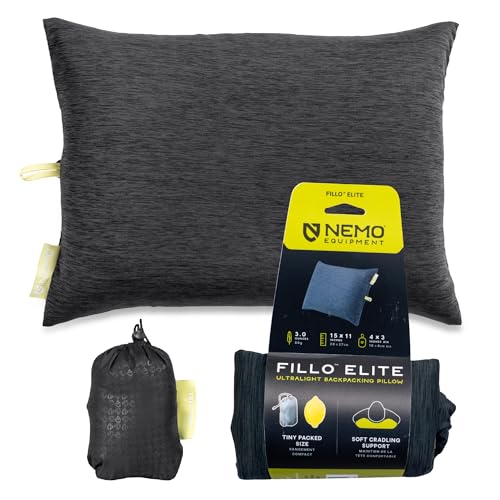
NEMO Fillo Elite Camping Pillow
A memory foam layer sits atop an air chamber, giving side sleepers cushion that air alone can’t match. Fabric loops on the back clip to a sleeping pad so it won’t slide off during the night. Owners switching from all-foam pillows report real weight savings without losing that softer feel.
Pros
- Foam top layer suits side sleepers better than air alone
- Pad-attachment loops stop nighttime sliding
- Compresses smaller than most foam-only pillows
Cons
- Heavier than pure air-filled pillows
- Foam layer takes longer to fully decompress after packing

Therm-a-Rest Compressible Travel Pillow
Recycled foam fill compresses into an included stuff sack, skipping the air valve altogether. It feels closer to a pillow from home than most backpacking-specific designs. Car campers and cabin renters favor that familiar softness, even though it packs larger than an inflatable.
Pros
- No valve or inflation step required
- Feels closer to a home pillow than air designs
- Made from recycled materials
Cons
- Packs noticeably larger than inflatable pillows
- Better suited to car camping than backpacking due to weight

Klymit Pillow X
An X-shaped cutout trims material and weight while the center chamber still cradles the head. Fewer cubic inches of air mean it inflates in just a few breaths. Budget-focused backpackers use it as an entry point into dedicated camp pillows without a steep price.
Pros
- Affordable entry point into dedicated camp pillows
- Cutout design keeps weight extremely low
- Inflates quickly with only a few breaths
Cons
- Less surface area than full-size air pillows
- Firmer feel with less cushion than foam hybrids

Exped REM Pillow
A contoured foam shape cradles the neck the way a flat air pillow cannot. That softer profile comes with a bulkier packed size than inflatable models. Back sleepers report fewer neck aches after switching from a flat pillow to this contoured design.
Pros
- Contoured shape supports back-sleeping posture
- Softer overall feel than air-only pillows
- Reasonably packable for a foam design
Cons
- Bulkier packed size than inflatable competitors
- Less suited to stomach or side sleeping

Cocoon Air Core Pillow Ultralight
Thin-wall construction shaves this pillow down to among the lightest in its category. A synthetic microfiber shell keeps the surface from feeling clammy overnight. Ounce-counting backpackers pick it specifically for weight savings over comfort extras.
Pros
- Among the lightest camp pillows available
- Packs extremely small
- Synthetic shell resists clamminess overnight
Cons
- Minimal cushioning compared to foam hybrids
- Single chamber shifts more during sleep

Big Agnes Clearview Pillow
A single-chamber design covers basic head support without extra features driving up the price. It inflates and deflates in seconds for fast camp setup and breakdown. First-time buyers choose it mainly for low cost and reliable simplicity.
Pros
- Affordable entry point into camp pillows
- Quick to inflate and deflate
- Lightweight enough for backpacking
Cons
- Basic design skips foam cushioning
- Can feel slippery without a pillowcase
How they compare
| # | Model | Fill type | Best for | Score | Price |
|---|---|---|---|---|---|
| 1 | Sea to Summit Aeros Premium Pillow | Multi-chamber air | Best overall | 9.3 | Check price |
| 2 | NEMO Fillo Elite Camping Pillow | Memory foam over air chamber | Best for side sleepers | 9.0 | Check price |
| 3 | Therm-a-Rest Compressible Travel Pillow | Recycled foam | Best for car camping | 8.7 | Check price |
| 4 | Klymit Pillow X | Single air chamber, X-shaped cutout | Best value | 8.5 | Check price |
| 5 | Exped REM Pillow | Contoured foam | Best for back sleepers | 8.3 | Check price |
| 6 | Cocoon Air Core Pillow Ultralight | Single air chamber | Best ultralight option | 8.1 | Check price |
| 7 | Big Agnes Clearview Pillow | Single air chamber | Best budget | 8.0 | Check price |
Questions worth asking
Are inflatable camp pillows comfortable for side sleeping?
Multi-chamber designs like the Sea to Summit Aeros Premium handle side sleeping reasonably well. Single-chamber air pillows can feel firmer and more slippery. Foam-topped hybrids such as the NEMO Fillo Elite generally suit side sleepers better.
How small do camp pillows pack down?
Air-only designs like the Klymit Pillow X or Cocoon Air Core Ultralight compress to roughly fist size. Foam and hybrid pillows pack noticeably larger, closer to a rolled shirt.
Do camp pillows lose air overnight?
A quality valve should hold air through a full night. Very cold temperatures can cause slight pressure changes, so check the valve seal before a trip and top off air before bed if needed.
What is the difference between a camp pillow and a regular pillow?
Camp pillows prioritize packed size and weight over plushness. Air chambers or compressed foam replace the loose fill found in home pillows, which is what makes them practical to carry on a hike.
Can you wash a camping pillow?
Most shells are spot cleanable or machine washable on a gentle cycle. Check the specific care label first, since some foam fills degrade faster with repeated washing than air chambers do.
Are foam camp pillows warmer than air pillows?
Foam holds slightly more insulating warmth against the head than a plastic air bladder. Cold-weather campers sometimes notice the difference, though it’s minor compared to the sleeping bag’s own insulation.
How much should a camp pillow weigh?
Ultralight backpackers typically look for pillows under 3 ounces, like the Klymit Pillow X or Cocoon Air Core Ultralight. Car campers can carry an 8 to 12 ounce foam pillow without noticing the extra weight.
Do you need a pillowcase for a camp pillow?
It’s optional but improves comfort, since bare synthetic shells can feel slick or cold against skin. A buff, spare shirt or the pillow’s own stuff sack turned inside out works as a simple cover.
Which camp pillow is best for backpacking versus car camping?
Backpackers should lean toward air-only designs like the Sea to Summit Aeros Premium for minimal weight. Car campers without pack-space limits often prefer the home-like feel of the Therm-a-Rest Compressible Travel Pillow.
Our pick
Backpackers who want the best balance of pack size and support should get the Sea to Summit Aeros Premium. Side sleepers who prioritize cushion over minimal weight will rest easier on the NEMO Fillo Elite. Car campers who don’t need to save pack space are better off with the familiar foam feel of the Therm-a-Rest Compressible Travel Pillow, and ounce-counters chasing the lightest possible setup should look at the Cocoon Air Core Ultralight instead.


