Balancing Lumens and Battery Life in a Camping Headlamp
Black Diamond’s Spot 400 leads this comparison, pairing 400 lumens with replaceable AAA batteries for multi-night trips. Petzl’s Tikka suits casual campers who want similar reliability at less weight and lower cost. Anyone needing maximum range should size up to the Black Diamond Storm 500-R instead.
Black Diamond’s Spot 400 tops this lineup with 400 lumens on replaceable AAA batteries, a setup that skips chargers entirely on multi-night trips. Weekend campers who want less bulk should look at Petzl’s Tikka, which trades some brightness for a lighter, cheaper build.
Lumen output alone rarely predicts how a headlamp performs after dark, since beam distance, battery type, and weight all shape the experience at a campsite. We compared those specifications against owner reports on strap comfort and runtime across seven current models.
The top picks, ranked

Black Diamond Spot 400
Up to 400 lumens come from three AAA batteries, so campers can pack spares instead of hunting for an outlet. A dimmable red night-vision mode helps with reading maps without wrecking adjusted eyesight. An IPX8 rating means rain and stream crossings need no extra precautions.
Pros
- Replaceable AAA batteries suit multi-night trips without a charger
- IPX8 rating handles rain and stream crossings confidently
- Red night-vision mode preserves eyesight when checking maps
Cons
- Heavier than minimalist headlamps built for fast hiking
- Full brightness drains batteries faster than mid-range settings
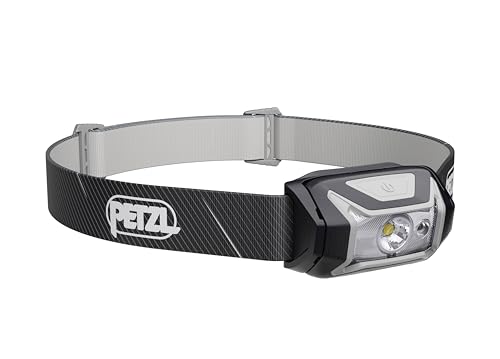
Petzl Tikka
A compact housing weighing under 3 ounces with batteries installed still manages 300 lumens. Three AAA cells power it, and a red light mode keeps camp use polite around others. Beam distance trails the Spot 400, though the weight savings matter more on a long approach hike.
Pros
- Lightweight build reduces fatigue on long approach hikes
- Red light mode avoids disturbing others at a shared campsite
- Lower price than premium headlamps with similar output
Cons
- IPX4 rating handles splashes but not sustained rain
- Beam distance is shorter than higher-output competitors

Energizer Vision HD Headlamp
Three AAA batteries drive 250 lumens here, enough for pitching a tent or cooking after dark. No red light mode or dimming function comes with it, unlike pricier competitors. Weekend campers who need occasional light rather than all-night coverage get adequate performance for less.
Pros
- Lower price than most dedicated outdoor brand headlamps
- Simple two-mode operation is easy for infrequent users
- AAA batteries are easy to find and replace on the road
Cons
- No red light mode for preserving night vision
- Beam distance shorter than higher-lumen competitors

Petzl Actik Core
A rechargeable Core battery pack ships standard, but the Actik Core also accepts AAA batteries as backup, avoiding the all-or-nothing tradeoff of fully rechargeable lights. Brightness peaks at 600 lumens. Reflective straps add visibility at roadside camping stops or dark trailhead parking.
Pros
- Accepts AAA batteries as backup when recharging is not possible
- 600-lumen output covers most backcountry camping needs
- Reflective headband improves visibility near roads or trailheads
Cons
- Rechargeable battery pack adds cost over standard AAA-only models
- Charging takes several hours via USB-C before reaching full capacity

Nitecore NU25
At 1.9 ounces, this is the lightest headlamp in the lineup, yet its built-in rechargeable cell still reaches 400 lumens with no AAA batteries involved. Its slim profile sits closer to the head, cutting bounce during a jog or fast hike to camp. Batteries can’t be swapped, so a dead unit means a USB charge instead of fresh cells.
Pros
- Slim, lightweight build reduces bounce during fast movement
- High-CRI mode renders colors more accurately for camp tasks
- USB-C charging avoids buying disposable batteries
Cons
- No swappable batteries if the built-in cell runs dry mid-trip
- Charging requires access to a USB power source

BioLite HeadLamp 425
Moving the battery pack to the rear of the headband balances weight against the front-mounted light, easing strain during extended wear. Output reaches 425 lumens from a rechargeable cell, and the strap uses moisture-wicking fabric. Campers who wear a headlamp for hours while cooking or reading report less forehead pressure than front-heavy designs.
Pros
- Rear battery placement balances weight for extended wear
- Moisture-wicking strap improves comfort during warm-weather use
- 425-lumen output covers most campsite and trail tasks
Cons
- Rear pack design costs more than single-unit headlamp builds
- No disposable battery backup if the rechargeable cell dies

Black Diamond Storm 500-R
500 lumens come from a rechargeable battery, and an included adapter still accepts AAA cells in a pinch. An IP67 waterproof rating exceeds every other model here, a real advantage on backcountry trips with unpredictable weather. Extra weight from the larger battery housing makes it a poor fit for fast, lightweight hiking.
Pros
- 500-lumen output exceeds most competitors in this comparison
- IP67 rating handles heavy rain and submersion briefly
- AAA adapter provides backup power without a dead-end battery
Cons
- Heavier housing adds bulk compared to minimalist headlamps
- Higher price than mid-range rechargeable competitors
Before you buy
What to Look for in a Camping Headlamp Lumen output gets the attention, but beam distance and battery type shape real-world usefulness just as much. A waterproof rating matters once weather turns or a stream crossing is unavoidable on a multi-day trip. Weight affects comfort during hands-free tasks like cooking or setting up a tent after dark. Red light modes preserve night vision and keep camp neighbors happy.
Rechargeable Versus Replaceable Battery Headlamps Built-in rechargeable cells, found on the Nitecore NU25 and BioLite HeadLamp 425, skip disposable batteries but need a USB source to top off mid-trip. AAA-powered models, including the Black Diamond Spot 400 and Petzl Tikka, let campers carry spares for trips with zero charging access. Hybrid designs like the Petzl Actik Core and Black Diamond Storm 500-R cover both scenarios at once.
Matching Weight and Comfort to Trip Length A heavier, higher-output headlamp barely registers on a short weekend trip. Multi-day backpacking rewards lighter builds like the Nitecore NU25 or rear-weighted designs like the BioLite HeadLamp 425, both of which reduce strain across hours of continuous wear. Strap material also changes how a headlamp feels in humid or warm conditions.
When Maximum Brightness Actually Matters Backcountry route-finding and nighttime emergencies are where a high-lumen headlamp like the Storm 500-R earns its keep, since beam distance affects safety. Cooking or reading at camp rarely needs more than 300 lumens on a lower setting. Adjustable brightness lets a single headlamp cover both situations instead of packing two lights.
The lineup, side by side
| # | Model | Max output | Best for | Score | Price |
|---|---|---|---|---|---|
| 1 | Black Diamond Spot 400 | 400 lumens | Best overall | 9.4 | Check price |
| 2 | Petzl Tikka | 300 lumens | Best value | 9.0 | Check price |
| 3 | Energizer Vision HD Headlamp | 250 lumens | Best budget | 8.3 | Check price |
| 4 | Petzl Actik Core | 600 lumens | Best rechargeable | 9.1 | Check price |
| 5 | Nitecore NU25 | 400 lumens | Best lightweight and compact | 8.8 | Check price |
| 6 | BioLite HeadLamp 425 | 425 lumens | Best for all-night comfort | 8.9 | Check price |
| 7 | Black Diamond Storm 500-R | 500 lumens | Best for high-output backcountry use | 9.2 | Check price |
Questions worth asking
How many lumens do you need for a camping headlamp?
Most campsite tasks, like cooking or setting up a tent, need 150 to 300 lumens. Backcountry hiking or route-finding at night benefits from 400 lumens or more, like the Black Diamond Storm 500-R provides.
Is a rechargeable or battery-powered headlamp better for camping?
Rechargeable headlamps work well for trips with access to a power bank or car charger. Multi-day trips without charging access favor AAA battery headlamps, since spare batteries pack lighter than a power bank.
What is a red light mode used for on a headlamp?
Red light preserves night vision better than white light and avoids disturbing other campers or wildlife. Most headlamps compared here, except the Energizer Vision HD, include a dedicated red mode.
How waterproof should a camping headlamp be?
An IPX4 rating handles light rain and splashes, adequate for most car camping. Backcountry trips with stream crossings or heavy rain benefit from IPX8 or IP67 ratings, like the Black Diamond Spot 400 and Storm 500-R offer.
Can you use a headlamp with dead rechargeable batteries?
Only if it accepts a battery backup. The Petzl Actik Core and Black Diamond Storm 500-R both accept AAA batteries as a fallback when the rechargeable cell runs out.
What is the lightest camping headlamp available?
Among the models compared here, the Nitecore NU25 is the lightest at 1.9 ounces, followed closely by Petzl’s Tikka at 2.9 ounces with batteries installed.
Do camping headlamps work for running or fast hiking?
Slim, low-bounce designs like the Nitecore NU25 suit running or fast hiking better than bulkier headlamps with rear battery packs, which can shift during quick movement.
How long does a headlamp battery last on a camping trip?
Battery life depends on brightness setting, ranging from several hours on maximum output to well over 100 hours on the lowest setting for most models compared here.
What is the difference between IPX4 and IPX8 waterproof ratings?
IPX4 resists splashes from any direction but not sustained rain, while IPX8 or IP67 ratings withstand submersion, which matters more for stream crossings than for car camping.
Are hybrid AAA and rechargeable headlamps worth the extra cost?
For trips split between charging access and remote nights, yes, since a hybrid like the Petzl Actik Core or Storm 500-R avoids being stranded with a dead battery.
Final word
Black Diamond’s Spot 400 earns the overall recommendation for its balance of brightness, waterproofing, and replaceable battery convenience on multi-night trips. Anyone chasing maximum beam distance in the backcountry, and willing to carry the extra weight, should choose the Storm 500-R instead. Weight-conscious backpackers on short trips get better comfort from the Nitecore NU25, even without a swappable battery option.


