Camping Lanterns That Light a Tent and Last the Night
The Goal Zero Lighthouse 600 recharges by USB, solar or hand crank and doubles as a power bank. BioLite’s AlpenGlow 500 adds color modes and a wide even glow. For backpackers counting grams, the Black Diamond Apollo packs light and collapses small.
A camping lantern earns its place by lighting the whole tent and still holding charge by morning. The Goal Zero Lighthouse 600 fits most campers, recharging by USB, solar panel or hand crank and feeding a phone from its built in battery. Those who want warmer light and color options should look at the BioLite AlpenGlow 500. Backpackers watching weight will prefer the collapsible Black Diamond Apollo.
High lumen claims mean little without knowing how long that brightness lasts or how the lantern gets its power. We compared peak lumens against runtime at usable settings, checked power sources and recharge options, and weighed weight, water resistance and owner reports on real battery life across a night in the field.
How to choose
What to look for in a camping lantern Lumens tell you peak brightness, but runtime at a usable setting matters more for a full night. A lantern that blazes at 1000 lumens may only hold it for a couple of hours before dimming. Power source shapes how you keep it running, whether that means USB recharging, swappable batteries or solar. Weigh those against weight and water sealing based on whether you car camp or carry everything on your back.
How much brightness do you actually need A single tent needs only 100 to 300 lumens for reading and moving around comfortably. Lighting a group shelter or a cooking area calls for 500 lumens or more. Higher output drains power faster, so the trick is buying headroom, then running the lantern on a lower setting most of the night. Reserve full brightness for setting up camp or packing in the dark.
Best lantern for backpacking versus car camping Backpackers count every gram, which favors a light, collapsible model like the Black Diamond Apollo or the solar Luci Outdoor. Car campers can carry heavier lanterns with big batteries and higher output, so the Goal Zero Lighthouse 600 or bright Coleman make sense. Match the lantern to how it will travel, since a heavy base camp light is miserable on a long trail and a dim packable one frustrates a busy campsite.
Power sources and emergency use Rechargeable lanterns cut battery waste and often double as phone power banks, which matters during a storm or outage. Models that also accept AA or D cells, like the Apollo and Siege, keep working when there is no way to recharge. Solar options such as the Luci run indefinitely on sunlight but recover slowly. A lantern with more than one power path, like the Lighthouse 600, is the most dependable when plans change.
The top picks, ranked
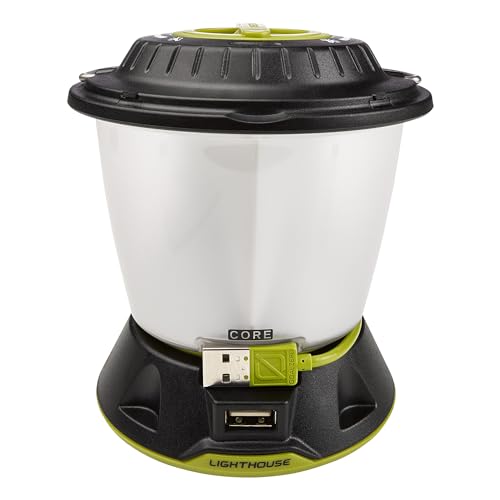
Goal Zero Lighthouse 600 Lantern
Three ways to recharge, USB, solar and a built in hand crank, keep this lantern useful when the grid is far off. A 4400mAh battery feeds a phone through the USB port during an emergency. Two brightness dials let you light half the lantern to stretch runtime deep into the night.
Pros
- Recharges by USB, solar or hand crank
- Doubles as a phone power bank
- Dual dials stretch runtime on low
Cons
- Hand crank is slow for a full charge
- Heavier than backpacking lanterns

BioLite AlpenGlow 500 Lantern
A wide chromatic LED array casts an even, warm glow rather than a harsh point of light. Multi color modes and a shake to cycle gesture add flair for base camp evenings. The internal battery recharges by USB C and can top off a phone in a pinch.
Pros
- Wide, even glow flatters a campsite
- Color and dimming modes for ambiance
- USB C recharge and phone top off
Cons
- No solar or crank backup
- Color features add to the price

Black Diamond Apollo Lantern
Fold out legs raise the light and collapse flat to pack small in a bag. It runs on the rechargeable core or drops back to AA batteries when charging is not an option. A frosted globe softens the beam so it lights a tent without glaring in your eyes.
Pros
- Collapses small for a pack
- Runs on rechargeable core or AA cells
- Frosted globe softens the light
Cons
- Lower peak brightness than base camp models
- Legs feel delicate under rough handling
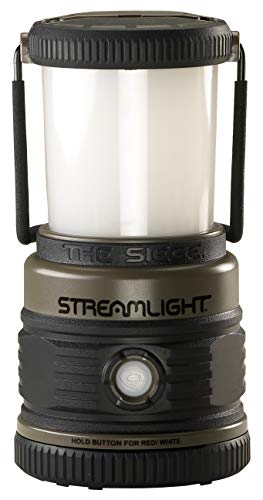
Streamlight Siege Lantern
An impact resistant body sealed to IPX7 shrugs off rain and a two meter drop. It runs on D cells for long unattended runtime, useful for storm kits as much as camping. A removable cover turns the bright top into a softer area light, and it floats if dropped in water.
Pros
- Waterproof and drop resistant
- Long runtime on common D cells
- Floats and stays sealed in water
Cons
- D cells add weight and bulk
- No built in USB recharging

Coleman 1000 Lumens LED Lantern
A thousand lumens on high floods a large campsite or a group shelter with light. It runs on D cells or a compatible rechargeable pack for flexibility. The runtime drops sharply at full brightness, so most owners keep it on a lower setting for the evening and reserve high for setup.
Pros
- Very bright for group campsites
- Flexible D cell or rechargeable power
- Simple three level control
Cons
- Runtime falls fast on high
- Bulky for anything but car camping

MPOWERD Luci Outdoor 2.0 Solar Lantern
An inflatable body collapses to about an inch thick and recharges entirely from the sun. No batteries to buy or carry makes it a fit for long trips off the grid. The diffused light is gentle rather than bright, which suits reading in a tent more than lighting a large area.
Pros
- Recharges free from sunlight
- Collapses nearly flat and light
- Waterproof and floats
Cons
- Low output for a small space only
- Solar recharge needs a full sunny day

LE LED Camping Lantern (2 Pack)
Two collapsible lanterns for a low price cover a tent and a picnic table at once. Each runs on AA cells and folds flat when not in use. The plastic build feels basic, but the output is steady and the price makes losing one to a trip far less painful.
Pros
- Two lanterns at a low price
- Collapse flat for storage
- Simple AA power anywhere
Cons
- Basic plastic build
- Shorter runtime than premium models
How they stack up
| # | Model | Max brightness | Best for | Score | Price |
|---|---|---|---|---|---|
| 1 | Goal Zero Lighthouse 600 Lantern | 600 lumens | Best overall | 9.3 | Check price |
| 2 | BioLite AlpenGlow 500 Lantern | 500 lumens | Best for ambiance | 9.0 | Check price |
| 3 | Black Diamond Apollo Lantern | 225 lumens | Best for backpacking | 8.7 | Check price |
| 4 | Streamlight Siege Lantern | 540 lumens | Best rugged pick | 8.5 | Check price |
| 5 | Coleman 1000 Lumens LED Lantern | 1000 lumens | Best for bright output | 8.3 | Check price |
| 6 | MPOWERD Luci Outdoor 2.0 Solar Lantern | 75 lumens | Best solar and packable | 8.1 | Check price |
| 7 | LE LED Camping Lantern (2 Pack) | About 300 lumens each | Best budget | 7.9 | Check price |
Frequently asked questions
How many lumens do I need for a camping lantern?
For a single tent, 100 to 300 lumens is plenty for reading and moving around. Lighting a group shelter or cooking area needs 500 lumens or more, though you will usually run it lower to save power.
Are rechargeable or battery lanterns better for camping?
Rechargeable lanterns cut battery waste and often power a phone too, but they need a way to recharge. Battery models like the Streamlight Siege keep working anywhere. Dual power lanterns such as the Black Diamond Apollo offer both.
What is the best lantern for backpacking?
A light, collapsible model wins for the trail. The Black Diamond Apollo folds small at about eight ounces, and the inflatable Luci Outdoor weighs even less and recharges from the sun.
Can a camping lantern charge my phone?
Some can. The Goal Zero Lighthouse 600 and BioLite AlpenGlow 500 both include a battery and USB port to top off a phone, which is handy during an outage or a long trip.
How long do camping lanterns last on a charge?
It depends heavily on the brightness setting. Most models here run for a full night or more on low, but runtime drops sharply on high, sometimes to only a few hours at peak output.
Are solar camping lanterns worth it?
For long trips off the grid, yes, since they recharge free from sunlight with no batteries to carry. The tradeoff is lower output and a slow recharge that needs a full sunny day, as with the Luci Outdoor.
What lantern is best for a power outage at home?
A model with long runtime and multiple power paths suits emergencies. The Goal Zero Lighthouse 600 recharges by hand crank and powers a phone, while the waterproof Streamlight Siege runs a long time on D cells.
Do camping lanterns need to be waterproof?
Some water resistance helps against rain and dew. If you camp in wet climates or want a storm kit light, a sealed IPX7 model like the Streamlight Siege resists rain and even survives a drop in water.
Warm light or cool light for a campsite?
Warm light, around what the BioLite AlpenGlow offers, feels more relaxing and attracts fewer insects. Cool white light appears brighter for tasks like cooking or reading a map.
The bottom line
The Goal Zero Lighthouse 600 is the pick for most campers, thanks to three recharge paths, a built in power bank and runtime controls that stretch a night of light. Campers who value a warm, even ambiance should choose the BioLite AlpenGlow 500. Backpackers cutting weight will be happier with the collapsible Black Diamond Apollo, which trades peak brightness for a pack friendly size and AA backup.