How R-Value and Thickness Separate Camping Mattresses
Exped MegaMat 10 Sleeping Pad is the top pick for most campers, combining thickness with strong warmth. SoundAsleep Camping Series Air Mattress wins on value for car camping. WELLAX Ultralight Air Sleeping Pad suits backpackers watching every ounce of pack weight.
Exped MegaMat 10 Sleeping Pad suits most campers who want warmth and genuine cushioning in one pad. SoundAsleep Camping Series Air Mattress comes close for less, especially for car camping. WELLAX Ultralight Air Sleeping Pad leads for anyone counting grams on a tight budget.
Warmth, packed size and comfort pull against each other on every camping mattress, and a pad that feels plush in a store can leave you cold by 2am outdoors. We ranked these seven using published R-values, thickness specs and long run owner feedback rather than a single weekend trip.
The top picks, ranked

Exped MegaMat 10 Sleeping Pad
Open cell foam sits under a thick air chamber here, giving a feel closer to a real bed than a typical pad. Its R-value of 8.1 handles cold ground through shoulder season nights. An included pump makes setup painless compared with lung powered inflation.
Pros
- High R-value handles cold nights well
- Mattress-like plushness underfoot
- Included hand pump speeds setup
Cons
- Bulky once packed for transport
- Heavier than any air only pad here

Therm-a-Rest MondoKing 3D Sleeping Pad
Thick foam and stretch knit fabric define this self-inflating classic, with a surface that grips a sleeping bag rather than letting it slide. Owners report it inflates most of the way on its own before a few extra breaths finish it. An R-value of 7.0 keeps it warm through most three season trips.
Pros
- Very stable and quiet at night
- Grippy top fabric resists sliding
- Durable build across many seasons
Cons
- Large packed volume in a trunk
- Slow to fully deflate for packing
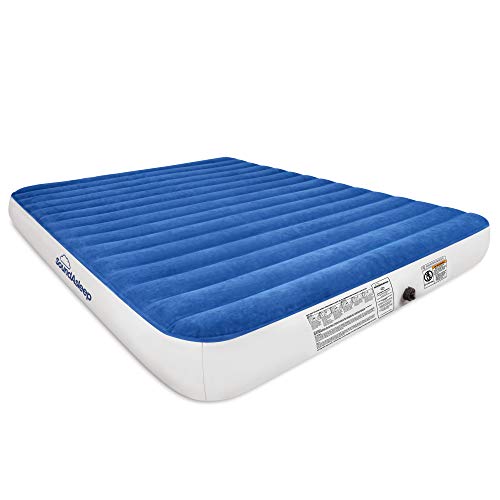
SoundAsleep Camping Series Air Mattress
A built in rechargeable pump removes the need to carry a separate one, paired with a wave beam interior that limits sagging. Nine inches of height gives a real off the floor bed feel inside a roomy tent. No foam insulation layer means it suits mild weather best.
Pros
- Built-in cordless pump saves packing one
- Firm, genuinely off-the-floor height
- Strong value for the size offered
Cons
- No foam insulation for cold nights
- Needs a roomy tent to fit

Klymit Static V Luxe Sleeping Pad
Body mapped baffles run wider here than on a standard pad, cradling hips and shoulders for side sleepers who normally roll off narrow mats. A handful of breaths brings it to full firmness. Warmth stays modest, so it suits three season trips more than winter camping.
Pros
- Extra width keeps side sleepers centered
- Packs down small for a backpack
- Inflates fully in under a minute
Cons
- Modest warmth rating for cold trips
- Louder crinkle than a foam pad

WELLAX Ultralight Air Sleeping Pad
Packed size shrinks to roughly a water bottle here, at a lower cost than most inflatables on this list. Warm weather backpackers get the most from it, since saving weight matters more to them than plush thickness. Owners note it thins out noticeably under heavier body weights.
Pros
- Lowest cost pad in this comparison
- Tiny packed size for a backpack
- Light weight for the price point
Cons
- Thin support for heavier sleepers
- Limited warmth on cold ground
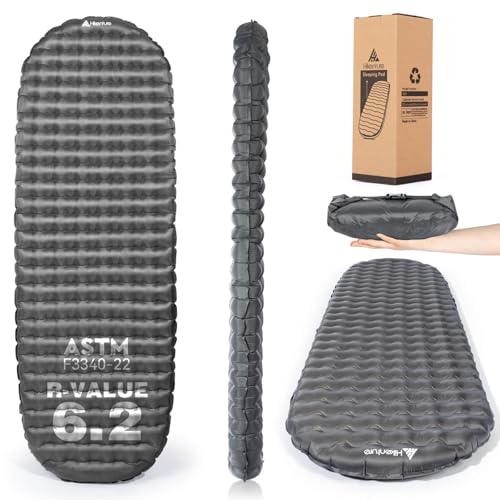
Hikenture Camping Sleeping Pad
Two people share one connected surface here instead of two separate pads pushed together. A built in foot pump keeps hands clean during setup. Tent campers who dislike a gap down the middle get the most benefit from this design.
Pros
- Fits two adults on one surface
- Foot pump keeps hands free
- No gap between sleeping partners
Cons
- Bulky and heavy for backpacking trips
- A single leak affects both sleepers

Sea to Summit Comfort Plus Sleeping Mat
Two independent air chambers let you tune firmness on each side and keep support if one chamber ever fails. Backcountry pack size stays reasonable despite the added cushioning. Inflation takes more breaths than a single chamber pad of the same size.
Pros
- Dual chambers allow tunable firmness
- Quiet fabric compared with rivals
- Redundant support if one chamber fails
Cons
- Costs more for the packed size
- Takes extra breaths to fully inflate
Side by side
| # | Model | Thickness | Best for | Score | Price |
|---|---|---|---|---|---|
| 1 | Exped MegaMat 10 Sleeping Pad | 3.9 in | Best overall | 9.4 | Check price |
| 2 | Therm-a-Rest MondoKing 3D Sleeping Pad | 4 in | Best for comfort | 9.2 | Check price |
| 3 | SoundAsleep Camping Series Air Mattress | 9 in | Best value | 9.0 | Check price |
| 4 | Klymit Static V Luxe Sleeping Pad | 3 in | Best for side sleepers | 8.7 | Check price |
| 5 | WELLAX Ultralight Air Sleeping Pad | 2.2 in | Best budget | 8.4 | Check price |
| 6 | Hikenture Camping Sleeping Pad | 3.5 in | Best for couples | 8.2 | Check price |
| 7 | Sea to Summit Comfort Plus Sleeping Mat | 3.1 in | Best for backpacking comfort | 8.0 | Check price |
What to look for
What R-value do I need for camping? R-value measures how well a pad blocks cold rising from the ground, and it matters more than most campers expect. A rating near 2 covers summer trips comfortably. Shoulder season and winter camping call for something above 5, since body heat otherwise pulls straight into the dirt below.
Foam pad vs inflatable vs air mattress, which should I pick? Self-inflating foam pads run warm and plush but pack large, which suits car camping better than a backpack. Lightweight inflatables trade some warmth for a packed size small enough to carry for miles. Tall air mattresses add a real bed feel inside a roomy tent, at the cost of any foam insulation.
How much should packed size and weight matter? A comfortable mattress is useless if it will not fit your load. Car campers can ignore weight entirely and chase thickness instead. Anyone carrying gear any real distance should prioritize packed volume and grams over a plush spec sheet.
Which camping mattress works best for side sleepers? Side sleepers and larger campers need wider pads and taller lofts to keep hips and shoulders off the ground. Klymit Static V Luxe adds body mapped width specifically for this. Light sleepers should also check owner notes on crinkle noise, since some inflatables run noticeably louder than foam.
Good to know
What is a good R-value for winter camping?
Look for 5 or higher when the ground is cold or frozen. Ratings below 3 are built for summer only and will feel cold underneath by early fall.
Are air mattresses or foam pads warmer?
Insulated self-inflating foam pads usually run warmer, since the foam slows heat loss into the ground. A tall uninsulated air mattress can feel colder in cool weather, because the air inside keeps circulating and cooling.
Is a camping mattress good for backpacking?
Only if it packs small and stays light. Tall air beds and thick foam pads suit car or tent camping instead. Slim inflatables like the Klymit Static V Luxe or WELLAX Ultralight are built for carrying on your back.
How do I keep a camping pad from sliding at night?
A grippy or stretch knit top fabric helps, as does pairing it with a non slip sleeping bag. A ground sheet under the tent keeps the whole sleep system from shifting on slick tent floors too.
Can two people share one camping mattress?
Yes, double pads like the Hikenture give couples a single connected surface without a gap. A shared pad packs bulkier than two singles, and one puncture affects both sleepers, so carry a repair patch.
How do I stop a camping mattress from leaking?
Store it clean and dry, keep sharp gear away from the sleeping area, and use a footprint or ground sheet underneath. Most pads ship with a patch kit, and a slow leak is easiest to find by inflating firmly and listening near the valve.
Do camping mattresses need a separate pump?
It depends on the type. Self-inflating foam pads fill mostly on their own, some air beds carry a built in pump, and lightweight inflatables rely on a stuff sack pump or a few breaths to reach full firmness.
How thick should a camping mattress be?
Two to three inches suits most back sleepers. Side sleepers and heavier campers are more comfortable at three inches or beyond. Thicker pads add warmth and cushioning but also raise packed size and weight.
Camping mattress vs sleeping bag pad, is there a difference?
Not really. Sleeping pad and camping mattress describe the same category of gear, though thicker, bed like options tend to get called mattresses more often than thin backpacking pads do.
What is the most durable camping mattress material?
Self-inflating foam pads with rugged outer fabric, like the Therm-a-Rest MondoKing 3D, tend to survive rough ground and repeated packing better than thin inflatables. Puncture resistant fabric matters more than material for long term durability.
Our pick
Exped MegaMat 10 Sleeping Pad remains the mattress most people should buy, since its warmth and thickness suit almost any car camping trip. SoundAsleep Camping Series Air Mattress deserves a close look from value focused tent campers. WELLAX Ultralight Air Sleeping Pad stays the pick for backpackers counting every gram.
You might also need
How to Clean a Camping Coffee Maker
How to Pack a Cooler to Keep Ice Longer

How to Choose Binoculars: 8×42, 10×42 or Compact
