Which Canoe Fits the Way You Actually Paddle?
The Old Town Discovery 119 Solo Sportsman leads for solo paddling and fishing thanks to its stable, wide flat hull. The Sea Eagle TC16 Travel Canoe suits paddlers without roof racks or storage space, since it packs into a carry bag. Families should consider the Lifetime Kodiak 13 Canoe for its comfortable tandem seating.
Paddlers chasing stability for fishing or standing casts do best with the Old Town Discovery 119 Solo Sportsman and its wide flat hull. Anyone without a garage, trailer or roof bars can skip that problem entirely with the Sea Eagle TC16 Travel Canoe, which deflates into a carry bag. For a tandem boat that keeps cost down, the Lifetime Kodiak 13 Canoe fits two adults and gear comfortably.
Comparing canoes online is harder than it looks, since hull behavior in the water rarely shows up in a product listing. A flat hull feels steady at rest but tires you over distance, while a shallow arch tracks straighter yet feels tippier until you adjust. We compared length, hull material, rated capacity, empty weight and how each canoe reaches the water, then weighted stability and transport since those factors decide whether a canoe actually gets used.
The shortlist, ranked

Old Town Discovery 119 Solo Sportsman Canoe
This solo hull measures just under twelve feet, keeping it light enough for one paddler to load alone. Its wide, flat bottom gives fishing platform stability, so standing to cast feels secure on calm water. Three layers of polyethylene resist punctures on rocky landings, though that toughness adds weight for the length.
Pros
- Stable enough to stand and cast
- Puncture resistant three layer hull
- Short enough for one person to load
Cons
- Heavier than its length suggests
- Flat bottom loses speed over distance
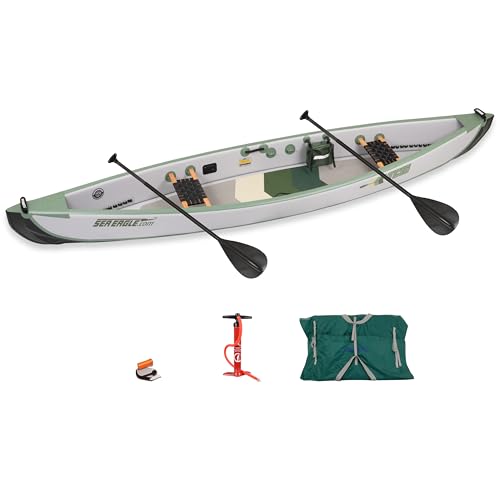
Sea Eagle TC16 Travel Canoe
Inflated, this canoe stretches to sixteen feet yet folds down into a bag that fits in a car trunk. A drop stitch floor gives it rigidity that belies the word inflatable, according to the listing. Pumping it up takes real time, so it rewards planned outings more than last minute trips.
Pros
- Fits in a closet or car trunk, no roof rack needed
- Drop stitch floor keeps the hull rigid on the water
- Seats two or three paddlers comfortably
Cons
- Setup and inflation add time before launch
- Priced above most rigid canoes in this lineup
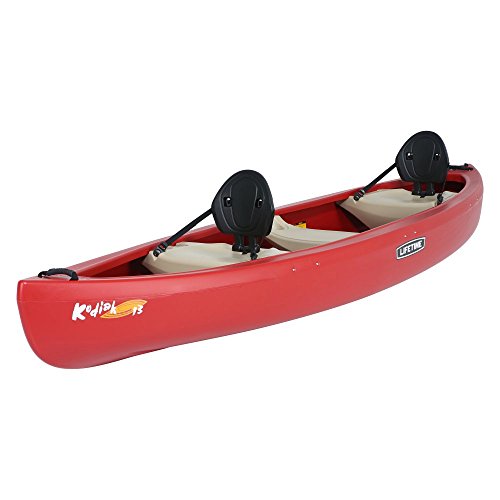
Lifetime Kodiak 13 Canoe
At thirteen feet, this tandem hull suits two adults plus a modest gear load on flat water. Blow moulded polyethylene construction shrugs off scrapes on rocky shorelines. Moulded seats with backrests keep an afternoon on the water comfortable rather than a chore.
Pros
- Backed seats add comfort for longer outings
- Rotomoulded hull tolerates rough handling
- Priced well for a tandem canoe
Cons
- Awkward for one person to carry alone
- Tracks less efficiently than longer hulls

Old Town Saranac 146 Canoe
Stretching to fourteen feet six inches, this hull holds a straight line with little correction needed. Old Town adds rod holders and cup holders to the moulded seats, useful for a relaxed day of fishing. The extra length means it takes two people and a full size roof rack to transport.
Pros
- Tracks straight with minimal paddle correction
- Rod and cup holders suit casual fishing
- Extra seat and capacity for a third paddler
Cons
- Requires two people and a proper rack to load
- Less forgiving at rest than flat bottomed hulls

Sun Dolphin Mackinaw 15.6 Canoe
Rated for a heavier load, this fifteen foot six inch hull suits camping trips, coolers or three paddlers. A deep hull profile keeps spray out even when loaded close to capacity. Owners note it catches wind noticeably when running empty, which matters on open, breezy water.
Pros
- High rated capacity for gear heavy trips
- Deep sides keep spray and chop out
- Under seat compartments add dry storage
Cons
- Catches wind badly when lightly loaded
- Among the heaviest hulls in this lineup

Pelican Sport 15.5 DLX Canoe
Built from a lighter multi layer material than the rotomoulded hulls nearby, this fifteen foot canoe is easier to lift onto a roof rack. It turns readily on winding rivers, trading some stability for agility. That lighter construction also means it tolerates dragging over rock less well than thicker hulls.
Pros
- Lighter to carry and load than similar length rivals
- Turns quickly on winding rivers
- Padded seating adds comfort
Cons
- Hull is less impact resistant than rotomoulded designs
- Feels livelier in chop, which unsettles beginners
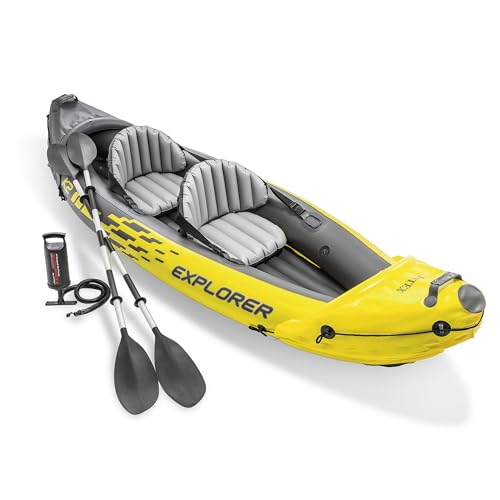
Sevylor Ogden 2-Person Canoe
As the most affordable option here, this inflatable gets two paddlers onto flat water without a big outlay. Multiple air chambers add a safety margin if one section loses pressure. Raised bow and stern sections give it a canoe like profile rather than a raft’s flat ends.
Pros
- Lowest cost way into canoeing
- Packs small enough for a closet shelf
- Multiple air chambers add redundancy
Cons
- Wanders more than a rigid hull on open water
- Limited to calm, wind sheltered conditions
What to look for
What hull shape works best for canoe stability? Flat bottomed hulls, like the one on the Old Town Discovery 119, deliver high initial stability, so the boat feels steady the moment you sit down and shift your weight. Shallow arch hulls trade that early steadiness for secondary stability, meaning they lean further before actually tipping, and they slide through water with less resistance. Beginners typically prefer the flat profile, while paddlers covering distance grow to prefer the arch. Neither shape wins outright, so match the hull to where you paddle most often.
How does canoe length affect speed and control? Longer hulls hold a line with less corrective paddling, which is why the Old Town Saranac 146 covers a few miles with noticeably less effort than a short solo boat. Shorter canoes turn faster, weigh less and fit smaller vehicles, suiting twisting rivers and solo outings. Under twelve feet generally means a solo, playful boat. Twelve to fourteen feet works as a versatile family size, and fifteen feet or more favors distance and heavier loads.
Can I transport a canoe without a roof rack? Logistics sideline more canoes than anything that happens on the water. Loading a fifteen foot rotomoulded hull alone onto a roof is genuinely difficult, and it still needs somewhere to live between trips. Inflatable models such as the Sea Eagle TC16 or the Sevylor Ogden remove that obstacle by packing into a bag, at the cost of extra setup time before launch. Decide how the canoe reaches the water before comparing hull shapes.
How much weight can a canoe safely carry? Rated capacity covers total load, not just paddlers, and a canoe loaded near its limit sits lower, ships more spray and turns sluggishly. A practical target is crew weight plus gear kept well under the rating rather than close to it. Extra headroom in the rating also means a drier ride, which explains why gear heavy trips suit high capacity hulls like the Sun Dolphin Mackinaw 15.6 even with a small crew.
Compared at a glance
| # | Model | Length | Best for | Score | Price |
|---|---|---|---|---|---|
| 1 | Old Town Discovery 119 Solo Sportsman Canoe | About 11 feet 9 inches | Best overall | 9.4 | Check price |
| 2 | Sea Eagle TC16 Travel Canoe | About 16 feet inflated | Best for small storage | 9.2 | Check price |
| 3 | Lifetime Kodiak 13 Canoe | About 13 feet | Best value tandem | 9.0 | Check price |
| 4 | Old Town Saranac 146 Canoe | About 14 feet 6 inches | Best for distance paddling | 8.8 | Check price |
| 5 | Sun Dolphin Mackinaw 15.6 Canoe | About 15 feet 6 inches | Best for load capacity | 8.6 | Check price |
| 6 | Pelican Sport 15.5 DLX Canoe | About 15 feet 6 inches | Best for easy handling | 8.3 | Check price |
| 7 | Sevylor Ogden 2-Person Canoe | About 12 feet inflated | Best budget | 8.0 | Check price |
Frequently asked questions
Is a canoe or kayak better for beginners?
Canoes are easier to enter and exit, hold more gear and let you sit higher off the water, which suits many first timers. Kayaks paddle faster, handle wind better and work well solo. Families with gear on calm lakes usually find a canoe the more practical first boat.
Can one person paddle a tandem canoe?
Yes, though it takes some technique. Sitting in the bow seat facing backward moves your weight toward the centre, which stops the empty end catching wind. A dedicated solo hull such as the Old Town Discovery 119 is far easier if you paddle alone most of the time.
Are inflatable canoes any good?
Modern inflatables with drop stitch floors, including the Sea Eagle TC16, perform well on flat water and solve storage and transport problems outright. They track less precisely than rigid hulls and take time to inflate, so they suit planned trips more than spontaneous ones.
How much does a canoe weigh?
Recreational polyethylene canoes in this comparison generally weigh between fifty and ninety pounds, depending on length and construction. Two people can manage that easily, but loading a longer hull alone onto a tall roof is difficult, worth considering before buying.
Do you need a roof rack for a canoe?
Any rigid canoe needs a roof rack plus bow and stern tie down lines. Foam block kits work on bare roofs, but they suit short, slow trips rather than regular use. Inflatable canoes sidestep the issue entirely since they travel in a car trunk.
What safety gear should you carry in a canoe?
A correctly fitted buoyancy aid for every person aboard is essential, along with a spare paddle, a bailer or bilge pump and a whistle. Many locations require a light for paddling near dusk, so check local regulations for the water you use.
Can these canoes handle river currents?
Slow, flat moving rivers suit every canoe in this comparison. Real current or rapids call for a whitewater specific hull with more rocker and dedicated outfitting. Inflatable models here should stay on calm, flat water only.
How do you stop a canoe from veering off line?
Wandering usually comes down to paddling technique rather than the hull. A J stroke, where you angle the blade outward at the end of each stroke, corrects the natural turn without switching sides. Longer hulls such as the Saranac 146 also need less correction to begin with.
What size canoe do you need for two people and gear?
A tandem hull between thirteen and fifteen feet, such as the Lifetime Kodiak 13 or Sun Dolphin Mackinaw 15.6, comfortably carries two adults plus camping gear or a cooler. Check the rated capacity against combined crew and gear weight before loading.
Our pick
For solo paddling, fishing or standing casts, the Old Town Discovery 119 Solo Sportsman remains the steadiest choice from the first outing. Families wanting two seats plus gear should weigh the Lifetime Kodiak 13 Canoe for value against the Old Town Saranac 146 for distance comfort. When storage or transport is the real obstacle, the Sea Eagle TC16 Travel Canoe clears it without giving up much on the water.