Which Car Battery Fits Your Climate and Engine?
The Odyssey Extreme Series 34-PC1500T leads this list on cranking power and deep cycle endurance. The Optima RedTop 34/78 resists vibration best for trucks and modified vehicles, and the ACDelco Gold 48AGM suits modern cars with start stop systems.
Maximum starting power and reserve depth point to the Odyssey Extreme Series 34-PC1500T, with the Optima RedTop 34/78 suited to rough duty vehicles and the ACDelco Gold 48AGM built for start stop cars. Group size still decides what physically fits, so confirm that first.
Battery buying gets tricky because cold cranking amps grab all the marketing attention. Reserve capacity, cycle life and vibration resistance actually decide how long a battery lasts. We compared published specifications, construction type, warranty terms and group fitments, weighing what owners report about longevity in heat and on vehicles that sit unused.
Our top picks

Odyssey Extreme Series 34-PC1500T Battery
Pure lead plates give this battery both a big cranking figure and genuine deep cycle tolerance. It suits vehicles carrying winches, inverters or heavy audio that would flatten an ordinary starter battery. A long warranty reflects construction that owners report holding up for years.
Pros
- Handles deep discharge far better than standard batteries
- High cranking output in cold weather
- Long warranty period for the class
Cons
- Heaviest option in this group
- Needs a proper charger to reach full capacity

Optima RedTop 34/78 Starting Battery
Spiral wound cells resist the vibration that kills flat plate batteries on rough roads. This is a starting battery rather than a deep cycle unit, so it excels at delivering a hard burst to a large engine. Its sealed case mounts in positions that would leak on a flooded battery.
Pros
- Excellent vibration resistance
- Strong cranking burst for big engines
- Sealed and spill resistant in any mounting position
Cons
- Not designed for repeated deep discharge
- Reserve capacity trails the Odyssey
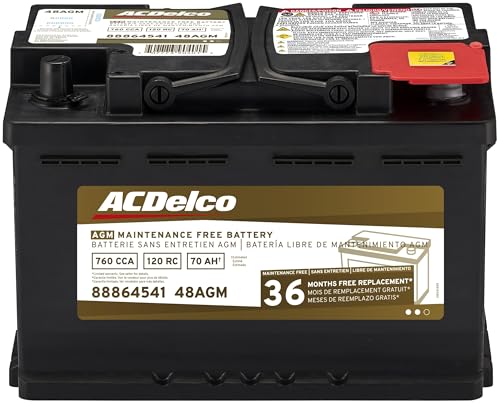
ACDelco Gold 48AGM Battery
Modern cars that shut the engine off at every red light demand an AGM battery built for high cycle counts. This one serves as a straight replacement for many European and domestic vehicles that shipped with AGM from the factory. Fitment and charging profile match what the car expects.
Pros
- Built for start stop cycling
- Common group size fits many vehicles
- Solid warranty from a mainstream brand
Cons
- Only worthwhile if your car needs AGM
- May require a battery registration procedure

NORTHSTAR NSB-AGM24F Battery
NORTHSTAR pairs pure lead AGM construction with an unusually high reserve capacity, useful if you run recovery gear, fridges or lighting with the engine off. Recharge acceptance is fast, so a short drive restores meaningful charge. This is a specialist choice rather than a budget swap.
Pros
- Class-leading reserve capacity
- Fast recharge acceptance
- Tolerates repeated partial discharge
Cons
- Limited group size availability
- Premium construction costs more

Optima YellowTop D34/78 Dual Purpose Battery
The YellowTop splits the difference between starting and deep cycle duty, suiting vehicles with winches, aftermarket audio or long idle periods. It uses the same spiral cell design as the RedTop but with thicker plates tuned for cycling. Expect slightly lower peak cranking in exchange.
Pros
- Recovers well from deep discharge
- Same vibration resistance as the RedTop
- Dual terminals simplify accessory wiring
Cons
- Lower cranking peak than the RedTop
- Overkill for a stock daily driver

Delphi BU9094R MaxStart AGM Battery
Heat kills batteries faster than cold does, and this AGM design resists the plate corrosion that shortens life in southern summers. It fits a wide range of imports in group 94R and handles the electrical load of modern accessories. Owners report steady performance without flooded-cell maintenance.
Pros
- Holds up well in high ambient heat
- High reserve capacity for the size
- Common fitment across European imports
Cons
- Group 94R does not fit smaller cars
- Warranty terms trail the top picks

Weize Platinum AGM Battery Group 35
Weize brings AGM construction to a lower price point, a reasonable upgrade over a basic flooded battery for a commuter car. Cranking figures are respectable, and the sealed case avoids terminal corrosion. Build quality sits a step below specialist brands, so treat the warranty as part of the value.
Pros
- AGM construction at an entry-level price
- Sealed case avoids acid corrosion
- Popular group 35 fitment for Japanese cars
Cons
- Lower cranking output than premium AGMs
- Less proven longevity than established brands
How they compare
| # | Model | Type | Best for | Score | Price |
|---|---|---|---|---|---|
| 1 | Odyssey Extreme Series 34-PC1500T Battery | AGM, pure lead plates | Best overall | 9.4 | Check price |
| 2 | Optima RedTop 34/78 Starting Battery | AGM, spiral wound cells | Best for trucks and off road | 9.2 | Check price |
| 3 | ACDelco Gold 48AGM Battery | AGM | Best for start stop vehicles | 9.0 | Check price |
| 4 | NORTHSTAR NSB-AGM24F Battery | AGM, pure lead | Best for accessory heavy builds | 8.8 | Check price |
| 5 | Optima YellowTop D34/78 Dual Purpose Battery | AGM, spiral wound cells | Best dual purpose | 8.6 | Check price |
| 6 | Delphi BU9094R MaxStart AGM Battery | AGM | Best for hot climates | 8.3 | Check price |
| 7 | Weize Platinum AGM Battery Group 35 | AGM | Best budget | 8.0 | Check price |
How to pick the right one
Which group size battery fits your car? Group size describes physical dimensions and terminal layout. A battery that doesn’t fit the tray, or reaches the terminals the wrong way round, is useless regardless of specification. Check the label on your current battery or the owner’s manual, and confirm terminal polarity, since a group 35 and a group 24F look similar but reverse the posts. Hold-down clamps also need the correct case height to keep the battery from moving.
Cold cranking amps or reserve capacity: which matters more? Cold cranking amps measure the burst available at low temperature to turn over a cold engine, mattering most in northern winters and with large displacement engines. Reserve capacity measures how long a battery can run the car’s electrics if the alternator fails, and it also tracks how well a battery tolerates accessory load while parked. Meet or exceed the manufacturer’s cranking figure first, then treat higher reserve capacity as the tiebreaker.
Is an AGM battery worth it over flooded? AGM batteries hold electrolyte in glass mat separators, so they resist vibration, tolerate deeper discharge and never need topping up. Vehicles with start stop systems or heavy electrical loads generally require AGM, and a flooded battery in that role fails quickly. A simple older car with modest accessories still runs fine on a good flooded battery for less, though AGM usually earns back the difference in years of service.
Why do car batteries fail before their warranty ends? Modern cars monitor battery condition, and many need a new battery registered with a scan tool so the charging system adapts correctly. Skipping that step can shorten an expensive AGM’s life. Short trips are the other silent killer, since the alternator never fully recharges the pack. Owners who drive briefly should attach a smart maintenance charger occasionally, which does more for lifespan than buying a bigger battery.
Questions worth asking
How do I find the right battery group size for my car?
Read the group size printed on your existing battery, then confirm it in the owner’s manual or a fitment lookup. Group size covers case dimensions and terminal position, so getting it right guarantees the battery sits in the tray and the cables reach.
How long do car batteries typically last?
Three to five years is typical, with hot climates at the short end and mild climates at the long end. AGM batteries in vehicles designed for them often exceed that, while short-trip driving and repeated deep discharges cut it dramatically.
Do I need an AGM car battery?
If your car has start stop, regenerative braking or shipped with AGM from the factory, yes. Otherwise it’s an upgrade rather than a requirement, though it pays off on vehicles with winches, big audio systems or rough-road use.
Is a higher cold cranking amps rating always better?
Not by itself. Exceeding the manufacturer’s figure gives useful margin in winter, but a high cranking number paired with poor reserve capacity is a worse buy than a balanced battery. The engine only draws what it needs to start.
Does a new car battery need to be registered?
Many vehicles from the last decade require registration or a battery management reset so the charging system uses the correct profile. Check the manual, since skipping the step can leave a new AGM chronically undercharged.
Why does my car battery keep dying on short trips?
Short journeys don’t give the alternator time to replace the charge used at startup, so the battery slowly falls behind. A smart maintenance charger used overnight every couple of weeks solves it without replacing anything.
Can an AGM battery be mounted on its side?
Sealed AGM designs such as the Optima and Odyssey units are spill resistant and tolerate unusual mounting angles, unlike flooded batteries. Always confirm the manufacturer’s guidance, and secure the battery with a proper hold-down either way.
What should I do with my old car battery?
Return it to any retailer that sells batteries, since lead acid units get recycled and most sellers charge a core deposit you get back. Never put one in household waste.
The bottom line
The Odyssey Extreme Series 34-PC1500T offers the deepest reserve and longest service life, especially on a vehicle carrying accessories. Trucks and rough-road use are better served by the vibration-resistant Optima RedTop, while start stop cars should stick with a purpose-built AGM like the ACDelco Gold 48AGM. Confirm your group size before ordering any of them.