Car Batteries Ranked on Cold Cranking Amps and Life
The Optima RedTop 34/78 is our overall pick for strong starting power and vibration resistance. The ACDelco Gold 48AGM is the better all round choice for modern cars with heavy electrical loads, and the Odyssey 34-PC1500T offers the deepest reserve for accessory heavy builds.
If you need a replacement battery that starts reliably in cold weather and survives rough roads, the Optima RedTop 34/78 is the strongest all round pick, with the ACDelco Gold 48AGM better suited to modern electrically demanding cars and the Odyssey 34-PC1500T the choice for heavy accessory loads.
Car batteries are harder to shop for than they look because the group size must physically fit your tray and terminals, and a car with stop start technology requires AGM construction rather than a conventional flooded battery. We compared group sizes, cold cranking amps, reserve capacity and what owners report about service life to rank the seven below.
Our top picks

Optima RedTop 34/78 Starting Battery
A spiral wound AGM starting battery built for high cranking output and unusually strong resistance to vibration, which is why it is a common choice for trucks and rough road use. The sealed construction means no maintenance and no acid spill risk in unusual mounting positions. Owners report reliable cold starts and long service life when the charging system is healthy.
Pros
- Very strong cranking output for cold starts
- Spiral cells resist vibration damage
- Sealed and maintenance free in any orientation
Cons
- Costs well above a standard flooded battery
- Reserve capacity is lower than deep cycle rivals
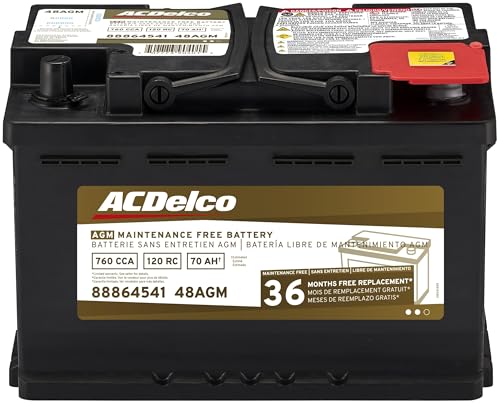
ACDelco Gold 48AGM Battery
An AGM battery in the widely used group 48 size, designed for cars with stop start systems and the heavy electrical loads of modern infotainment and driver assistance systems. AGM construction handles the repeated shallow cycling that stop start causes far better than flooded designs. Owners report it is a straightforward direct replacement on many European and American vehicles.
Pros
- Correct specification for stop start systems
- Handles heavy accessory loads calmly
- Very common group size, easy to source
Cons
- Must be replaced with AGM, not flooded
- Heavier than the flooded battery it replaces

Odyssey 34-PC1500T Extreme Series Battery
A pure lead AGM battery designed to both crank hard and tolerate deeper discharge than a standard starting battery, which suits vehicles running winches, lighting bars, audio systems or camping loads. The pure lead plates give a long cycle life. Owners report it as the battery of choice for overland and off road builds where the electrical system works hard.
Pros
- Handles deep discharge better than starting batteries
- Very high cranking output
- Long cycle life in demanding use
Cons
- The most expensive option here
- Needs a properly matched charger for best life

Optima YellowTop D34/78 Dual Purpose Battery
A dual purpose spiral cell battery that both starts an engine and tolerates repeated deep discharge, aimed at vehicles with winches, inverters or large audio installations. It recovers from being run flat far better than a conventional starting battery. Owners report it as the sensible compromise where a second battery is not practical.
Pros
- Recovers well from deep discharge
- Good reserve capacity for accessory use
- Same vibration resistance as the RedTop
Cons
- Lower cranking output than the RedTop
- Overspecified for an ordinary commuter car

Delphi BU9094R MaxStart AGM Battery
An AGM battery in the common group 94R size at a price closer to premium flooded batteries, aimed at European vehicles that specify AGM from the factory. It offers the cycling durability of AGM without the cost of a specialist brand. Owners report solid service life as a direct factory replacement.
Pros
- AGM performance at a more accessible price
- Correct size for many European cars
- Sealed and maintenance free
Cons
- Fewer size options than the big brands
- Warranty terms are shorter than premium rivals

Weize Platinum AGM Battery
A budget AGM battery available in several common group sizes, aimed at owners who need AGM construction for a stop start vehicle without paying premium brand prices. The specifications are respectable for the cost. Owners report good value, with the usual caveat that budget batteries vary more unit to unit than established brands.
Pros
- Cheapest realistic route to AGM construction
- Covers the most common group sizes
- Sealed and spill proof
Cons
- Less consistent unit to unit than premium brands
- Warranty support is more limited

Mighty Max MM-H6 AGM Battery
A straightforward AGM replacement battery in the group 48 or H6 size, suited to keeping an older vehicle on the road without a large outlay. It is sealed, spill proof and mounts in any orientation. Owners report it does the job as a basic replacement, though it is not the battery for a heavily loaded electrical system.
Pros
- Low cost direct replacement
- Sealed and mountable in any position
- Adequate cranking for ordinary engines
Cons
- Reserve capacity trails premium AGM batteries
- Not suited to heavy accessory loads
What to look for
Group size has to match before anything else Battery group size defines the physical dimensions, terminal positions and hold down arrangement. A group 34 will not sit correctly in a tray built for a group 48, and reversed terminal positions can leave cables that will not reach. Check the label on your existing battery, or look up your vehicle in a fitment guide, before comparing any performance figures. Getting this wrong is the most common reason a battery goes back, and no amount of cranking power compensates for a battery that will not clamp down safely.
Cold cranking amps matter most in cold climates Cold cranking amps measure how much current a battery can deliver at zero degrees Fahrenheit while holding usable voltage, which is exactly the condition that kills tired batteries. If you live somewhere with real winters, meeting or slightly exceeding your vehicle’s specified CCA is worthwhile. In warm climates it matters far less, and reserve capacity, meaning how long the battery can run the vehicle’s electrics without the alternator, becomes the more useful number.
Stop start vehicles need AGM, not flooded Cars with automatic engine stop start cycle the battery constantly, restarting the engine at every set of traffic lights. Conventional flooded batteries are not built for that shallow cycling and fail early. AGM batteries, where the electrolyte is held in glass mat separators, handle it properly. Some vehicles also require the new battery to be registered with the charging system using a diagnostic tool, so check before fitting, since skipping that step can shorten the new battery’s life.
Most batteries die from the charging system, not age A battery that fails at two years old usually points at something else: a parasitic drain from an accessory left live, an alternator not charging to the correct voltage, or repeated short journeys that never fully recharge it. Before spending on a premium battery, check charging voltage at the terminals with the engine running, which should sit around fourteen volts on most vehicles, and test for parasitic draw. Fitting a better battery to a faulty system simply buys you a more expensive failure.
How they stack up
| # | Model | Group size | Best for | Score | Price |
|---|---|---|---|---|---|
| 1 | Optima RedTop 34/78 Starting Battery | 34/78 dual terminal | Best overall | 9.4 | Check price |
| 2 | ACDelco Gold 48AGM Battery | 48 (H6) | Best for modern vehicles | 9.2 | Check price |
| 3 | Odyssey 34-PC1500T Extreme Series Battery | 34 with dual terminals | Best for accessory loads | 9.0 | Check price |
| 4 | Optima YellowTop D34/78 Dual Purpose Battery | 34/78 dual terminal | Best dual purpose | 8.8 | Check price |
| 5 | Delphi BU9094R MaxStart AGM Battery | 94R (H7) | Best value AGM | 8.6 | Check price |
| 6 | Weize Platinum AGM Battery | Several common sizes including 48 and 94R | Best budget AGM | 8.3 | Check price |
| 7 | Mighty Max MM-H6 AGM Battery | 48 (H6) | Best budget replacement | 8.0 | Check price |
Frequently asked questions
How do I know which battery group size I need?
Read the label on your current battery, which states the group size, or check your owner manual. Online fitment guides using registration or vehicle details are also reliable. Group size determines dimensions, terminal position and hold down type, all of which must match for a safe installation.
What is the difference between AGM and flooded batteries?
Flooded batteries hold liquid electrolyte between plates. AGM batteries hold it in absorbent glass mat separators, which makes them sealed, spill proof, more vibration resistant and much better at repeated cycling. AGM costs more and is required for stop start vehicles and heavy electrical loads.
How long should a car battery last?
Typically three to five years, and up to six or seven in mild climates with regular longer drives. Heat shortens battery life more than cold does, so hot climates tend toward the shorter end. Frequent very short journeys are the other main life shortener, since the battery never fully recharges.
Do I need to register a new battery to my car?
On many modern vehicles, yes, particularly European models with intelligent charging systems. The car tracks battery age and adjusts charging accordingly, and fitting a new battery without resetting that data means it is charged as though it were old. A diagnostic tool or a workshop visit handles it.
What are the signs a battery is failing?
Slow cranking, especially on cold mornings, dashboard lights dimming while starting, a swollen case, and needing a jump start more than once. Many parts stores test batteries free, which is worth doing before replacing, since the alternator or a parasitic drain is often the real culprit.
Can I fit a battery with higher cold cranking amps than specified?
Yes, and it does no harm. The starter draws what it needs, so extra capacity is simply headroom. What you should not do is fit a battery with less cranking power than specified, or a physically different group size that does not clamp down correctly in the tray.
Is it safe to fit a battery myself?
Usually, with care. Disconnect the negative terminal first and reconnect it last, keep tools away from bridging both terminals, wear eye protection, and make sure the hold down clamp is properly secured. Note that some vehicles lose radio codes and stored settings when power is removed, so a memory saver is useful.
Does AGM need a special charger?
For normal vehicle charging, no, since alternators charge AGM adequately. For a bench charger or trickle charger, choose one with an AGM setting, because AGM batteries prefer a slightly different voltage profile and can be damaged by high voltage desulfation modes intended for flooded batteries.
Final word
The Optima RedTop 34/78 is the battery to fit if strong cold starting and vibration resistance are your priorities, and it has the track record to justify the cost. The ACDelco Gold 48AGM is the better match for a modern stop start car with heavy electrical demands, and the Odyssey 34-PC1500T earns its place where winches, lighting or camping loads pull the battery down regularly.


