Dual Action Polishers That Won’t Burn Through Car Paint
Griot’s Garage G9 Random Orbital Polisher leads for balancing motor strength with beginner friendly forgiveness. Avid Power Dual Action Polisher is the affordable way to learn swirl removal. Rupes LHR15 Mark III BigFoot suits detailers correcting large panels with its long orbit throw and fast cutting speed.
Griot’s Garage G9 Random Orbital Polisher tops this list for pairing real cutting power with a motor that will not bog down mid pass. Avid Power Dual Action Polisher opens the door for beginners at the lowest cost here. Rupes LHR15 Mark III BigFoot is the long throw machine detailers reach for on large flat panels.
A random orbital machine forgives mistakes, while a rotary can strike through clear coat in seconds if the operator is new. Orbit throw, motor strength under pad pressure and how much vibration tires the hands are the specs that actually separate these machines. We compared those figures against owner feedback to sort beginner safe tools from ones that reward experience.
The best picks, ranked

Griot’s Garage G9 Random Orbital Polisher
A strong 900 watt motor pairs with a throw long enough to cover ground quickly, yet the G9 resists bogging down under firm pressure. Detailers often recommend it as a first polisher that also holds up to years of regular use. Vibration stays low for a dual action machine, which matters over a full detail session.
Pros
- Strong motor resists bogging under pressure
- Low vibration compared with other dual action machines
- Backed by a long manufacturer warranty
Cons
- Heavier in hand than compact units
- Costs more than beginner focused machines
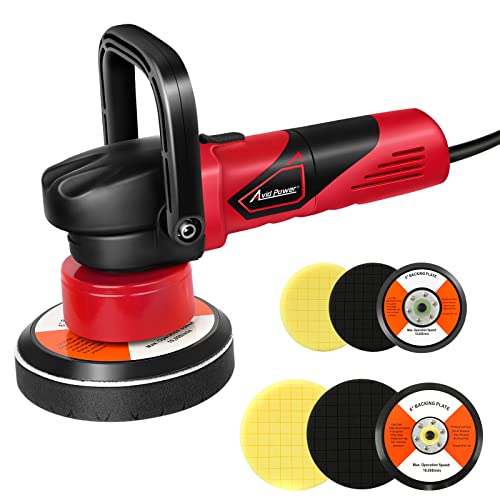
Avid Power Dual Action Polisher
Avid Power gives beginners a variable speed random orbital machine with a starter pad set included, all at a low entry cost. Owners use it to learn swirl removal without committing to a bigger budget. A shorter 5 mm throw slows correction speed and adds more vibration than premium machines.
Pros
- Very low cost for a first polisher
- Starter pads included in the box
- Simple variable speed dial to learn on
Cons
- Shorter throw slows down paint correction
- Vibrates more than premium dual action machines

Porter-Cable 7424XP Polisher
The 7424XP has taught a generation of detailers to correct paint safely, thanks to its forgiving orbital action. A huge range of aftermarket pads and backing plates fits this machine specifically. Heavy hand pressure can still bog the motor down, which is the main habit new users need to unlearn.
Pros
- Forgiving action suits complete beginners
- Enormous pad and accessory ecosystem available
- Decades of proven reliability behind it
Cons
- Bogs down under heavy hand pressure
- Ergonomics feel dated next to newer machines

Rupes LHR15 Mark III BigFoot
A 15 mm orbit throw lets the LHR15 Mark III cut and finish large panels quickly while staying random orbital safe. Professional detailers treat it as a benchmark tool for hoods, roofs and doors. That same long throw makes tight areas around mirrors and trim noticeably more awkward to work.
Pros
- Covers large panels fast without sacrificing safety
- Refined finish with minimal marring
- Build quality holds up to daily professional use
Cons
- Large head struggles in tight areas
- Priced well above beginner machines
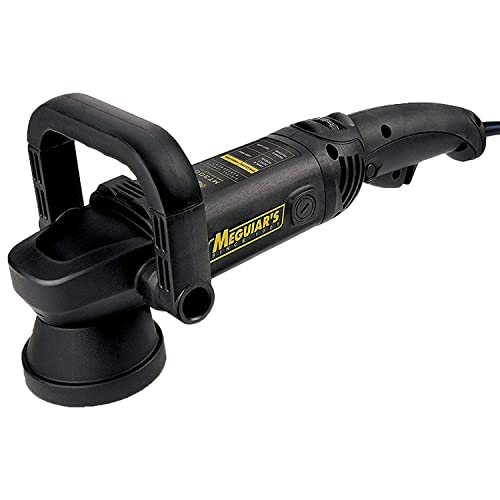
Meguiar’s MT300 Dual Action Polisher
Digital torque management holds pad speed steady as hand pressure increases, which keeps correction consistent across a panel. Detailers point to that balance of control and price as the MT300’s main strength. A corded design means it always needs a nearby outlet, unlike battery powered alternatives.
Pros
- Torque management keeps speed steady under pressure
- Comfortable grip options for longer sessions
- Strong mid range value for the feature set
Cons
- Corded design limits where you can work
- Head feels bulkier than similarly priced machines
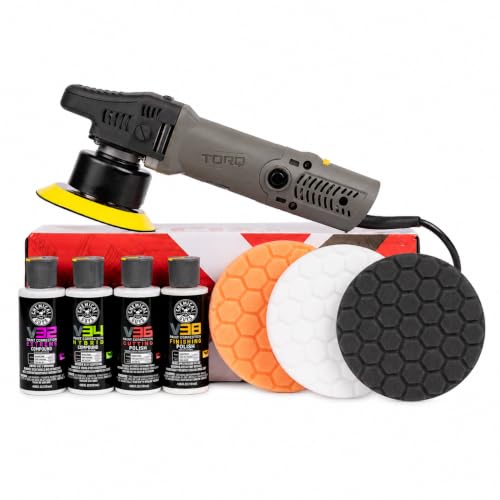
Chemical Guys TORQX Random Orbital Polisher
TORQX ships bundled with pads and compounds fairly often, letting newcomers start correcting paint the same day it arrives. Its forgiving orbital action mirrors other beginner focused machines on this list. Heavier defects take noticeably more passes than a longer throw machine would need.
Pros
- Frequently bundled with pads and polish
- Forgiving action suits first time users
- Comfortable grip for extended sessions
Cons
- Slower against heavier paint defects
- Corded operation limits mobility around a vehicle

Adam’s Swirl Killer 15mm Polisher
A 15 mm throw and a compact wrap handle let this machine cover hoods and roofs quickly while staying random orbital forgiving. Owners favor it for speeding through large flat panels on bigger vehicles. The same long throw becomes trickier to control across curves and body lines.
Pros
- Long throw speeds up large panel correction
- Compact grip stays comfortable over long sessions
- Strong value for a 15 mm machine
Cons
- Harder to control across curves and contours
- Heavier balance at the head than the body
Compared at a glance
| # | Model | Type | Best for | Score | Price |
|---|---|---|---|---|---|
| 1 | Griot’s Garage G9 Random Orbital Polisher | Random orbital (dual action) | Best overall | 9.4 | Check price |
| 2 | Avid Power Dual Action Polisher | Random orbital (dual action) | Best budget | 8.3 | Check price |
| 3 | Porter-Cable 7424XP Polisher | Random orbital (dual action) | Best beginner classic | 8.8 | Check price |
| 4 | Rupes LHR15 Mark III BigFoot | Random orbital (dual action) | Best long-throw | 9.2 | Check price |
| 5 | Meguiar’s MT300 Dual Action Polisher | Random orbital (dual action) | Best torque control | 9.0 | Check price |
| 6 | Chemical Guys TORQX Random Orbital Polisher | Random orbital (dual action) | Best starter kit | 8.0 | Check price |
| 7 | Adam’s Swirl Killer 15mm Polisher | Random orbital (dual action) | Best for large panels | 8.6 | Check price |
How to choose
Dual action or rotary: why beginners start here Random orbital dual action polishers spin and oscillate at the same time, so the pad simply stops turning under too much pressure. That mechanism makes them very hard to burn through paint with, which is why every machine on this list is a DA. Rotary polishers spin directly and cut faster, but they can strike through clear coat in seconds without experience. Anyone new to paint correction should start with a dual action machine.
How orbit throw changes correction speed Throw describes how far the pad travels within each orbit. A short 5 mm throw works gently and precisely but corrects slowly across a whole panel. A long 15 mm throw covers hoods and roofs fast, though it turns clumsy in tight areas near trim and mirrors. An 8 to 9 mm throw splits the difference for most daily driven cars.
Motor power and vibration matter more than spec sheets suggest A stronger motor holds its pad speed steady even as hand pressure increases, keeping correction even across a panel. Vibration is the factor spec sheets rarely capture well. A smooth machine lets someone finish a whole car without hand fatigue, while a buzzy one wears out an arm halfway through a hood.
Pads, compounds and working technique The machine only handles half the job of paint correction. Match pad firmness and compound aggressiveness to the actual defect, and size the backing plate to the throw length. Work small sections at a time, then wipe and inspect under good lighting. Forcing the machine rarely corrects paint faster than simply letting the pad do the work.
Common questions
Is a dual action polisher safe for a beginner to use?
Yes. Random orbital dual action polishers stop the pad from spinning hard under too much pressure, which makes them difficult to burn paint with. They are the recommended starting point ahead of any rotary machine.
What orbit throw should a first time buyer choose?
An 8 to 9 mm throw suits most cars as a versatile all rounder. Choose a 5 mm throw for tight trim areas and gentle finishing, or step up to 15 mm to correct large flat panels faster.
Can a dual action polisher actually remove swirl marks?
Yes, paired with the right pad and compound a dual action machine removes swirls and light scratches while staying beginner safe. Heavier defects simply need more passes than a rotary would require.
Do you need different pads for cutting and finishing paint?
Yes. Firmer cutting pads paired with a compound remove defects, while softer polishing pads with a finer polish refine the gloss afterward. Matching pad to task matters as much as the machine itself.
How does a dual action polisher differ from a rotary polisher?
A dual action machine spins and oscillates together and stalls under pressure, so it rarely burns through paint. A rotary spins directly and cuts faster, but it can strike through clear coat quickly if misused.
What speed setting works best for paint correction?
Lower speeds spread product across the panel and help it finish down smoothly, while higher speeds handle the actual cutting. Most correction happens in the upper middle range, though the compound’s own guidance should set the final number.
Does a longer throw always correct paint faster?
A longer throw covers more surface area per pass, but it can bog down more easily and gets harder to control on curves. Tight or heavily contoured panels often correct better under a shorter throw instead.
How do you avoid leaving holograms after polishing?
Finish with a soft polishing pad and a fine polish, keep the pad clean between passes, and run a final controlled speed pass to refine the surface. Random orbital machines rarely leave the holograms a misused rotary can.
Our pick
Griot’s Garage G9 Random Orbital Polisher belongs in most driveways, strong enough to correct swirls yet forgiving enough for a first attempt. Start with the Avid Power Dual Action Polisher if the budget is tight this year. Step up to the Rupes LHR15 Mark III BigFoot once large panels become a regular job.

