Top Carving Knives for Perfect Slices Every Time
The J.A. Henckels International Classic 8-inch Carving Knife is the best overall for most home cooks. It offers a razor-sharp, stain-resistant blade and a comfortable triple-rivet handle, making it ideal for slicing large roasts and poultry. However, it requires hand washing and may not retain its edge as long as premium options.
A carving knife is essential for serving perfectly sliced roasts, turkey, or ham. The right blade glides through meat, creating thin, uniform portions that impress guests. But with so many options, finding the best carving knife can feel overwhelming.
We compared top-selling models from trusted brands, focusing on sharpness, comfort, and durability. Whether you need a budget-friendly workhorse or a premium showpiece, this guide helps you pick the right tool for your kitchen.
The best picks, ranked
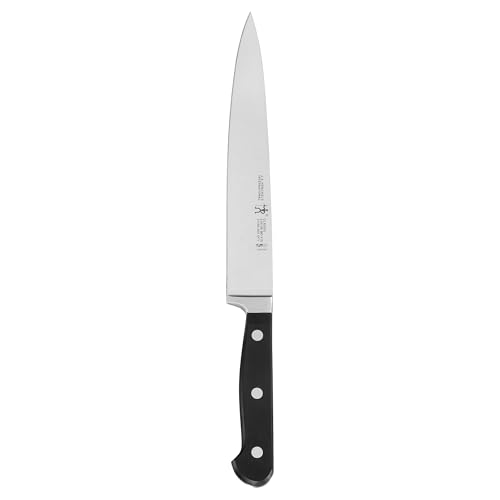
J.A. Henckels International Classic 8-inch Carving Knife
This carving knife from Henckels features a high-carbon stainless steel blade that resists stains and rust. The classic triple-rivet handle provides a secure grip, and the pointed tip allows for precise cuts around bones. Owners report it slices turkey and roast beef effortlessly, though it is not dishwasher safe.
Pros
- Razor sharp out of the box
- Comfortable, balanced handle
- Durable and stain-resistant
Cons
- Not dishwasher safe
- Edge may dull with heavy use

Wüsthof Classic Hollow Edge 9-inch Carving Knife
The Wüsthof Classic carving knife has a hollow edge with scalloped indentations that reduce friction, preventing slices from sticking to the blade. Made in Germany, it features a precision-forged high-carbon steel blade and a synthetic handle that resists fading. Users say it creates paper-thin slices with minimal effort, but it comes at a premium price.
Pros
- Hollow edge prevents sticking
- Precision-forged blade is very sharp
- Ergonomic, durable handle
Cons
- Expensive
- Requires careful hand washing
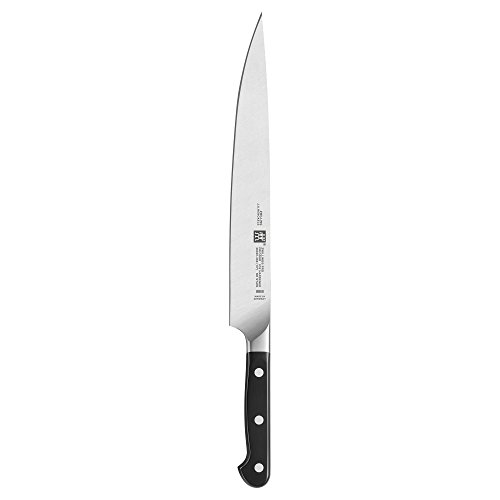
Zwilling J.A. Henckels Pro 9-inch Carving Knife
Zwilling Pro line is known for its ice-hardened Friodur blade that offers excellent edge retention and flexibility. The 9-inch carving knife has an open handle design with a curved bolster for a secure grip. It slices large roasts with ease and is a favorite among culinary enthusiasts, though it is heavier than other models.
Pros
- Excellent edge retention
- Sturdy and well balanced
- Comfortable grip even when wet
Cons
- Heavier than other carving knives
- Pricey
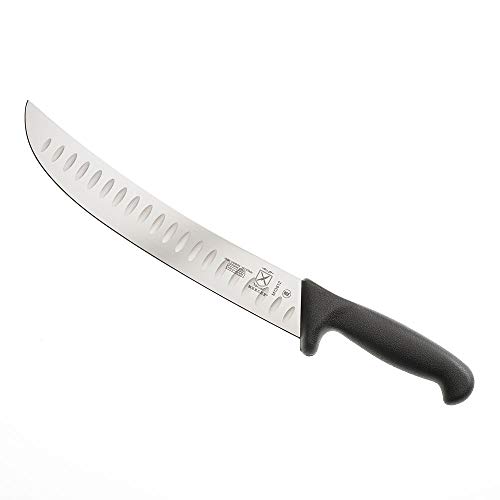
Mercer Culinary Renaissance 12-inch Carving Knife
Mercer Culinary offers a 12-inch carving knife that easily handles large turkeys and roasts. The blade is made from high-carbon German steel, and the handle has a unique textured pattern for a non-slip grip. It is a favorite among home cooks who need extra length, but it may be too long for smaller kitchens.
Pros
- Long blade slices large roasts in one pass
- Non-slip handle
- Excellent value for the size
Cons
- Might be unwieldy for small tasks
- Not as nimble as shorter knives

Victorinox Swiss Army 10-inch Carving Knife with Granton Edge
Victorinox is known for quality at an affordable price. This carving knife features a Granton edge (similar to hollow edge) that reduces sticking and a Fibrox handle that is slip-resistant even when wet. It is lightweight and sharp, making it a reliable choice for everyday carving, though the blade is not as thick as premium knives.
Pros
- Very affordable
- Lightweight and easy to handle
- Granton edge prevents sticking
Cons
- Blade is thinner and may require more frequent sharpening
- Handle is not as elegant
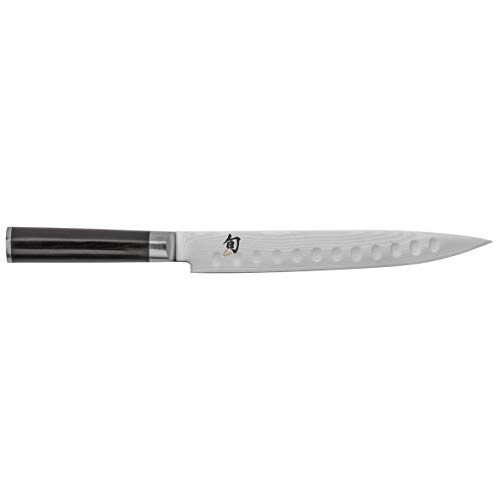
Shun Classic 9-inch Carving Knife
Shun Classic knives are handcrafted in Japan with a D-shaped handle that fits the hand naturally. The 9-inch carving knife has a razor-sharp edge and a beautiful Damascus pattern. It is ideal for those who want a top-tier knife, but it is expensive and requires careful maintenance.
Pros
- Superb sharpness out of the box
- Beautiful design
- D-shaped handle for comfort
Cons
- High price
- Blade is brittle; avoid cutting bones

Rada Cutlery Carving Knife
Rada Cutlery offers a simple, lightweight carving knife that is made in the USA. It features a high-carbon stainless steel blade that takes a sharp edge and an aluminum handle that is comfortable to hold. This knife is very affordable and easy to sharpen, but it is not as heavy-duty as forged knives.
Pros
- Very lightweight
- Affordable
- Made in the USA
Cons
- Not as durable for heavy use
- Handle may feel cold to the touch
What to look for
How they stack up
| # | Model | Blade Length | Best for | Score | Price |
|---|---|---|---|---|---|
| 1 | J.A. Henckels International Classic 8-inch Carving Knife | 8 inches | Best overall for most home cooks | 9.4 | Check price |
| 2 | Wüsthof Classic Hollow Edge 9-inch Carving Knife | 9 inches | Best for effortless nonstick slicing | 9.2 | Check price |
| 3 | Zwilling J.A. Henckels Pro 9-inch Carving Knife | 9 inches | Best for professional-grade performance | 9.1 | Check price |
| 4 | Mercer Culinary Renaissance 12-inch Carving Knife | 12 inches | Best long blade for large cuts | 8.9 | Check price |
| 5 | Victorinox Swiss Army 10-inch Carving Knife with Granton Edge | 10 inches | Best budget-friendly option | 9.0 | Check price |
| 6 | Shun Classic 9-inch Carving Knife | 9 inches | Best for precision and aesthetics | 9.3 | Check price |
| 7 | Rada Cutlery Carving Knife | 9.25 inches | Best lightweight and easy to maintain | 8.5 | Check price |
Questions worth asking
What is the difference between a carving knife and a chef’s knife?
A carving knife has a long, narrow blade that is ideal for slicing thin, even cuts of cooked meat. A chef’s knife has a wider blade that curves upward, making it versatile for chopping, dicing, and mincing. Carving knives are not designed for heavy chopping tasks.
Can I use a carving knife to cut bread?
While a carving knife can technically cut bread, it is not ideal. A serrated bread knife is better because it can slice through crusty bread without crushing it. Using a carving knife on bread may result in uneven slices and can dull the blade faster.
How do I sharpen a carving knife?
You can sharpen a carving knife using a whetstone, honing rod, or electric sharpener. For best results, use a whetstone with a coarse grit first, then a fine grit to polish the edge. Alternatively, many professional sharpeners are available. Remember to maintain a consistent angle, usually around 20 degrees.
Is a longer carving knife always better?
Not necessarily. A longer blade can slice large roasts in one motion, but it can be harder to control and store. For most home kitchens, an 8 to 9 inch blade is sufficient. If you frequently carve large turkeys or roasts, a 10 to 12 inch blade may be more convenient.
Can I cut through bones with a carving knife?
No, carving knives are not designed for cutting through bones. Attempting to do so can damage the blade and cause it to chip. Use a separate bone saw or a heavy cleaver for such tasks. A carving knife is meant for slicing meat, not bone.
How often should I sharpen my carving knife?
The frequency depends on how often you use it. For occasional holiday carving, sharpening once or twice a year may be enough. If you use it weekly, hone it before each use and sharpen it every few months. A dull knife is more dangerous than a sharp one because it requires more force.
Are carving knives dishwasher safe?
Most carving knives should not be washed in the dishwasher. The harsh detergents and high heat can damage the blade and handle, and the knife can bump against other items, causing dulling or nicks. Always hand wash and dry your carving knife immediately after use.
What is a Granton edge or hollow edge?
A Granton edge or hollow edge features small scallops or indentations along the side of the blade. This creates air pockets that reduce friction and prevent slices from sticking to the knife. This feature is particularly useful for carving thin slices of meat, making the process smoother and faster.
Our take
For most households, the J.A. Henckels International Classic 8-inch Carving Knife is the best choice due to its balance of performance, comfort, and price. If you are willing to invest more, the Wüsthof Classic with hollow edge offers effortless slicing and is a joy to use. Budget-conscious cooks will be satisfied with the Victorinox Swiss Army, which delivers reliable performance at a fraction of the cost.