How to Choose the Right Cat Bowls for Indoor Cats
Hepper Nomnom Cat Bowl leads for indoor use, since its tray catches spills and its shallow stainless dishes suit sensitive whiskers. PETLIBRO Elevated Cat Bowl Set offers better value for two cat homes. UPSKY Double Cat Dish keeps food and water tidy in one small footprint.
Hepper Nomnom Cat Bowl is the pick for an indoor feeding station. PETLIBRO’s elevated set covers two cat homes, and UPSKY Double Cat Dish keeps food and water together in a small space.
Indoor cats return to the same spot every day, so small annoyances repeat until they become real problems: kibble scattered across wood floors, a plastic bowl that smells stale by midweek. Whisker contact, bowl height and spill containment matter more indoors than out. We compared dimensions, materials and base designs, alongside what owners report about mess and fussy eating, to rank these seven.
The shortlist, ranked

Hepper Nomnom Cat Bowl
Two shallow stainless steel dishes sit inside a moulded tray with a raised lip, so anything a cat flicks out of the bowl lands on the tray instead of the floor. Wide, shallow walls keep whiskers from ever touching the sides. Both dishes and tray go in the dishwasher, which keeps the daily routine quick.
Pros
- Tray contains spills and stray kibble
- Shallow stainless dishes avoid whisker contact
- Whole unit is dishwasher friendly
Cons
- Premium position for a cat bowl
- Tray takes more floor space than a single dish

PETLIBRO Elevated Cat Bowl Set
Two stainless bowls sit on a tilted, elevated stand, pairing the neck comfort of a raised feeder with the food gathering benefit of a forward tilt. A single purchase covers food and water for one cat, or feeds two cats side by side. Owners report rubber feet keep the stand planted on tile.
Pros
- Tilt keeps food gathered at the low edge
- Removable bowls simplify washing
- Rubber feet stop sliding on hard floors
Cons
- Plastic stand needs wiping to stay fresh
- Fixed height suits average adult cats only

UPSKY Cat Bowl Double Cat Dish
Small apartments need a feeding station that stays compact and unobtrusive, and this double dish delivers that at low cost. Two raised dishes sit on a single tilted base that wipes clean in seconds. Owners report the light build means an eager cat can nudge it, so a mat underneath helps.
Pros
- Very affordable double dish setup
- Small footprint suits apartments
- Removable bowls make cleaning quick
Cons
- Light enough for a cat to push around
- Plastic scratches over time

Petkit 15 Degree Tilted Elevated Cat Bowl
A fifteen degree angle brings food toward the cat and shortens how far it lowers its head. The stainless insert lifts out for washing while the outer shell stays in place. Its tidy look suits a feeding station in a visible kitchen corner.
Pros
- Pronounced tilt eases neck position
- Stainless insert is easy to sanitise
- Tidy design suits visible kitchen corners
Cons
- Single bowl, needs a second for water
- Outer shell needs hand wiping

Vantic Elevated Cat Bowls
Two well spaced bowls on a wider stand let two cats eat side by side without crowding, which reduces the quiet tension that makes some cats abandon meals. Bowls sit tilted and raised, and the stand carries enough weight to resist pushing. Owners report the spacing suits two cats better than compact double dishes do.
Pros
- Generous spacing between bowls
- Weighted base resists pushing
- Removable bowls for daily washing
Cons
- Wider footprint than single stations
- Stand needs wiping around the recesses

Petmate Antimicrobial Stainless Steel Pet Bowl
Sometimes a plain stainless bowl that survives a dishwasher cycle every day is all that is needed. Petmate adds a rubber base ring that keeps it in place on tile and stops the metallic rattle. Pick a shallow size rather than a deep one, since deep stainless bowls are a common cause of whisker discomfort.
Pros
- Non porous surface suits chin acne concerns
- Rubber ring reduces sliding and noise
- Survives daily dishwasher cycles
Cons
- Deeper sizes cause whisker contact
- No elevation or tilt
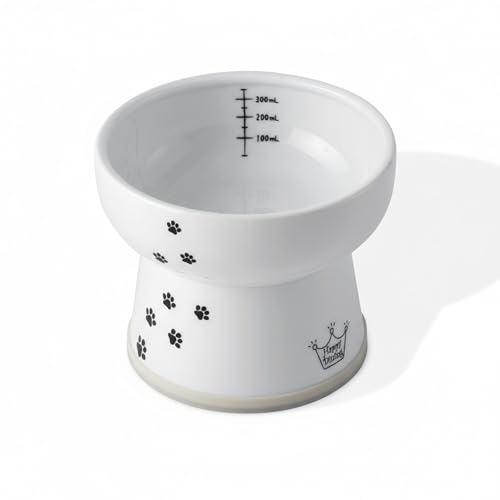
Necoichi Raised Cat Water Bowl
Indoor cats on dry food often drink less than they should. A wide, raised ceramic bowl placed away from the food station tends to draw more frequent visits. Glazed ceramic keeps water tasting clean in a way scratched plastic does not, so pair it with a separate food bowl rather than a full station.
Pros
- Wide opening suits whisker sensitive cats
- Ceramic keeps water tasting clean
- Raised height reduces neck bending
Cons
- Water only, no food dish included
- Ceramic can chip if dropped
The lineup, side by side
| # | Model | Material | Best for | Score | Price |
|---|---|---|---|---|---|
| 1 | Hepper Nomnom Cat Bowl | Stainless steel dishes, moulded tray | Best overall | 9.4 | Check price |
| 2 | PETLIBRO Elevated Cat Bowl Set | Stainless steel bowls, plastic stand | Best value | 9.2 | Check price |
| 3 | UPSKY Cat Bowl Double Cat Dish | Plastic base with removable bowls | Best budget | 9.0 | Check price |
| 4 | Petkit 15 Degree Tilted Elevated Cat Bowl | Stainless steel insert, ABS shell | Best for tilt design | 8.8 | Check price |
| 5 | Vantic Elevated Cat Bowls | Stainless steel bowls | Best for two cat homes | 8.6 | Check price |
| 6 | Petmate Antimicrobial Stainless Steel Pet Bowl | Stainless steel | Best for easy cleaning | 8.3 | Check price |
| 7 | Necoichi Raised Cat Water Bowl | Glazed ceramic | Best water bowl | 8.0 | Check price |
What to look for
What should an indoor feeding station include? An outdoor cat eats in a different spot each day and the mess disappears on its own. An indoor cat returns to the same patch of floor, so scattered kibble and splashed water land there daily. A tray, mat or raised lip turns a daily sweep into a weekly wipe and protects wood floors from moisture over time.
Why does my cat paw food out of the bowl? A ring of food left around the bowl edge, or kibble scooped onto the floor before eating, points to whisker contact with the sides. Whiskers carry dense nerve endings, so the sensation genuinely bothers many cats. Switching to a wide, shallow dish usually fixes it within a few meals.
Which bowl material keeps a station fresh? Stainless steel and glazed ceramic are non porous, so they wash clean and hold no lingering food odour. Plastic scratches with use, and those scratches trap oils and bacteria, a pattern vets often link to feline chin acne. Switching to stainless or ceramic, washed daily, is the standard first step for chin bumps.
Where should food and water bowls sit? Cats generally prefer water away from food, and many drink noticeably more once the two are separated. Keep the station away from the litter tray, out of high traffic paths and away from loud appliances. In multi cat homes, spacing stations apart reduces resource guarding that owners often miss.
Common questions
Do indoor cats need different bowls than outdoor cats?
The bowl itself is the same, but indoor stations benefit far more from spill trays, non slip bases and materials that clean easily, since the mess and the smell stay in your home.
Should a cat bowl be raised?
Raised bowls reduce neck bending and can help cats that regurgitate after eating quickly or have joint stiffness. Healthy young cats manage either way, so it is a comfort upgrade rather than a requirement.
Why does my cat paw food out of the bowl before eating?
It is usually whisker discomfort with the bowl sides, though some cats also do it as play. A wide shallow dish is the first thing to try, and a tray beneath contains the mess either way.
How often should indoor cat bowls be washed?
Wash food bowls daily and water bowls at least every other day. Biofilm forms quickly in standing water, and many cats drink less from a bowl that feels slippery.
Is stainless steel or ceramic better for a cat bowl?
Both are non porous and easy to sanitise. Stainless is unbreakable and dishwasher proof, while ceramic is heavier and less likely to slide. Either beats plastic for long term hygiene.
How can I get my indoor cat to drink more water?
Place water away from food, use a wide shallow bowl so whiskers stay clear, offer more than one water station and refresh it daily. Some cats also prefer moving water from a fountain.
How many feeding stations do two cats need?
Two separate stations spaced apart, ideally with a third water source. Cats guard resources subtly, and separated stations stop one cat from quietly discouraging the other.
Do cats need a mat under the food bowl?
A mat catches spills, protects flooring and stops light bowls sliding. It is optional with a spill tray or a heavy weighted base, and useful with almost everything else.
What is the best cat bowl for a small apartment?
A compact double dish with a slight tilt, like UPSKY, keeps the footprint small while still separating food and water on one base.
Elevated vs flat cat bowls, which is better indoors?
Elevated bowls suit cats with neck or joint stiffness and can reduce regurgitation after fast eating. Flat bowls work fine for healthy cats and are simpler to clean underneath.
Our take
Hepper Nomnom Cat Bowl is the indoor station worth choosing first, since its spill tray and shallow stainless dishes solve mess and whisker comfort together. PETLIBRO’s elevated set offers better value for two cat homes, and UPSKY Double Cat Dish keeps a small apartment feeding station tidy for very little.


