5 Scratcher Pads That Save Your Furniture
PetFusion Ultimate Cat Scratcher Lounge ranks best overall, since dense cardboard and a curved shape invite long stretching scratches. Catit Style Scratcher Bench is the value pick for smaller homes, and Pet Craft Supply Cardboard Lounge is the budget choice for placing pads in multiple rooms.
PetFusion Ultimate Cat Scratcher Lounge earns the top spot for a scratcher pad a cat actually uses instead of the sofa. Catit Style Scratcher Bench suits tighter spaces at a lower cost. Pet Craft Supply Cardboard Lounge works well when you want an inexpensive pad you can replace often.
Picking one gets harder than it looks, since cats care about angle, texture and stability, and a pad that slides on the first scratch gets abandoned fast. We compared cardboard density, dimensions, shape and reversibility, then weighed owner reports on how quickly pads wear through, how much debris they shed, and which designs pulled cats away from furniture.
How to choose
What angle of scratcher does your cat actually want? Watch where a cat already scratches before buying anything. Cats working on rugs or carpet usually prefer horizontal pads, while those targeting sofa arms want an incline or a vertical post instead. Buying the wrong orientation is the most common reason a scratcher sits ignored.
Does placement matter more than the scratcher itself? Put the pad exactly where unwanted scratching happens, not tucked into a quiet corner. Cats scratch to stretch after sleeping and to mark visible territory, so near the bed and near the main sitting area rank as the two highest value spots. Move it gradually only after the habit is established.
How does cardboard density affect how long a pad lasts? Tightly packed corrugated cardboard resists shredding and sheds less mess over time. Cheaper pads use looser cardboard that a determined cat can hollow out within weeks. Reversible designs effectively double the life of whatever density you buy.
Keeping a scratcher stable and the mess under control A pad that slides gets abandoned quickly, so choose a framed design or anchor a flat pad with a non slip mat underneath. Sprinkling catnip into the grooves helps introduce a new scratcher faster. Expect some debris regardless, and keep a handheld vacuum nearby rather than fighting it.
The shortlist, ranked

PetFusion Ultimate Cat Scratcher Lounge
A broad curved surface here doubles as a spot cats nap on, keeping the pad in daily use instead of forgotten in a corner. Cardboard density noticeably beats budget pads, so it holds up for months rather than weeks. Flipping it over for a fresh surface effectively doubles its working life.
Pros
- Long enough for a full body stretch scratch
- Doubles as a lounging spot cats return to
- Dense cardboard resists shredding quickly
Cons
- Takes a fair amount of floor space
- Costs more than plain flat pads

Catit Style Scratcher Bench with Catnip
A slight bench angle appeals to many cats more than a flat pad, and the surrounding frame keeps cardboard from sliding on hard floors. Replacement inserts let the frame outlive several pads. Owners report it works especially well placed near a spot the cat already scratches.
Pros
- Frame contains loose cardboard debris
- Replaceable inserts cut long term cost
- Angle suits cats that dislike flat pads
Cons
- Smaller surface than lounge style scratchers
- Plastic frame can slide on very smooth tile
Pet Craft Supply Cat Scratcher Cardboard Lounge
This curved lounge mirrors the shape of pricier options at a much lower cost, making replacement every few months painless. Lighter cardboard means heavy scratchers wear through it faster than denser pads. Placing several around the house stays affordable this way.
Pros
- Low enough cost to place one in every room
- Curved shape encourages lounging and scratching
- Reversible for a second surface
Cons
- Wears through faster than dense cardboard
- Sheds more debris around the pad

Necoichi Cat Scratcher Bowl
A bowl shape gives cats a curved surface to scratch plus a contained space to sit in, appealing strongly to cats that like feeling enclosed. Its footprint stays smaller than a lounger and looks less like pet equipment in a living room. Large cats trade away scratching surface for that compact size.
Pros
- Small footprint for apartments
- Enclosed shape appeals to nervous cats
- Looks tidier than most cardboard scratchers
Cons
- Limited surface for a full stretch
- Debris collects inside the bowl

4CLAWS Scratching Board
A plain flat board suits cats already scratching horizontally on rugs and carpet. It slides under a sofa or against a wall, letting you place it exactly where the problem scratching happens. Smooth floors need anchoring underneath, since a moving pad discourages use.
Pros
- Fits into tight spots and against walls
- Reversible for double the life
- Straightforward and inexpensive
Cons
- Slides on hard floors without securing
- No lounging appeal to keep cats interested

PetStages Scratch Snuggle and Rest Scratcher
A soft raised edge surrounds the cardboard scratching surface here, so cats treat it as a bed with a built in scratcher. That combination keeps cats returning to the same spot, useful right beside a sofa. Fabric edges collect hair and need regular vacuuming.
Pros
- Combines a bed and a scratcher in one place
- Raised edge appeals to cats that like support
- Insert is replaceable
Cons
- Plush surround traps hair and dust
- Bulkier than a plain cardboard pad
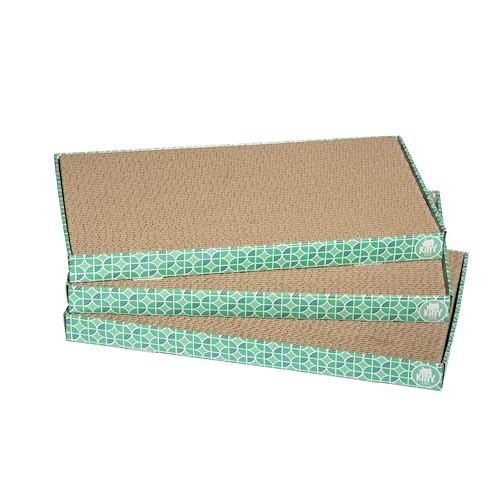
Kitty City Wide Cat Scratcher Lounge
Extra width here suits big cats and multi cat households where two animals might use the pad at once. A wave shape offers both flat and inclined scratching angles on one piece. Cardboard density stays mid range, so expect more frequent replacement in a busy household.
Pros
- Wide enough for two cats or one large one
- Wave shape offers multiple scratching angles
- Reversible surface
Cons
- Mid density cardboard wears at a moderate rate
- Needs more floor space than a bench
Side by side
| # | Model | Material | Best for | Score | Price |
|---|---|---|---|---|---|
| 1 | PetFusion Ultimate Cat Scratcher Lounge | High density recycled cardboard | Best overall | 9.4 | Check price |
| 2 | Catit Style Scratcher Bench with Catnip | Corrugated cardboard in a plastic frame | Best value | 9.2 | Check price |
| 3 | Pet Craft Supply Cat Scratcher Cardboard Lounge | Corrugated cardboard | Best budget | 9.0 | Check price |
| 4 | Necoichi Cat Scratcher Bowl | Compressed corrugated cardboard | Best for small spaces | 8.8 | Check price |
| 5 | 4CLAWS Scratching Board | Corrugated cardboard | Best flat pad | 8.5 | Check price |
| 6 | PetStages Scratch Snuggle and Rest Scratcher | Cardboard insert with plush surround | Best for nappers | 8.3 | Check price |
| 7 | Kitty City Wide Cat Scratcher Lounge | Corrugated cardboard | Best for larger cats | 8.0 | Check price |
Frequently asked questions
Why does my cat ignore the scratcher pad?
Usually the angle, texture or location is wrong. Try placing it directly next to the furniture being scratched, adding catnip, and checking that it does not slide. Some cats simply prefer sisal or a vertical post over cardboard.
How long does a cardboard scratcher last?
Anywhere from a few weeks to six months, depending on cardboard density and how many cats use it. Dense pads like the PetFusion lounge typically last several months and flip over for a second life.
Do scratcher pads stop cats from scratching furniture?
They help a great deal when placed in the right spot, and work best combined with regular nail trimming and, if needed, deterrent tape on furniture. Cats need somewhere to scratch, so removing the option entirely is not realistic.
Is cardboard safe for cats to scratch and chew?
Plain corrugated cardboard with non toxic glue is considered safe. Cats ingest small amounts of dust while scratching, which is generally harmless. Avoid pads with loose plastic parts or unknown coatings.
How do you stop cardboard mess from a scratcher?
Choose a framed or bowl design that contains debris, place the pad on a hard floor rather than carpet, and vacuum around it a couple of times a week. Denser cardboard also sheds noticeably less.
How many scratchers does a cat need?
At least one per cat plus one extra, spread across the rooms where a cat spends time. Multi cat homes benefit from a mix of horizontal pads and vertical posts, so animals are not competing for one surface.
Should you use catnip on a new scratcher?
It helps introduce roughly two thirds of cats that respond to catnip. Rub it into the grooves rather than piling it on top. Silver vine works as an alternative for cats that ignore catnip.
Can scratcher pads be recycled?
Most plain cardboard pads go into cardboard recycling once any plastic frame, glue strips or fabric edging is removed. Check local guidance, since heavily shredded cardboard is not accepted everywhere.
Cardboard scratcher vs sisal post: which do cats prefer?
Preference varies by cat. Cardboard suits cats that like shredding texture and horizontal scratching, while sisal rope holds up better for vertical, full body stretches. Offering one of each covers most preferences in a household.
The bottom line
PetFusion Ultimate Cat Scratcher Lounge remains the pad most likely to earn daily use, since its density, length and lounging shape match how cats naturally stretch and scratch. Catit Style Scratcher Bench suits smaller rooms with replaceable inserts that keep costs down, while Pet Craft Supply’s lounge lets you place cheap scratchers throughout the house. Position whichever you choose right beside the furniture you are trying to protect.


