Cat Trees Built for Big Cats and Keen Climbers
The Vesper V-High Base is our top overall pick for its sturdy build, real-wood look, and roomy perches. For multi-cat homes the tall Feandrea 67-inch offers the most usable levels, while the compact TRIXIE Baza suits small apartments without crowding the room.
If you want a quick recommendation, the Vesper V-High Base fits most cats and rooms, the Feandrea 67-inch is best for multi-cat households that need many perches, and the TRIXIE Baza is the pick for tight spaces.
Choosing a cat tree is harder than it seems because stability, height, base weight, and scratching material all have to match your cat’s size, age, and climbing habits, plus the space you can spare. We compared these seven towers on stability, usable height, scratching surface, and value, drawing on manufacturer specifications and the wear and wobble patterns owners report over time.
The top picks, ranked
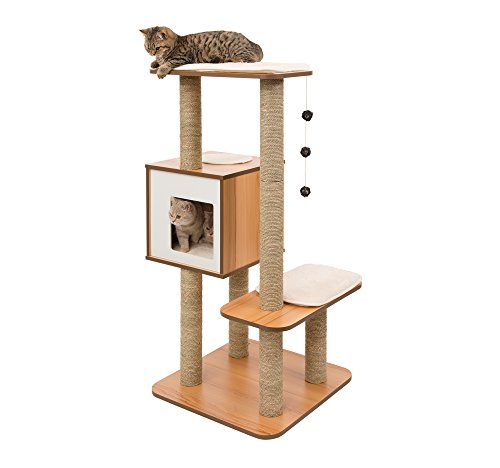
Vesper V-High Base Cat Tree
The V-High Base pairs a heavy, wide base with a clean walnut-look finish that blends into a living room better than most towers. Owners report the platforms feel solid even for larger cats, and the memory-foam cushions add real comfort. It costs more than carpet-covered towers, but the stability and look justify the step up for many buyers.
Pros
- Very stable, wide weighted base
- Furniture-friendly walnut finish
- Comfortable memory-foam cushions
Cons
- Costs more than carpet towers
- Only moderate height for climbers

Feandrea 67-Inch Multi-Level Cat Tree
This tall tower packs in perches, a hammock, and covered condos, giving several cats their own space on one footprint. Owners report the sisal posts hold up well and the higher perches are popular with cats that like to survey the room. It is large, so measure first, and anchoring it to the wall is smart for very active climbers.
Pros
- Many levels for several cats
- Tall perches cats gravitate to
- Durable sisal scratching posts
Cons
- Large footprint needs planning
- Best anchored for active climbers

Yaheetech Multi-Level Cat Tree
The Yaheetech delivers a lot of climbing structure for a modest price, with multiple perches, a condo, and dangling toys. Owners report it is a strong starter tower, though the plush covering shows wear sooner than sisal-heavy models. For a first tree or a second one in a spare room, the value is easy to recommend.
Pros
- Lots of structure for the price
- Condo and perches for lounging
- Simple assembly with clear parts
Cons
- Plush wears faster than sisal
- Base could be heavier

Frisco 72-Inch Cat Tree
At six feet, the Frisco 72-inch gives climbing cats real vertical territory with stacked perches and a top condo. Owners report cats enjoy the high vantage points, though the height makes wall anchoring worthwhile. Assembly takes some patience, but the payoff is a tower that satisfies cats who love to climb high.
Pros
- Tall design for serious climbers
- Multiple high perches
- Roomy top condo
Cons
- Height benefits from wall anchoring
- Assembly takes time

Go Pet Club Cat Tree
The Go Pet Club is a big, feature-heavy tower with many perches, condos, and posts spread across a tall frame. Owners report it works well for busy multi-cat households that need a lot of shared territory. The plush finish is basic and the look is more functional than stylish, but you get a great deal of usable space.
Pros
- Generous perches and condos
- Good for busy multi-cat homes
- Competitive price for the size
Cons
- Utilitarian appearance
- Plush covering feels basic

Amazon Basics Cat Tree Tower
A straightforward tower that covers the basics of scratching, perching, and a small condo without extra fuss. Owners report consistent quality for the price and easy setup. It is on the shorter side and lacks premium touches, but as an entry tree for a single cat or a kitten it does the fundamentals reliably.
Pros
- Easy, quick assembly
- Consistent quality for the price
- Good fit for a single cat or kitten
Cons
- Shorter than most rivals
- Few extra features

TRIXIE Baza Scratching Post Tower
The Baza keeps a small footprint while still giving a cat a post to scratch and a perch to rest on. Owners report it suits studios and corners where a full tower would crowd the room. It is not built for multiple cats or heavy climbers, but for a compact space and a single cat it hits a sensible balance.
Pros
- Small footprint for tight rooms
- Neat, simple design
- Easy to place in a corner
Cons
- Limited to one cat
- Single perch only
Compared at a glance
| # | Model | Height | Best for | Score | Price |
|---|---|---|---|---|---|
| 1 | Vesper V-High Base Cat Tree | About 52 inches | Best overall | 9.4 | Check price |
| 2 | Feandrea 67-Inch Multi-Level Cat Tree | About 67 inches | Best for multi-cat homes | 9.2 | Check price |
| 3 | Yaheetech Multi-Level Cat Tree | About 54 inches | Best budget tower | 9.0 | Check price |
| 4 | Frisco 72-Inch Cat Tree | About 72 inches | Best for tall spaces | 8.7 | Check price |
| 5 | Go Pet Club Cat Tree | About 62 inches | Best large multi-perch tower | 8.5 | Check price |
| 6 | Amazon Basics Cat Tree Tower | About 40 inches | Best simple starter tree | 8.3 | Check price |
| 7 | TRIXIE Baza Scratching Post Tower | About 45 inches | Best for small apartments | 8.1 | Check price |
What matters most
Stability comes first A wobbly tower is a tower cats stop using, because they will not commit to a perch that shifts under them. Look for a wide, weighted base and check that the height is supported by the footprint. Taller towers reward you for anchoring them to the wall, which removes tip risk entirely and lets even heavy climbers use the top perches with confidence.
Match height and layout to your cat Young, athletic cats love vertical height and multiple stacked perches, while older or heavier cats often prefer lower, roomier platforms that are easy to reach. In multi-cat homes, more separate levels reduce squabbles by giving each cat its own space. Measure your ceiling clearance and floor area before buying, since towers look smaller online than in the room.
Scratching surface and materials Sisal rope and sisal fabric hold up to scratching far better than carpet or plush, so posts wrapped in sisal stay usable longer. Plush coverings feel cozy and look soft but tend to show wear and shed sooner. Many good towers combine both, using sisal on the posts where claws land and plush on the perches where cats rest.
Space, style, and assembly A cat tree lives in your room full time, so a finish that blends with your furniture makes it easier to place where the cat actually wants it, usually near a window. Compact towers suit apartments, while large multi-condo models need real floor space. Check the assembly steps too, since most towers ship flat and a clear instruction set saves frustration.
Frequently asked questions
How tall should a cat tree be?
It depends on your cat and space, but many cats enjoy trees between four and six feet because height gives them a vantage point and territory. Older or less agile cats often do better with lower, easy-to-reach perches, so match the height to your cat’s climbing ability and your ceiling clearance.
What is the best material for a cat tree?
Sisal rope and sisal fabric are the most durable scratching surfaces and stand up to claws far longer than carpet or plush. Many quality trees combine sisal posts with soft plush perches, giving cats a tough surface to scratch and a comfortable spot to rest.
How do I keep a cat tree from tipping over?
Choose a tower with a wide, weighted base and match the height to that footprint. For taller trees, anchoring the top to a wall bracket removes tip risk entirely, which owners report makes a big difference for active climbers and heavier cats.
Will my cat actually use a cat tree?
Most cats take to a tree faster when it is placed near a window or in a room the family uses, and a little catnip or a favorite toy on the perches helps. Stability matters too, since cats avoid perches that wobble under their weight.
Are tall cat trees safe for older cats?
Tall trees can be fine if they include lower, easy-to-reach perches and stable steps between levels. For senior cats or those with mobility issues, a shorter tower with wide, closely spaced platforms is often a more comfortable and safer choice.
How many perches do I need for multiple cats?
As a rule of thumb, more separate perches and levels reduce competition, so a multi-cat home benefits from a tall tower with several distinct platforms and condos. Giving each cat its own space to claim helps prevent squabbles over the best spot.
How do I clean a cat tree?
Vacuum the perches and posts regularly to remove hair, and spot-clean plush areas with a pet-safe cleaner. Sisal can be brushed to remove loose fibers, and keeping the tree clean also helps it stay attractive to your cat.
Where should I place a cat tree?
Cats usually prefer a tree placed near a window with a view or in a room where the family spends time, so they can watch activity while feeling secure. Avoid cramped corners with no sightlines, since the vantage point is a big part of the appeal.
How do I get my cat to stop scratching furniture?
Placing a sturdy sisal scratching post or tree near the furniture your cat targets gives it a better option, and rewarding use of the post reinforces the habit. Cats scratch to stretch and mark, so offering an appealing, stable alternative is more effective than scolding.
The bottom line
For most homes the Vesper V-High Base offers the best mix of stability, comfort, and living-room-friendly looks, which is why it tops our list. Choose the Feandrea 67-inch if you have several cats who need their own perches, or the TRIXIE Baza if floor space is tight and you have a single cat.